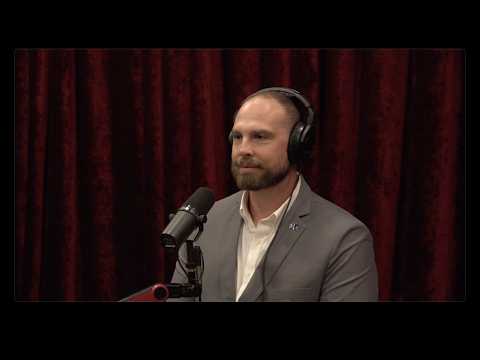
Jacques Vallée joins Ryan Sprague on Somewhere in the Skies to discuss his book Forbidden Science 7: The Final Report and more than six decades of UFO research. Vallée says he wants to support a new generation of researchers. He cautions that government disclosure may prompt more questions rather than settle the subject. He also recounts field investigations in Brazil, Argentina and elsewhere, arguing that witness accounts and physical traces deserve attention alongside photographs and military footage.
The conversation turns to unusual materials and scientific analysis, including material from Ubatuba, Brazil, that Vallée says he worked on with Garry Nolan. Vallée also discusses consciousness, artificial intelligence and the challenges of studying consciousness scientifically. Later, he considers whether some UFO crashes could have been deliberate, describes claims surrounding the Trinity incident, and discusses the Socorro case and the Nimitz footage. Claims about crashes, beings and government knowledge are presented as Vallée’s views; the interview does not establish them as confirmed facts.
Key points
Vallée says he now wants to support the next generation of UFO researchers.
He recounts field investigations in Brazil, Argentina and other countries.
Vallée says he worked with Garry Nolan on materials, including material from Ubatuba, Brazil.
The interview explores possible links between consciousness, artificial intelligence and non-human intelligence.
Vallée discusses the possibility of deliberate UFO crashes and the Trinity, Socorro and Nimitz cases.
0:04Vision Radio. While our government's official position is not to speculate on this subject, we can choose to let our minds explore other possibilities to use our imaginations. For if we consider that astrocientists agree on one point, that the possibility of life elsewhere is not only quite probable, some feel it is there without a doubt. Let us suppose them that these objects are real space vehicles extraterrestrial origin and not an illusion of the mind.
0:50I'm Ryan Spre and you are now somewhere in the skies. Welcome to Somewhere in the Skies. I am your host, Ryan Spreg, and today we have a very special guest joining us once again, the one, the only Jacques Valet. Now, Jacques has recently come out with volume seven of his Forbidden Science Journal series, and it's titled The Final Report. So, what has a lifetime of studying the UFO phenomenon truly taught Jacques Valet? What has he kind of put to the wayside? And what has he decided to continue to pursue when it
1:35comes to this topic? Where does he stand on all of this after decades of studying it? This is such a fascinating wide-ranging conversation. We talk about things like are UFO crashes deliberate gifts to humanity? How do we communicate with non-human intelligence beyond technology? Does consciousness play a role in all of this? Uh where does Jacques stand on different types of anomalous phenomena? Uh he regals us with stories from the past from his journal entries, his adventures in Brazil and in Russia and so many different things like that. We get updates on things like the meta materials that Jacques has studied and analyzed throughout the years and so so much more. We talk
2:25about Passport to Meonia. If you're watching this on YouTube, I'm holding up a 1975 edition of the book that I hold dearly. So, we break that down with him as well. So, so much that we talk about. So, I truly think you're going to enjoy this conversation. And I want to make one thing clear. While this may be the final report by Jacques Valet, this certainly is not the end of his work. We know that this man has dedicated more than half of his life to this topic and he surely has more to contribute to that. So, we get some final messages from Jacques about what he thinks we should be doing moving forward as new people enter this field of study every single day. What
3:14advice does he have for us moving forward? What is the future of disclosure? Where does he stand on disclosure today? Are we any closer to answers than when he first started? So, yeah, it's a fascinating conversation that I truly think you're going to enjoy. But before I go, I want to take just a few moments to ask you guys, please rate and review Summer in the Skies on Apple Podcasts and on Spotify. Every single rating and review helps us gain visibility, find new listeners, so we truly do appreciate that. If you're watching on YouTube, simply like, subscribe, hit that notification bell. We would really appreciate that, too. If you'd like to help support us further, there are ways to do that through Patreon, YouTube channel membership, and Apple
3:59Premium, as well. Links are in the show notes or video description for that. But without further ado, let's get to this wide-ranging, fascinating conversation with the one, the only Jacques Valet. For the third time in the history of the podcast, I am deeply honored to have back on the show with me today, the one, the only Jacques Valet. Jacques, welcome back, my friend. Thank you for having me. You know, a lot has happened since the last time you and I spoke. I believe Scattered Castles had just come out, your previous volume. And now here we are with Forbidden Science Volume
4:447, the final report. And there's been a lot of talk in the UFO research community of, "Oh, this is it. Jacques Valet's swan song, as it were, when in reality, we all know your work is never truly done. This may be the last journals, but um your work has not completed." Is that right? You know, I I've seen this so often that in business and in, you know, in science that people do research or they have and then things change and they don't, you know, they keep doing the same things they've been doing before or teaching the same courses. You can't do that. I mean, you know,
5:31there has been a sea change, a recognition now finally a recognition that the the phenomenon is is real, you know, that the witnesses were not lying, that they were actually seeing something extraordinary. And also that uh you know there are a number of organizations that have been researching it [clears throat] all all the time okay without telling anybody without telling us so um now that it's out to some extent at least um we need to change what we were doing and I want to change my own role you know it's not it's not the time to do the same research arch
6:22we were doing 10 years ago. you know I I want to and also you know I'm I'm a little bit older and uh I think my there are number of exciting new uh ideas in the field and and new people leading it you know and uh both that there are three universities in the US that now teach courses about UFOs in various ways but uh And you know starting with Stanford and Colombia and Harvard I mean you know this is doesn't get better than that. Yeah. And and they have their own money you know. So this is uh I'm hoping that Europe is going to you know enter the the
7:16same start doing the same thing. But things are always slower [snorts] in in Europe. Um, I'm still in Paris for a couple of weeks and it's it's [snorts] getting crazy here. Um, but things are getting organized and I I think that's where I I want to redefine my role as support, you know, providing support to the the new people who are going to lead the research. Um I've I've you know I've done [snorts] what I could and um I've given my report and now there
8:01are many many new directions to explore but one danger there there are two dangers or two hazards you know if you want one is that new people think that they got it because they've been watching podcasts for the last two years and uh they have not done research on the in the field or very little. They've read books which is good but they don't have the personal in experience. [snorts] Well, some of them have seen UFOs. Okay. Some of them have had you know like
8:46Dr. Nolan at at Stanford made no secret of the fact that when he was a kid, you know, like me, he had a a personal experience and he never kept it secret like I I never kept secret, you know, the fact that I saw something I could not explain with several witnesses when I was a kid. So um but you know many things have happened over the last 60 years that came and went and you know disappeared under the wave so to speak and that people need to know uh to understand what's going
9:31on now. So that's uh that's I think that's part of my role. Right. And I appreciate that, you know, a lot of people in this field of research, they do get stuck in their ways, you know, no matter no matter what, they will not waver from their core beliefs. And it's so refreshing to hear that someone who has researched this topic for so long in the various subsets of phenomena that seem to be occurring that you're willing to kind of open your mind up to those other possibilities. So I guess shock my my question for you would be what are some of those fundamental changes that you think need to take place rather than just the nuts and bolts phenomena that the
10:19government might be investigating? Well, there is a drastic change right here in Paris. As you know, the the French government has had a research unit for a long time, the longest of many country uh unclassified, non-military that has looked at many cases from citizens from from the public. Um they just announced that um they were reorganizing because of what's going on and contrary to what people think they are essentially asking us they they asked me to rejoin them
11:07officially which I'm you know I I was grateful for and uh but we all had to sign a two-page essentially security agreement. Okay. In other words, yes, uh we'll continue the research in a new way with probably more resources, but it will be it's not exactly classified in the military sense, but it's um essentially a secret, you know, [clears throat] secret clothes. the the re so people have this perception that everything will be open you know disclosure disclosure disclosure
11:52let's go dance in the streets um I I I don't think that's going to happen the way they they think it will uh because the moment you disclose that okay there is something we don't understand it you know as as director of the CIA said five years ago in a church in Washington with Dr. Ail and with the Archbishop of Washington and with the director of NASA, the administrator of NASA. Um, we don't know what this is. You know, number one, it's real. Number two, we don't know what this is. It's not the Russians. It's not the Chinese. It's not any of that. Okay. Great. So um that raises
12:44a number of new questions. Now they are very serious important questions. That means that systems are going to be put in place and that money will be allocated. There will be budgets in the millions of dollars which there has never been. Yeah. I mean those were very small things. many volunteers like me and um now that's going to change. It's going to be more academic and it's going to be more structured. It's going to be so u yes disclosure uh disclosure of what? Good question. Yeah. No, when um No, it's it's great with this closed there is something we didn't
13:38quite see it before. Now our eyes open. There is something. Um what happens the next day? Well, the next day people will say, well, you know that we've disclosed that uh those things were real and they landed and they left traces. Well, you know, I can introduce you to a number of farmers. I've I've gone there. I've seen the traces. They know if I go back and I say, you know, John, this was real. They say, Jack, where have you been? I You came here three times. I showed you the traces. I showed you the holes. I showed you the the places where the trees were
14:27destroyed and so on. Um, I I I told you this was for him. You know, we we already know that. Okay. So, that's not disclosure. I mean, they can maybe in Washington it's a disclosure, but it's not a disclosure in Wisconsin and Montana and Texas. Okay. So, what else? Well, there are ships, you know, that round things and [snorts] cylinders, you know, cigars, discs that have left imprints. Well, you know, I've measured those imprints. I've published all this, you know, into scientific press, you know, with Dr. knowledge and with with other with my colleagues here in France, you know,
15:16we we recovered some materials and we took them to Sakair Atomic Center here close to Paris to test it and we published all that. There was a case, you know, it's funny because people expect, you know, the the the the Pentagon is going to reveal certain secrets. Okay. And we've had five series of disclosures on the internet, you know, in the last two months of things that happened two years ago. You know, there was a light in the sky. Somebody maybe took a picture. And
16:01you're telling me this was really important and nobody followed up right in the Pentagon, right? That was was tracked. They had a picture of it. They had a witness. And now all we have is gee, you know, it's gone. Yeah. And they throw it to the scientists. You know that doesn't that make any sense? So I think we'll have to take a step back. We we already know a lot. The people already know a lot. Most of the cases were from civilians. You know the the military cases are
16:46especially interesting because the military expects a threat. So they have they can they have be better detection systems especially you know aviation as we saw with the limits and so on but the limits you know were over 20 years since the limits we still don't know what it was I mean it's not resolved we don't know whether there was a natural explanation or a technology explanation or whether It's a UFO. We don't know that. I mean, until we know it's a UFO, but you know what I mean. So, um, what's the disclosure? Well, uh, there were creatures with it.
17:41Well, you know, I remember when I was a kid hearing an interview on French radio of some guy in Kub near Liil in the north of France who had seen something land on the railroad tracks. He was a railroad guy um leaving imprints on the on the tracks and there were two creatures next to it. So everybody knew that you know this was the early 60s late 50s. See my wife I'm getting there too. I'm getting there. I I I've heard all that. Okay. I I've heard all that. So,
18:31um so the disclosure is uh maybe we captured some of those and we've been studying them. Uh that story I remember Dr. Heinneck telling me telling me that he didn't have any proof of that. uh he was not a doctor so he probably would not have been in in the room with the surgeons but uh there was pretty good documentation of that already and you remember just a few months ago the the case in Brazil ah well the doctor was brought to Washington
19:19and the doctor said yes you know I had this body on you know in my hospital and I studied it. Okay. So, so we know that. Okay. So, so what else is there that we need to disclose? Well, um, at that point we have to be very careful because the we from where we stand we don't have any way of checking anything that they say. Um, so how are we going to test it? How are the media going to know what questions to ask? There
20:06will be a press conference that says, "Okay, we have A, B, and C. Well, what about D, E, and F? Where is it?" You know, uh, is anybody going to ask that question or are we going to And it's a complex case. It's a complex phenomena. Um, I've been studying it not quite all over the world, but you know, I'm I know the French files. I know the Spanish files. I know the Argentinian and the Brazilian files. I've gone to Brazil four times. I've gone to Argentina four times investigating things in the field. Okay. The first time I went to Brazil, I was invited
20:57there by the police of Rio de Janeiro because they knew I had previously studied a case where two men had received messages and they thought they were messages from space. We have no proof that if they went to the top of a hill near Rio de Janeiro, [clears throat] they would be contacted by something. They went to the top of the hill and they were found dead the next day. Both of them, right? The lead masks. Right. Yes. Yes. With lead masks. Mhm. Well, uh, I had a report from a
21:46society lady in Rio who had written to a friend of mine who was an investigator in Rio that she had seen the whole thing. She was driving the towards rail on on the freeway and she was watching the the hill the um vint where the and she saw a light coming down on top of the of the peak and she reported that and I had that report. I had her report. Well, um that's why the the real
22:32police, I mean, this was a dead case, but they they pick up like most police, you know, big police uh uh groups in big cities. They they keep archives and they go back to the unsolved cases. They asked me to come back to Rio with them and go up to the top of that mountain, to the top of that that hill and and and talk to some of the witnesses who had been there. And we we did that as a as a group with an interpreter. I don't speak Portuguese. Um that was incredible. And since then I've gone back three times to uh to Brazil with um always with local people who
23:23knew the language, knew the dialects of Brazil, of which there are many, and knew the territory and could take me to the right places, including places where there was no road, no transportation, and and you would be there, you know, in in the forest [snorts] and you would talk to the people who had actually [clears throat] had the experience. All the wounds, some of them were wounded. I had photographs of the wounds from the local doctor and I published those photographs. Okay. So, all that we've done would have been there. Yeah. All that was civilian. You know,
24:10I I have no I I've looked at a few official cases and a few military cases uh especially in Brazil, you know, escorted by the the officers who had done the work. But I never, you know, went to reexamine the military case on my own. I have no no statute for doing this. no no authority for doing this. But the civilian cases are in a way richer than the military cases because the the farmer in the field, he has animals. He has traces. He knows the weather. He knows the noises.
24:59He knows what's he he can tell from the reaction of his of his dogs for example whether there are places that the dogs will avoid places that the cattle will avoid. You know he uh he knows the health of of of the of the cattle. He knows he can he can tell when there is something wrong in the environment. Okay. a pilot in, you know, an F-18 has remarkable instruments to fight combat. I mean, that's all it does. Now, as part of that, he or she is in communication with people on the
25:50ground, people above above him in the Awax and everything else around. Okay? So, he'sworked and he has instruments and but many of the pilots when they took pictures of UFOs recently in the last few years took them with you know with their little Apple right little Apple camera they they didn't have a you know so the all those things you know are things that will have to be clarified because the the press doesn't really understand it and the the public the you know in the US
26:43um the the the military cases that I think America has never uh grown and that we shouldn't grow out of uh you know the attack of the Japanese in Pearl Harbor that remains you know that was a surprise that precipitated the entrance of the US into World War II you know two years after the start of World War II uh that's what precipitated the thing was a treason was a surprise was a you know catastrophic realization and the world had changed. Okay, we may be close to something
27:31like that. So, Americans have never forgotten that. You don't get the same reaction in around here in Paris. You know, people are preoccupied with all kinds of other things right now and the um you know, especially the price of goods and the price of gasoline, okay, which is that that's the problem. Um, aliens. Well, you know, uh, we could welcome aliens. Uh, you know, the Pope said, "If you show me an alien, I'll offer to baptize him, you know." Yeah. Which is a very gentle, you know, remark by a pilot, you know, right? So um we're not talking about waiting with machine guns and
28:22um so there are cultural biases in the idea of disclosure you know that's all that's all I want to say. Yeah. Yeah. No, I and you know someone like you who like you said you have traveled to other countries and experienced other cultures and how they either reject or embrace these phenomena. uh that does play a big role and like you said the farmer in the field having the experience and there's trace evidence that is so much more important than a grainy photo or video from a quote unquote sophisticated military gun camera. You know what I mean? So that's fascinating. You mentioned one thing, Jacques, that I did want to touch on, and that was, you know,
29:10your work with Gary Nolan and these materials that you had studied. I'd love to know where does that stand today in 2026 when it comes to these materials? And do you think the public overall will ever have a moment of seeing these or or I guess not seeing knowing that these materials are of non-human origin or were constructed off world or where do you stand on all of that today when it comes to materials? Well, the there are a couple of things which should be dispelled or explained about that. First what I turned over to to Gary to Dr. Nolan was in part my own collections that
30:00I had accumulated over and some of it came from the US but a lot of it came from France and Spain and you know other places. um the the idea of confiscating all this in the US doesn't make any sense because a lot of that comes from outside and you know the US has no jurisdiction to stop that because other fragments are you know at at different places in different labs around the world. Okay. So I was shown some some pieces when I I I was in Russia, you know, some years ago um that they had recovered after the landing of a UFO in in in Russia. So I I don't have it,
30:50but you [clears throat and snorts] know the it it's all over the world. So uh that's what I turned over that that whole collection uh to uh to Gary at Stanford when uh professor Sturok who was an astrophysicist at Stanford with whom I worked for two years in astrophysics at Stanford um had become very interested in this whole subject and he had a collection of of artifacts of of materials that he gave me when he retired. We worked together on those that included the
31:36Ubatuba material from Brazil. He went to Brazil. He went to Ubatuba to talk to people there and so on. So we had worked on that together. So I I also turned that over to to Dr. Nolan. The Stanford has had three generations of u of of people staff people and faculty people who have worked on this and continue to work on this. So uh there is a a legacy there over many years okay 50 years. So um that's what the collection consists of. So now I think what what he's doing and I'm still helping
32:25him to the extent I can is to uh organize all that and and and begin to test it systematically. Okay. Now people say well you know you've had this for years how come you haven't analyzed it? Well, you know, the chemical analysis has been done a long time ago by other people, but it can be fooled. You know, we it it's just chemistry. So, it's useful. Some of it is very good. Some of it was done by APRO or Bon or you know other groups like that in university labs by professionals and
33:10so on. But it doesn't tell us enough to to really find out whether there is something that has been manipulated scientifically inside the material you have to look at the isotopes. Now the isotopes that are in you know the most commonly done are those for atomic bombs you know uranium and plutonium and so on. Well the budgets are unlimited to do that. So um there are other people who manipulate isotopes for hospitals in very very small quantities you know to as tracers
34:00in the body. You could be in in some conditions you could be injected with a few, you know, very very few micrograms of of radioactive material or specially uh specially manipulated material to trace where it goes in the body because there is no other way of knowing you know the the condition of a particular disease. But that that's evacuated in less than 24 hours, you know, and it's very very small radioactivity when it's radioactive but and it's very expensive, you know, but hospitals
34:45maintain isotopes, you know, artificial isotopes or artificial material with selected isotopes. The isotopes are not artificial. isotopes isotopes. Um, so another fallacy is people say, "Oh, you know, if if you had found at Stanford, if you guys had found a difference in the isotopes, that would show it was from extraterrestrial." Well, that's not true. We have uh we have, you know, material. We have rocks from the moon and Mars on earth here. Uh those from the moon were brought
35:34back by the astronauts and but some of it was ejected by impact of meteors and you know they went through space and they were captured by the earth. So I I have a small collection of those. Um, if you could test them, you would find the same isotope ratios [clears throat] because that's physics does that. I mean, the atom needs to have those isotopes in certain proportions. So, it will it may change by a few percent, maybe 3%, maybe 5%. Depending on where it landed and you know where it was as a rock or as a as a metal but it um it's not going to vary by 35%.
36:25So if you find a variation above 10%. You have to pay attention. Somebody did it intentionally. Maybe they did it intentionally, you know, on the satellite of Jupiter or maybe they did it intentionally in PaloAlto. Okay. Or in or London. Right. So I I think you have to you have to put all that between parentheses. Okay. Yeah. Um so that's where we are. That's where the the science has to restart. Um a number of people have those collections. Uh some of them keep them, you know, secret because they think they're going to make millions. There are some pieces of rock that are
37:13offered on the internet for $8 million. You can have something from Roswell. Okay. Well, sure. Yeah. So, uh, that's part of the, you know, the myth. Um, that's not what we're trying what we're talking about. We, we have a chain of evidence behind everything we have, you know, at Stanford. Um, if you don't have a chain of evidence, you're not going to publish the results, but nobody will will really look at it because you could always fool it, you know, in a lab somewhere on a small scale, right? Um, those things have to be replicated. They should be published quickly.
37:58We've published everything we had so far, but it's expensive. It takes specialists. It's long. And people say, well, you know, all you need to do is take a measurement. Well, you can't take a measurement because your colleagues will say, you've been very sloppy, and they won't look at it. [snorts] You need to take 10 or 12 or 20 measurements throughout the material in different areas. Um, [clears throat] and you know, each one may cost, you know, 10 or $20,000. So unless you have the instruments and you know the great thing about professor Nolan is that he
38:44has developed his own machines for biology. So we can test very very small amounts of material and there we also have access to you know the big the big things at Stanford that the students and the ge the geologists are the ones who use those instruments you know not so much the physicists but the physicists too but it's mostly the the geologists because it helps them trace certain phenomena inside the earth. Okay. By by looking at the isotopes. So um the um you need to get time on those machines and time is expensive. So this is not easy. This this will take financing.
39:36It'll take teams of specialists. Usually those are [clears throat] you know postphd uh students who continue to to to work on research in universities but you know couple of years after their PhD and they're well established and they they know the technology completely some of them have built the machine. So I I think that's important and but it's not easy. Yeah. Yeah. It takes time. It takes time. But it's exciting to know that students are, you know, passionate and pursuing it. And just like the UFO community, these geologists, these scientists,
40:25these chemists, like they want answers, too. They want the answers to the biggest questions. Is this from a non-human intelligence or not? But like you said, it takes time, it takes resources, but I think it's in the right hands and I I look forward to the future of that as well. Um, physics, Jock, you mentioned the word physics and I want to kind of play off of that in terms of like the antithesis of that, something so far beyond physics that we're still trying to understand it if we ever will. and that's consciousness. Now, you recently were featured on the Bicolo podcast with George Schnapp Kellaher and uh there were
41:11some really interesting conversations that took place in terms of consciousness on that as well when it comes to communicating with possible non-human intelligence. You guys even brought up the idea of AI being a possible way to communicate or completely bypassing humans altogether and the AI just communicating with the non-human intelligence. That was a fascinating conversation that really the AI will ask that question. Yeah. Right. Um could you expand on that a little bit? Hello, this is Ryan Spreg, the host of Somewhere in the Skies. If you're enjoying our podcast, our live streams, and our videos, and you'd like to support the show, there are several ways to
42:01help while unlocking exclusive perks. Join our Patreon community for early access to episodes, priority guest questions, exclusive articles, bonus content, and access to a growing community of fellow UFO enthusiasts. You can also subscribe to Somewhere in the Skies Premium on Apple Podcasts. For adfree listening, early access, and exclusive premium content. If you're watching on YouTube, consider becoming a channel member to unlock bonus content, membersonly posts, badges, and so much more. No matter how you choose to support Summer in the Skies, your contribution directly helps fund our research, our production, travel, interviews, and the continued growth of everything we do here. So, to learn more,
42:48check the links in the show notes or the video description. And real talk here, guys, thank you for listening and supporting us for almost 10 years. And thank you for supporting independent content. and I hope you'll continue to join me somewhere in the skies. Seen something you can't explain? Heard something you can't unhear? Are you tired of reading boring magazines about politics, current events, sports, or finance? Do you wish you could unplug from your screen for a while? Looking for a magazine with an unhealthy obsession with UFOs, cryptozoolology, ghosts, hauntings, and all manner of high stranges? Then look no further. Fate magazine is here for you. Ghosts, UFOs, cryptids, weird encounters. Rely on Fate to
43:39bring you nothing but the best true reports of the strange and unknown. Each issue is loaded with over 100 pages of supernatural content. Keep print alive and subscribe to Fate Magazine by going to fatemag.com. That's fatemag.com and click on subscribe. Subscriptions start at just 29.95. Go to fatemag.com and subscribe now. Deluxe subscribers get stickers. Also, check out our huge selection of classic back issues from the 1950s through today. That's fatemag.com. fatemag.com. in terms of of of human consciousness. Um, you know, we keep discovering or rediscovering
44:25aspects of what it does that we've set aside because our science was so good. Okay? We we make mistakes all the time. you know, you you look at something in the sky, you know, you think it's a balloon and it's not really a balloon, it's something else. And you know, it's Superman, you know, the old thing. So the uh we we we go through approximations of you know and it's good enough for us to survive you know dayto-day when you are in exceptional situations as in
45:13um in trance uh in dreams um under and the drugs whether medical or you know recreational and so on people start seeing all kinds of other things because you change the reference levels in the brain. Okay. Um we know that animals have a range of perceptions that's very different from ours. I mean, one of the things that fascinates me about civilian cases and farmers is farmers have, you know, animals around them and trained dogs that will see something or recognize
46:00something that humans don't. And the farmer is, you know, always very careful to to to recognize what the dog is looking at and, you know, why the dog behaves in a certain way. [clears throat] Um so um the consciousness is is not limited to humans of course and we know very little about we well we know something but we don't know enough about animal consciousness and how it it expands. If you grow up as a little kid, as I did with with a cat,
46:48you know, wait a minute, that that that cat is smart. That cat knows many things before you do. So, um the the problem is um that's what we were discussing with with Dr. Keller and with Mr. Bigalow um how do we how can you do something new in research about consciousness you know and uh there are of course a number of things that have already been done there's a lot of experiences in the last 50 years in the US in the UK and you know in Europe and so on about about consciousness
47:39and and also a lot has been learned with uh people from India and people from China coming to California especially where I live you know that I and I' I've seen those exchanges being part of some some of those exchanges and you have places like that were structured just to you know especially to look at those exch to facilitate those exchanges so we know a But uh places like Noexics also which was started by an astronaut you know um because of in part because of his experiences in space. So uh on you know on the moon. So um it's a new day for that
48:34study. It's going to be difficult. It's going to be expensive. It will take many many disciplines. And the problem there is not so much the to to dig up the knowledge that already exists, but to cross over the different disciplines, you know. Um, I I worked at when I was at Stanford, I did a lot of work with the surgery department because they had files and they couldn't find anything in their files and they needed databases and I was, you know, my PhD was about AI applied to databases. So they I I ended up doing a lot of applications for the surgeons.
49:25So that was my my chance to to ask some questions. You always want to ask you know a surgeon at Stanford. Uh like you know you when you operate on the brain you know what how do you know what the condition of the patient is going to be when they wake up? And um they you know the answer usually was you should ask a psychologist about that because you know we fix the structures that are damaged. We cannot tell you what that's going to do. Okay? Right? There are people who have had the parts of their brain removed and they've reacquired the ability to play music
50:22or to speak Chinese when the the Chinese lessons had been thrown out. Mhm. With a scalpel. Okay. and they got somehow the the brain reconstructed those memories and those abilities. There are also cases where and and they were you know on the level I mean I was with them in you know in the operating theater and there was no no question they said we we try to save you know the person we try to save the life and as much as we can of the intellect but we cannot tell you what's
51:09going to happen later what the and they the the brain has this amazing plasticity. That was the first time I heard the word plasticity in connection with the brain. Okay. Yeah. That it it reshapes itself and it reconstructs certain structures that you had extracted with a scalpel. That's construct the ability not the structure. The structure is the ability could come back. There are some abilities that you lose. I mean, you know, at my my age, I'm certainly part of my memory is is not what it was when I was, you know, 30 or 40. And I but my my brain is constructing
52:02other structures super structures to reconstruct it in another way. So the I I'm watching this with you know some some passion. Yeah. Certainly some some personal interest. Do you feel, Jacques, that that's kind of your new uh outlook on how to either communicate or commune or possibly understand these phenomena, this new way of thinking that you're kind of finding yourself in um as the years go by? Well, it's it's a road we have to build. Okay. Okay. We need to go there and and the road is is is bad. The road is little pieces and so on. But we we need to
52:59um there are theories of consciousness. Of course, every philosopher has developed a theory of consciousness. But you know the to me the the most interesting theories are those that say that part of consciousness is outside the body. Mhm. Okay. And I certainly verified that at SRRI you know with Dr. Pov, Dr. Tag and Inggo Swan and Yuri Geller, you know, and over the the years I spent at SRRI with them. I mean, I wasn't in their project. I was in the
53:45the early I [clears throat] can tell you the tales of horrors of the early internet. Uh I can tell you about the horrors of the internet today, but [snorts] we won't go into that. Yeah. So um there is no question that in remote viewing for example your consciousness has access. So we we put it in words like you know you transfer your consciousness outside you you're not transferring your consciousness outside of your body. I mean um as as far as my experience that they uh your your
54:35consciousness extends outside of the brain and we we need to look at it in the brain. Of course if we destroy parts of the brain you destroy some aspects of consciousness but that's not the point. You know, there are people who essentially had no brain and they could play music. Okay, there there are all kinds of strange things in the in the archives of the hospitals. You know, there are people who are born with very very primitive brain structures and they function. How do you do that? Right? And and then when you talk to the biologists, they will show you
55:26a a little spider that's just, you know, half a centimeter [clears throat] that you can put in a structure in a branching structure where the spider will see a a prey, an insect that it wants [clears throat] to capture in another part of the tree. But once they come down, they cannot see it anymore. So you make the structure so complex that you think the spiny little spider can't possibly remember the branching and so on. Well, it does. It will go down the right branches. It will not miss the step. It will go kill the prey and eat it. So when you see that
56:20you know you you look at you know it it is at a scale that we have not approached yet you know and so we don't have the instruments we don't have the tools. So that's part of what we need to build. need to go to the isotopes, you know, we we need to go to another level and of course that that starts with biology, you know, and and and with very very fine chemistry. And if I can contribute to that, uh I'm certainly not an expert in either of those fields, but I I know people in those fields. I I've uh in um in my career in venture capital I've
57:09worked with a number all of it was in science investments in science. So I've been in in some pretty interesting places where we were successful in working with the teams in building an enterprise not just doing an experiment. I mean doing experiment is is interesting but can the experiment turn into a product and can that product or other products turned into an enterprise on the street you know on NASDAQ we've done that okay in the process you learn a lot about what works and what doesn't work and that's most my professional life has been there
57:58hasn't been in the lab somewhere. Okay. [clears throat] Or on the computers somewhere. Okay. So, um but it uses labs and computers. So, to build something, not not just to demonstrate something, but to build it. So I think that's what I'm trying to that's what the discipline where that I can apply to to help if there is a next step in that research you know is have you thought of this have you thought of that and just how much money is it going to take and where where do you want to go find it you know I mean those are the questions now yeah yeah it's
58:47you're Right. Yeah. It's a finding the right tools and using all the different, you know, perspectives to to really formulate what comes next instead of one compartmentalized kind of way of thinking over here and one over here. I I'd love to ask you, Jacques, in terms of um with Forbidden Science 7, the final report, what is kind of that final thing you want to get out to readers of the book, younger, the younger generation that just might be getting into this topic or folks like myself who've been studying it for 30 plus years, folks like yourself who've been studying it for much longer. What is the message of the final report in your own words? You know,
The transcript is shortened here. Keep watching from this moment in the player.