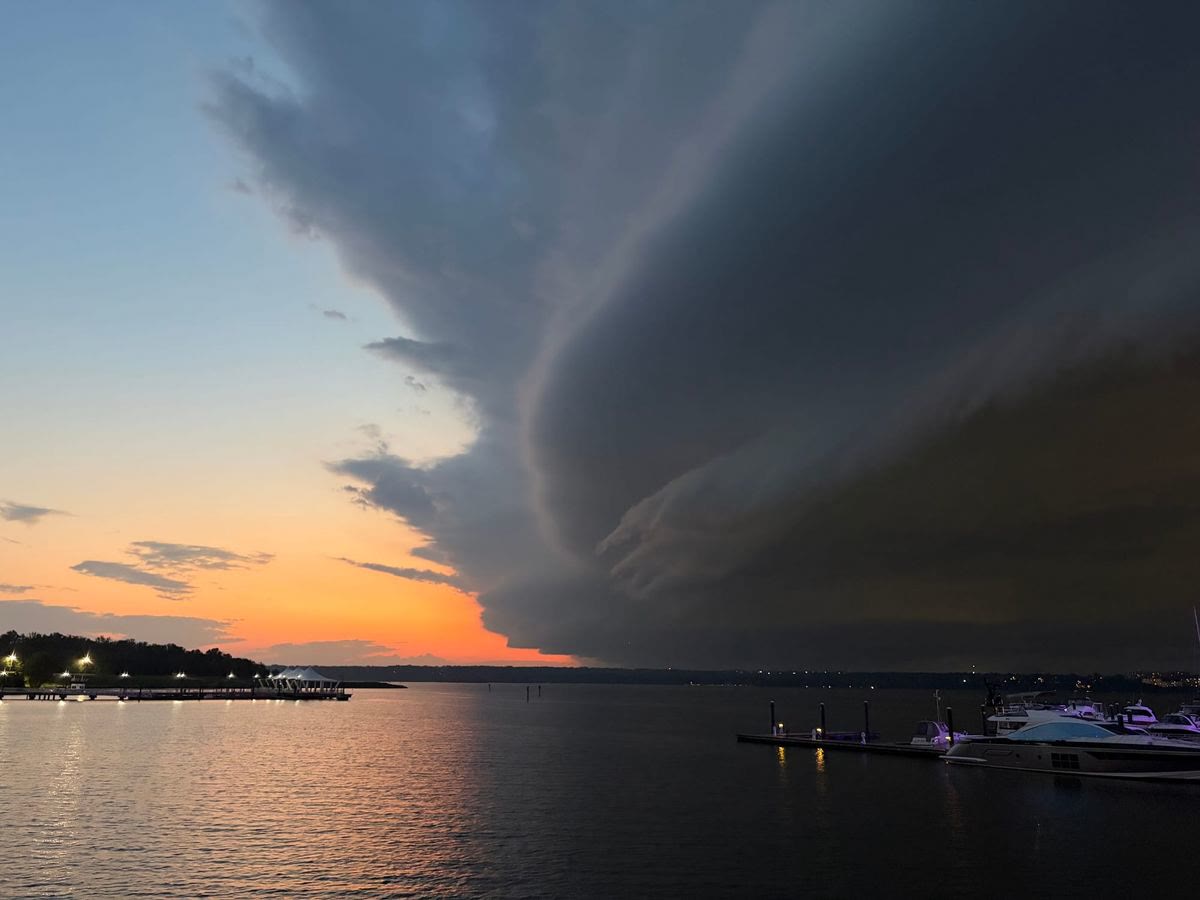
On October 16, a smooth, round cloud appeared over Washington, resembling a flying saucer. An eyewitness reported seeing it remain stationary before vanishing. The British website Daily Mail and local weather site Capital Weather reported the incident.
The photos sparked claims of alien craft disguised as clouds. However, similar clouds appeared as storms approached, and the phenomenon has a natural explanation. How can a cloud appear frozen in the sky — and then disappear?
Twenty Minutes Without Moving
The witness posted online that they saw the cloud about an hour before publishing their report. They stated the cloud didn't move or change shape for about twenty minutes, then vanished. Their description offers no explanation for what happened afterward.
That evening, saucer-shaped clouds appeared in the area before two bands of rain and thunderstorms passed through. The published photos showed more than one type of cloud.
A Smooth, Lens-Like Cloud
In some of the photos, weather experts identified a lenticular cloud. It's named for its shape: smooth and resembling a lens. It forms when moist air moves in waves and can appear to stand still, even though air continues to pass through it.
Other photos showed a pileus cloud, a smooth layer that forms above a rapidly growing storm cloud. The rising air cools, and its moisture turns into a thin cloud. As the storm continues to grow, it may rise through the cloud layer and change its shape.
The Claim of a Hidden Spaceship
UFO researcher Scott Waring claimed the clouds were hiding alien craft. He presented no evidence that the photos showed a craft or that aliens were involved. Weather experts identified natural clouds in the photos, which appeared as storms approached.
What Remains Unknown
It's unknown what caused the cloud the witness described to vanish, or if it was one of the clouds in the photos. A pileus cloud can change as the storm beneath it grows, but there's no information indicating that's what happened in this case.
At first glance, a saucer in the sky. Above the storm, a thin cloud layer.