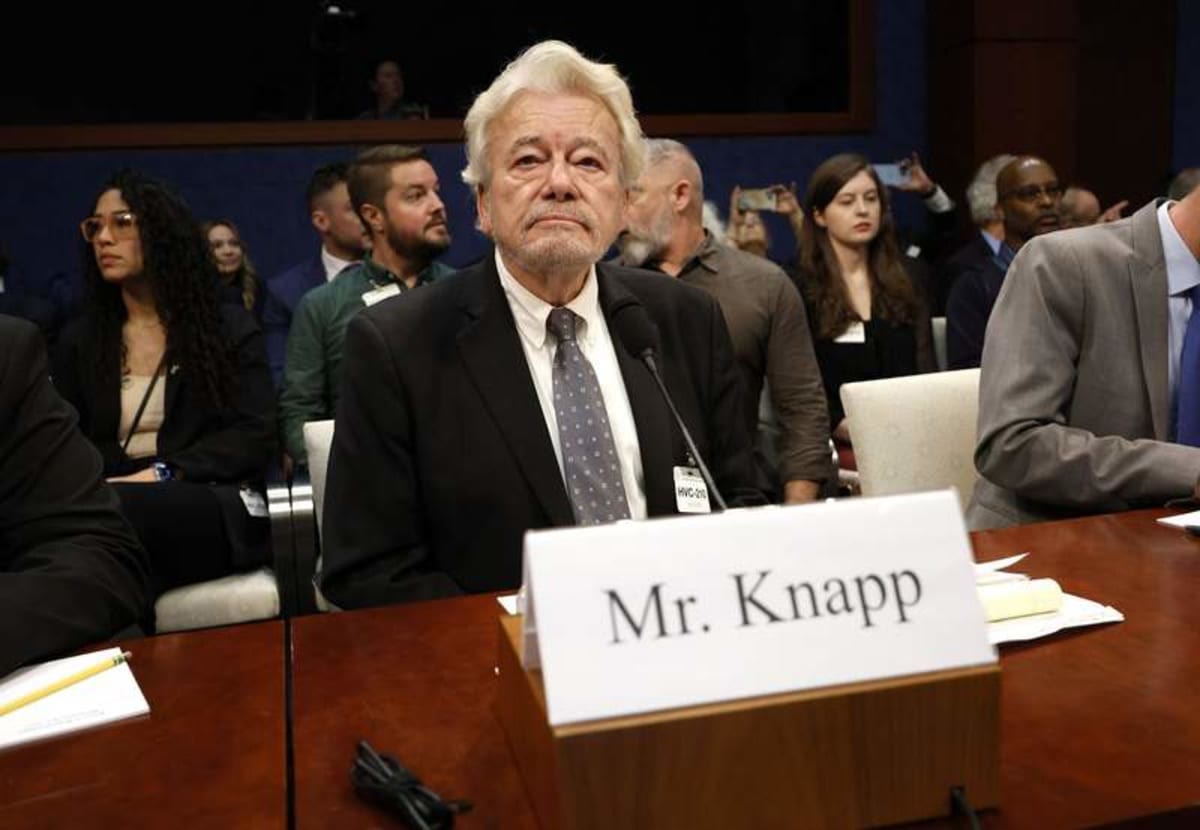
On October 19, journalist George Knapp discussed a government program that investigated UFO reports but was given a name that sounded like a regular technological research project. This was reported by the American website AOL.com. The story is intriguing due to the discrepancy: according to Knapp, the program dealt with UFOs, but official documents did not explicitly state this.
The program belonged to an intelligence agency within the US Department of Defense, which collects information on threats. Knapp spoke about it in an interview on the Mystery Wire program. Senator Harry Reid pushed for it to be secretly funded with $22 million.
A Name That Sounded Like Regular Research
Knapp explained that the official name was designed to sound like research into future technology and weapons that other countries might develop. This way, he said, the program didn't sound like one investigating UFOs.
Knapp stated that the documents and contract intentionally avoided mentioning UFOs to avoid drawing attention to what the program was truly examining. He did not present independent proof that the name was chosen to conceal this focus. According to him, this is how one should understand the discrepancy between the official name and the research.
What Appeared in the Proposal
Robert Bigelow, whose company operated the program, submitted a proposal to establish a global database of advanced aircraft. In simple terms, a database is an organized collection of information. James Lacatski, who was involved with the program, said it produced over a hundred reports on UFOs.
Both Senator Reid and Bigelow described the program as dealing with UFOs, according to the report. Thus, the research was conducted under a routine-sounding name, while the proposal and reports dealt with unexplained aircraft.
What Is Still Unknown
Bigelow said that files from the program are planned for release, but no date has been provided. It is unclear if the files will indeed be released, and there is also no independent proof that the name was chosen to conceal the program's purpose.
The files remain classified. On paper, the program remained a regular technological research project.