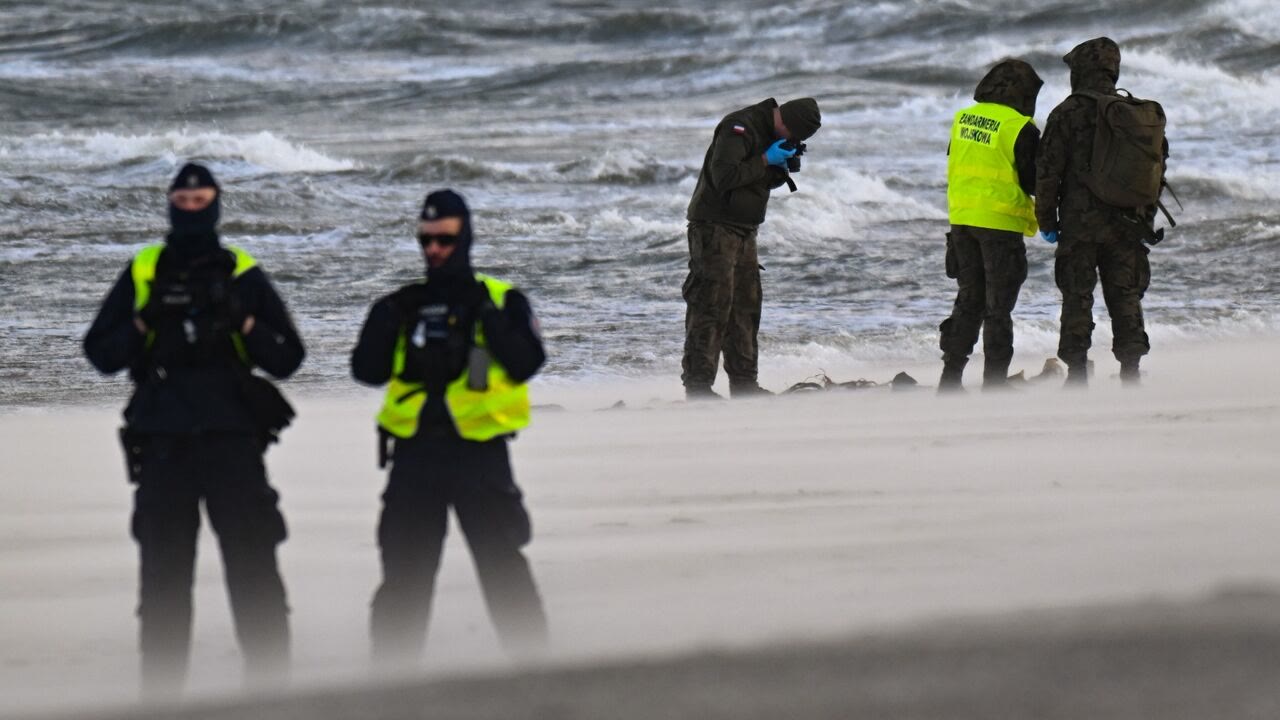
A passerby spotted drone-like debris, partially submerged in the sand, near the village of Karwia on Poland's Baltic Sea coast. On the evening of October 13, police and investigators were called to the scene.
Initially, it was unclear what had been found on the beach. The next day, the Polish defense minister stated that the debris belonged to a local military drone, which had been shot down during an exercise several weeks prior. This was reported by the Polish website TVP World. The drone was not found immediately after the exercise; the debris reached the shore by sea, where it was noticed by the passerby.
Debris Washed Ashore
A drone is a small, remotely operated aircraft. According to Defense Minister Władysław Kosiniak-Kamysz, the drone was shot down during an exercise that involved systems designed to counter drones. He said the debris drifted to the shore several weeks later.
The time gap between the exercise and the discovery is part of the story: the drone was shot down, but the debris was only found after it reached the beach. Its appearance wasn't enough to immediately identify its origin. Authorities stated that the debris belonged to a Polish drone, not a foreign aircraft.
The Defense Minister's Explanation
Kosiniak-Kamysz provided the explanation on October 14. He also ruled out the possibility of a Russian provocation, stating that the debris was a result of the exercise. According to him, the exercise was conducted at a training site in Poland and included the use of anti-drone systems.
The discovery occurred at a time when Poland is concerned about drones and missiles penetrating its territory. But in this case, the explanation provided by authorities was local: a Polish drone shot down during an exercise, with its debris washing ashore.
What Remains Unknown
Reports do not detail exactly how the drone ended up in the sea, or how the debris drifted to the shore. Authorities said the drone was shot down during an exercise several weeks earlier but did not provide further details about its journey.
The debris was visible in the sand before anyone knew its origin. The sea returned it to the shore; identification came only afterward.