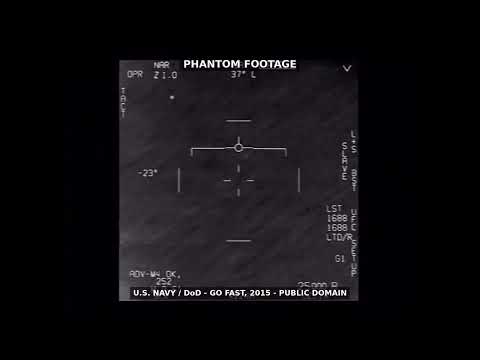
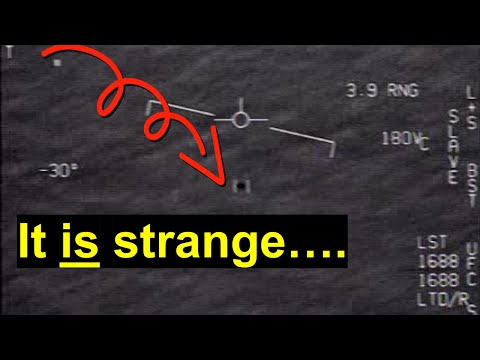
אדם פרנק, אסטרופיזיקאי ואסטרוביולוג מאוניברסיטת רוצ'סטר, בוחן את הראיות שמוצגות סביב עב״מים. לדבריו, תמונות וסרטונים רבים הם מטושטשים, ועדויות אישיות של עדים אינן תחליף לראיות מדעיות. הוא מתמקד בסרטון גו פאסט, שפורסם לצד כתבה על תוכנית של הפנטגון ב-2017. פרנק מסביר כי חישוב פשוט על סמך נתוני המצלמה מצביע על עצם שנע בכ-40 מייל לשעה בגובה של כ-15 אלף רגל — ככל הנראה בלון שנישא ברוח, ולא עצם שטס במהירות בלתי אפשרית.
במקום לחפש חייזרים באטמוספרה של כדור הארץ, פרנק מציע להתמקד בכוכבי לכת מחוץ למערכת השמש. הוא מתאר חיפוש אחר חתימות ביולוגיות, כמו חמצן באטמוספרה, וחתימות טכנולוגיות, כמו מזהמים תעשייתיים או אורות עיר. הוא מדגיש שממצאים כאלה ידרשו רף הוכחה גבוה, ומתייחס גם להצעה שזוהתה חתימה אפשרית בכוכב הלכת K2-18 b.
בהמשך פרנק דן באינטליגנציה פלנטרית ובאופן שבו ציוויליזציה יכולה להשפיע על כוכב הלכת שלה. הוא טוען שחברה טכנולוגית בת-קיימא צריכה לפעול יחד עם הביוספרה, ולא לפגוע בתנאים שמאפשרים את קיומה. גילוי חיים מחוץ לכדור הארץ, לדבריו, עשוי לשנות את הבנתנו את מקומנו ביקום, גם אם מדובר בחיים מיקרוביאליים בלבד.
עיקרי הדברים
פרנק אומר שחישוב מנתוני המצלמה בסרטון גו פאסט מצביע על עצם שנע בכ-40 מייל לשעה ובגובה של כ-15 אלף רגל.
לדברי פרנק, העצם בסרטון גו פאסט היה ככל הנראה בלון שנישא ברוח, ולא עצם שטס במהירות בלתי אפשרית.
פרנק טוען שסרטוני עב״ם מטושטשים ועדויות אישיות אינם מספקים ראיות מוצקות.
הוא מתאר חיפוש אחר סימני חיים בכוכבי לכת רחוקים באמצעות חתימות ביולוגיות וטכנולוגיות.
לדבריו, גילוי חיים מחוץ לכדור הארץ עשוי לשנות את האופן שבו האנושות מבינה את מקומה ביקום.
0:00The important thing to understand is that as of right now, we may be an accident, right? We may be the only place in the entire universe where life formed. So I think in that way, um finding any kind of life would really force us to revise our understanding of who we are, what we are, and where we're going. I am Adam Frank. I'm a professor at the University of Rochester. I'm an astrobiologist and an astrophysicist. I'm also the author of a bunch of books like the little book of aliens and right now the newsletter Every Man's Universe. >> Thank you for watching Big Think. If you'd like to support our work, we encourage you to join our members community. As a member, you'll receive our quarterly print magazine, a beautifully designed collection of the ideas and interviews that matter most.
0:46Big Think is for curious people who want to take deep dives into big ideas. To support the media you want to see in the world, go to bigthink.com/join. And now back to the interview. The search for extraterrestrial life. So often when people find out that I study life in the universe, the first thing they're going to ask me is about UFOs, about finding aliens in our atmosphere flying around. And you know, I have to tell them that from my experience, from what I've seen when I look at it, is that UFOs and now we call them UAPs, unidentified aerial phenomena, are just not really good evidence of anything
1:32associated with extraterrestrial life. So let me break that down a little bit. So in general, when you look at evidence surrounding UFOs, there's two things you get. You get fuzzy blob photos or fuzzy blob videos, and then you get personal testimony. So let's do the personal testimony. So you have pilots who are, you know, I think are being very honest about what they say they, you know, what they're they're reporting, uh or you get other people saying they've seen But here's the problem. Lots of evidence shows that personal testimony is the worst form of evidence. Any cop or, you know, district attorney can tell you that that personal testimony is not very accurate. People may want to tell you the truth, you know, may want to accurately report what they saw, but
2:18
because they were excited, because other things were happening, because of the way attention focuses, they're not going to be doing a very good job of reporting what actually happened. There's clear evidence that this is true. And then there's the videos. We have 70 years of fuzzy blob videos. And what I'm stunned by actually is that even all of these new videos that are being released, they're still fuzzy blob videos. We don't know anything about the cameras. We don't know anything about the you know, the circumstances, and the resolution is terrible. So there's not a whole lot you can do with those either. And in fact, since the modern era of UFOs, which was 2017 when the New York Times published a story about the Pentagon having a program to look at
3:05UFOs and UAPs, they find that 95% of all of those fuzzy blob videos or all of those reports can be explained. And then of those 5%, a few percent of that, you just don't have enough information to even begin an explanation. You ask the person, well, what time of day was it? They're like, I don't remember. Which direction were you facing? I don't remember. So there's not even enough. So you just have a few percent that resist explanation. But those 3% just because they're not explained doesn't allow you to go to, oh, they're extraterrestrials, right? There could be a lot of other explanations for them. For example, there were those three videos that came out with that 2017 New York Times story. And, you know, people said, oh my god, these things show that
3:50things are moving in the sky that can't be explained. And there was one of them called Go Fast, which, you know, people will probably remember if they've seen them. It's something appears to be zooming right over the surface of the water. You can hear the pilot as they're trying to get the camera to focus on it. And people were making all kinds of claims that it's actually dipping under the water, it's moving at impossible speeds. And then it turns out that on the screen, on the camera screen, there's actually some numbers that you can do simple trigonometry to figure out where is this thing and how fast is it moving. Turns out it was moving at 40 miles an hour at about 15,000 ft or so. And so there's a word for that. It's called a balloon. Okay, it was basically moving with the winds. So it just goes to show you that the problem with what we have with UFOs now and UAPs is
4:35there's a lot of hype and there's very rarely any solid evidence that a scientist can do anything with. And this is particularly true after these explosive hearings that we've had in Congress where former members of intelligence organizations have stood up and said, oh, the government has a routinely captured fallen spaceships. They have they have the spaceships, they have the alien bodies. And now the government's starting to release the documents that they have and there's nothing in there about spaceships, you know, about recovered spaceships. There's not even what I would want is just how about some of the tests that were done on these supposed alien bodies or the supposed the metal that the spaceships. Clearly somebody must have done, you know, scientific tests. Like when I
5:21get my blood work done the next day I get a bunch of scientific tests back that tell me, you know, the conditions and the chemical conditions in my blood. Where are those tests? So looking for alien life in the atmosphere is kind of like saying you want to find Nebraskans. You want to go find some Nebraskans. So you're going to go look in a small mountain village in the Himalayas for Nebraskans. Like that's crazy. Why don't you just go to Nebraska where they live? And that is really leads us to the good place, the right place to look for alien life, which is alien planets. And we can now do that. Because of advances in uh telescope technology, we have found alien planets orbiting alien stars, right? Which is something that in you
6:06know when I was a graduate student, we didn't know whether there were any other planets orbiting stars other than the ones in our solar system. It could have been that exoplanets as we call them could have been very rare. Turns out they're they're you know dull as dirt. Every star you see in the sky has a family of worlds orbiting it and every five if you count up five of them uh there's there's one of those stars that has a world orbiting it, a planet in orbiting in the right place for life to form. And now we figured out how to look at these planets for evidence of life. So this is something a field called biosignatures and what we can do is is we can look at the atmosphere from a distance from 100 light years away. We can look at light passing through the atmosphere of one of these alien planets
6:51and we can detect the chemicals that are in the atmosphere. And so what that means is we can tell whether or not there's a biosphere there because of if there's a of um an uh a robust biosphere on a planet, it will change the chemical makeup of the planet's atmosphere. And now how do we know that? Because that's what happened on Earth. When Earth first formed, there was no oxygen in the atmosphere. For the first two and a half billion years, there was no oxygen in the atmosphere. It was life in the form of a new form of uh photosynthesis which um uh evolution produced in microbes that gave us the oxygen atmosphere. So if we for example were to be able to find oxygen in the atmosphere of a distant planet, that
7:37would be pretty good evidence that there was a biosphere there. And we're building the telescopes uh that in the next 10 20 30 years will be able to make will at least be able to search for those biosignatures in detail. And in fact the James Webb Space Telescope is already kind of on the hairy edge of being able to do this. And just a year or so ago, there was a planet called K218b which some researchers proposed that they had actually found a biosignature on it. Now the interesting thing about K218b is it's a new class of planet, what is called a Hycean world. It's a a planet that's quite large, maybe eight times the mass of the Earth, and it's got a thick hydrogen atmosphere that keeps the inner parts of the planet,
8:22which are mostly water, warm and liquid. So a Hycean world could have a 700 km deep ocean. And what was proposed was that the James Webb Space Telescope had actually found evidence of dimethyl sulfide, which is a chemical that algae on Earth pumps into the atmosphere. Now, this was astonishing, and really in the end, nobody believed it. And that's fine. That's how the science is going to work. That there's going to be a very high burden of proof on any attempt to find a biosignature. But what was so exciting about K218b was that here it was for the first time we actually had a a sophisticated enough instrument, the James Webb Space Telescope, to even get us to the point where we had a spectra
9:07of a planet's atmosphere where we could think we were finding the right wiggle, the right signature of something like dimethyl sulfide. So that's biosignatures, but what about technosignatures, right? What about the possibility of finding life that wasn't just passively changing its environment? What about life that had produced technology and that technology was actively changing the environment? For a long time, the search for extraterrestrial intelligence or SETI was considered to be very marginal. It was something that, you know, people sort of like, sure, if you want to do it, but, you know, it was a career killer in some sense. But then in 2018, NASA hosted a meeting
9:53where they actually asked a group of us to propose ideas for looking for technosignatures, signatures of technological life on another planet. And that was really the birth of the modern field. Technosignatures went from being something that was kind of snickered about to suddenly even the term techno signature was new. We used to call it SETI. Now, you know, in general we call it techno signatures. And I was uh with a group of other researchers. I was the principal investigator on NASA's first grant to study planetary techno signatures or atmospheric techno signatures. And this is incredibly exciting because in some ways techno signatures would be easier to find potentially than biosignatures
10:38or easier to recognize. So, for example, one of the things we looked at was what about atmospheric pollutants? Like let's say there's a civilization that is purposely putting chlorofluorocarbons, CFCs, into its atmosphere. Now, on on Earth we did that by mistake. We did it. It was uh stuff that was released um uh from air conditioners and spray cans and it was destroying the ozone layer. But it turns out that chlorofluorocarbons are great greenhouse gases and if you wanted to purposely warm up your planet, you might pump chlorofluorocarbons into the atmosphere. We showed that it would be pretty easy for the James Webb Space Telescope to find chlorofluorocarbons in an atmosphere. They were like they would be a bright light in the spectra of a
11:23distant um uh the atmosphere of a different planet because they're so nature can't make chlorofluorocarbons. So, CFCs are one example of a techno signature. Another example that we investigated was imagine that you covered uh a portion of your planet in solar panels, right? The glint, the reflected light off those solar panels is something that you might be able to detect across a hundred light years. What about um city lights? What if you had a a planet like Trantor in Isaac Asimov's Foundation series, a city planet? If there was a lot of city lights on your planet, those could be detected across great distances. So, one of the coolest things about thinking about techno signatures in particular um is you have to think about the trajectory of civilizations. Like how in
12:10general do civilizations progress? Are there sort of, you know, uh rules? Are there commonalities in how any civilization would progress on a planet? And the exciting thing about thinking along these lines is it ends up turning itself around and focusing right back on us. The history of the Earth and its life shows us that when life gets really successful, it begins to transform its planet. This comes from something called the Gaia hypothesis, and it's the idea that as life becomes more robust on the planet's surface, it begins to use more of the planet resources and harvest energy from wherever it can, most of all sunlight. By using all of that energy,
12:58um it has feedbacks. It has to have feedbacks. There's what's called the second law of thermodynamics, which tells you if you use a lot of energy, there's always waste. There's always feedbacks, right? So what's interesting about looking at the history of the biosphere is we can see three and a half billion years of the biosphere affecting the evolution of the planet and the planet affecting the evolution of the biosphere. So we talked about the oxygen, right? So that is one of the best examples. Two and a half billion years ago that the evolution of this new form of photosynthesis triggered what is called the great oxidation event, and it pumped oxygen into not only the atmosphere, but also into the oceans and then into the geosphere, into the rocks.
13:44It changed the entire functioning of the planet. And we called this in a paper that my colleagues and I did, we called this planetary intelligence because when we think about intelligence, we think it usually happens in, you know, inside our heads, you know, inside individuals. But then you look at something like a um an ant colony where the intelligence, the ability to react and respond is happening, it's distributed, right? It's distributed across the entire colony. In some sense, the colony is the thing that has the intelligence. And so maybe what happens, this is what we're proposing, is that the biosphere at some point becomes robust enough that you get this kind of intelligence, not somebody thinking, not making decisions, but just the ability to respond to the environment and make changes that are
14:29good for you, right? Uh that that is what happened with the biosphere, that somewhere around, you know, two and a half billion, three billion years ago, the biosphere went from being um we like to call it also immature to becoming mature. It was a mature, intelligent biosphere that in some sense could exert, not conscious, but could exert controls on the rest of the planet. So once you have that idea of this, you know, a mature biosphere that went from the immature state to the mature state, and the mature state was planetary intelligence, right? Where it was it was changing the planet for its own ends, um you can now look at what we're doing and you can think about civilization as the technosphere, right? If the biosphere is the sum total of life covering the planet, the technosphere is the sum
15:15total of technology. And the technosphere that we have now is immature in the sense that it's like the early version of the biosphere where it's not helping its own case, right? It's not In fact, the the bio the the technosphere is not creating the conditions that will allow it to persist. In fact, it's actually degrading the biosphere condition. So the technosphere lives on top of the biosphere in some sense, right? And so what the technosphere is doing now with climate change, it's degrading the conditions in the biosphere that it needs to survive. So what you see is like, oh, what we need to do is to become a mature technosphere. It tells you that we need to make this transition to a kind of technosphere that understands that it needs to work with
16:01the biosphere, work with the planet so that it, you know, persists over geological time scales, a thousand years, 10,000 years, 100,000 years. So what's beautiful for me about this idea of planetary intelligence embodied in a mature technosphere is it tells exactly where you got to go, right? Where we yell and scream about with, you know, climate change. What do we got to do? Where are we headed? Some people think it's a hoax. But by looking at the Earth as just one example of a planet that produced life, where the life eventually created a mature biosphere and now has produced an immature technosphere, it tells you what a mature technosphere with planetary intelligence should look like. So what does that look like? So for example, right? In the biosphere,
16:47the biosphere, all of the networks always work to keep the biosphere healthy. In the technosphere, what would that look like? So think about banking, right? Right now, I cannot go to a bank and say, hey, I'd like a loan to build a nuclear weapon, right? The bank would be like, you can't do that. Like we don't give loans for nuclear weapons. In a mature technosphere, you'd go and say, hey, I'd like a loan to be able to make a to build a coal-fired energy, you know, power plant. And they'd be like, no, you can't do that, you know. We don't give loans for coal-fired power plants, right? The the whole the systems of the technosphere, the financial, political, technological systems would always be working to maintain the health of the technosphere
17:32and the biosphere that lived underneath it. So what's exciting to me about this idea of planetary intelligence, it kind of tells you exactly what we're going to be trying to build over the next century or so as we go through the very difficult decades probably that are in front of us as the planet does change, but it points us in exactly the right direction that we need, what kind of changes that we need to eventually become a mature technosphere and have planetary intelligence and then be the kind of civilization that lasts long enough that somebody else can find us, right? Because when we go looking for civilizations, the ones who are find are going to be the long-lived ones and those will be the ones that produced mature technospheres that had this this this property of planetary intelligence. So it's really game on now with both
18:18biosignatures and technosignatures. The next big space telescope, the one that will replace the James Webb Space Telescope, is something called the Habitable Worlds Observatory. And that one is specifically designed to find biosignatures and technosignatures. So really, that's why I say in the next 10, 20, or 30 years, we're really going to have the data to tell us whether life is common or whether it's rare. And it is it's just hard to sort of tell people how exciting this moment is after literally 2,500 years of people arguing with their opinions about whether life exists in the universe that we're finally we're going to get to know.
19:03So one thing people ask is like, let's say we do finally find life, you know? Uh, what would happen? Would it be super important? Would people be rioting in the streets? Would it be the end of religion? Religions are pretty adaptable and pretty malleable oh over time. I think they'd figure out a way of doing it. But sometimes people say like, well, you know, from a religious point of view, what makes us special is that we're there's only one. You know, we're the only example of life in the universe. We're the only time God created uh life. But that I just don't see that as being all that useful or I don't see that being carrying a whole lot of weight. What makes us special is we're life. We have this capacity to create. We have this capacity to do new things. We don't need to be just one of one to
19:48be special. And then if there are others, then we have a community. We're part of a community of life. Um, and that would mean that we're give us membership in this extraordinary community. I will say that I think it will be one of the most important events in human history. That it will it would change the course of history because of its impact on our understanding of ourselves. But before I go any further, let me say I don't think anybody's going to riot, right? You know, I'm always a little bit you know, why would people riot? I mean, unless they told us that the aliens are here and they're here to us, sure, I'm going to riot. But if I just find out that there's aliens, I think people have other things to do that, you know, then riot uh over that. But it still would be
20:33on the long term one of the most important events in human history because it would show us whether it was intelligent or not intelligent. A lot of times people say like, oh, if we found microbes, what's the big deal? The important thing to understand is that as of right now, we may be an accident, right? We may be the only place in the entire universe where life formed. But the thing about life is it is unlike any physical system in the universe. Cuz the thing is, if you were to give me a star at the beginning of its lifetime, um if you gave me a few pieces of information, I could tell you pretty much how that star is going to what it's going to be like, how it's going to evolve, uh what's going to happen in a you know, a few billion years. If you gave me a cell on a planet and said what's going to happen, there is no way.
21:18I have no mechanism to be able to predict like, oh yeah, you're going to get a giant rabbit that could punch you in the face, right? A kangaroo, right? Life is the only physical system that innovates. Life is the only physical system that creates. And to find out that just one example, if we find just one other example of this crazy system that creates and evolves and innovates, then it means there's lots of others, right? You know, there there's going to be others. And that means it's part of the universe. This this innovative, this creative capacity is part of what the universe does. We would be part of a community of life. And because life innovates, what it means is it's open-ended. You don't know where it's gone. You don't know what it's
22:03possible of, you know? Uh it opens up mind-boggling possibilities. Uh maybe life, some form of life is be able to crawl into the laws of, you know, of physics itself. Like, you know, choose your favorite science fiction version uh or story. So I think in that way, um finding any kind of life would really force us to revise our understanding of who we are, what we are, and where we're going. If we found intelligent life, that would just amplify it even more. It would be helpful perhaps because we would be able to It would just be an example perhaps of a long-lived civilization if we found an active civilization. Yeah, we wouldn't have to have communication. I think communication gets overplayed. You know, the distance between the stars is so vast that, you know, communication
22:48it's like, you know, if they're 10 light years away, we get a message and they're like, hey, we're here, and then we send something back and, you know, 10 years later they get like, whoa, what's up? And then another 10 years we get like, what are you doing? You know, it's hard to imagine communication really being that fruitful, but just knowing they exist, you know, and being able to observe them from a distance would change everything. >> Four times a year we print a magazine worth putting your phone down for. Big Things premium print magazine is built with custom artwork and expert insight from the world's biggest thinkers. No AI slap, no rage bait, just big ideas for curious people. Support the media
23:33you want to see in the world. Go to bigthink.com/join to become a member today.