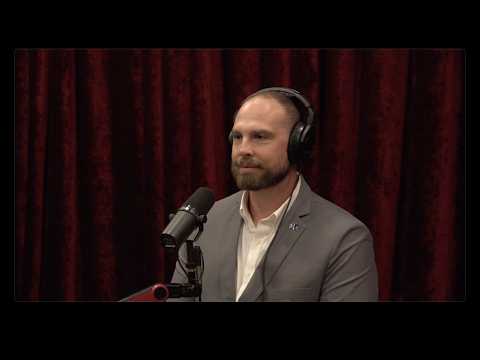
פרופסור גארי נולן מאוניברסיטת סטנפורד מתארח אצל מאט פורד בתוכנית Good Trouble לשיחה על חקר עב״מים ועל דרכים לקדם חשיפה גם בלי שהממשלה תוביל אותה. נולן מדבר על השינוי ביחס לתופעות בלתי מזוהות במדע ובתקשורת, על הצורך בחקירה מדעית עצמאית ועל חשיבות הגישה לנתונים, פרסום ממצאים וביקורת עמיתים. הוא אומר שממצאים מסוימים מעניינים אותו, אך מדגיש שאינו יודע מה פשרם ושעדיין אין בידיו הוכחה מכרעת.
השניים דנים גם באמון בדברי הממשלה ובמשרד AARO, בשיתוף פעולה אפשרי עם חוקרים עצמאיים ובתפקיד הקהילה בקידום מחקר שקוף. נולן מתייחס לכתבה של הוול סטריט ג׳ורנל ולדיון עם ספקנים, ומסביר מדוע חשוב לו שהראיות יוצגו במלואן. בשאלות הקהל עולה גם האפשרות שחשיפה תגרום לזעזוע חברתי; נולן מספר שראה דברים בילדותו, אך מבהיר שסיפור אישי אינו הוכחה לאחרים. בסיום מאט פורד ממשיך את הדיון בחשיפה ובטענות על חסמים בממשל ובקונגרס.
עיקרי הדברים
נולן קורא לקדם חקירות מדעיות עצמאיות ולפרסם ממצאים, גם ללא חשיפה ממשלתית.
נולן אומר שיש נתונים שמעניינים אותו, אך הוא אינו יודע מה הם מוכיחים.
השיחה עוסקת באמון בממשלה ובשיתוף פעולה בין AARO לחוקרים עצמאיים.
נולן מסביר מדוע הוא מסתייג מדיון עם ספקנים שלדעתו אינם מציגים את הראיות במלואן.
מאט פורד מסיים בטענות על חסמים לחשיפה בממשל ובקונגרס.
0:04Happy New Year, everyone. Welcome to the Good Trouble Show. Super glad everybody is here today and as my prompter decides to do its own thing. Anyway, super excited. Hope everyone had a wonderful time during their holidays and a very happy new year. I know that I think everyone is hoping we have an even better 2026 in terms of the whole UAP disclosure effort. Our guest today, he is a professor of pathology at Stanford University School of Medicine. He earned his degrees in biology and genetics from Cornell and Stanford, trained with Nobel Laureate David Baltimore, and has published over 350 scientific papers.
0:53You think about that in and of itself, it's pretty impressive. He also happens to have over 50 patents, a leading immunologist and biotech entrepreneur. He invented powerful tools for studying cells, founded several successful companies, and has recently been analyzing unusual materials and biological effects linked to UAP sightings. He is the co-founder of the Sol Foundation, one of the places I absolutely love to go every year for their conferences. Please welcome Dr. Gary Nolan. Gary, how are you? We're off to a rip roaring start. Great. Well, hello, everybody, and Happy New Year as well. And thanks for the invitation. You're very, very welcome.
1:38I think this is like your third or fourth time on the show. But how are your holidays and what kind of trouble did you get into on New Year's Eve? Actually, we were in bed by around 1030. I've done all night raves, etc., party boats, you name it. It's not that my party days are past. I mean, geez, I went to Mykonos to the big end of summer party there with a bunch of friends and 5000 guys. And that was a lot of fun. So I'm not I'm not beyond a good party. But it was nice to just have some time alone with my husband and friends. We went over to the next door neighbors here for a little bit of the evening.
2:26So it was nice. Very nice. Excellent. Did you make any sort of good New Year's Eve resolutions that you'll be sticking to? My God, we'll see. Well, it's the same one every year. Go back to the gym, which I do. You know, I think, you know, I mean, let's just sort of circle immediately to the UAP thing. It's double down on doing what's important and not get distracted by what's not by, you know, people or efforts attempting to distract because they feel that they need attention. And so because you never get anything done by not focusing.
3:12And so, you know, it's it's you know, it's important, I think. So so that's what it is for me, at least. I mean, literally in five days, I am 65 years old. Wow. So I'm yeah. So January 8. So, you know, the clock begins to tick in your head. And it's not that I don't feel like I've I've accomplished things. It's more that I still have things that I want to do. And it's not just about me. It's about what can I do for others to either pass on whatever I've learned personally or what I've learned from others that I think are worthy of consideration by the field at
4:00large. And so and that's, you know, for me, frankly, it's just how to do science. That's what I've done for the last four years. And we're going to get into it. I have to say probably my only New Year's Eve resolution is to lose the lose the eight pounds that I gained over the holidays. So that that's that's where I'm starting. But folks, before we jump into it fully with Dr. Nolan, let's talk about about the show. So he will be taking questions from all of us, all of you watching right now. So just drop drop your questions into the chat. But do it. Do it in all caps. And our good trouble show moderators will they'll compile the questions and we'll hand them off to Dr. Nolan. And then also later in the program, we have a surprise for the audience, Dr.
4:47Gary Nolan, as you have never seen him before. And that's that's that's going to be fun. But first thing I want to jump into is is exactly I was right is this whole narrative thing. And when it comes to the UAP issue, as everyone knows, this topic has been labeled as fringe. I mean, really, if you think about it from the very beginning and sort of purposefully labeled as fringe, is the UAP narrative changing in both the general public realm and the scientific academic realm? And if you think it has, why? Oh, I certainly think it has, without doubt. I mean, there's a I mean, you know, it began certainly or took off with Leslie Cain's
5:35and Blumenthal's article in The New York Times, you know, subject to Lou Elizondo and Chris Mellon's help getting the videos out the door. And of course, the many brave pilots and whistleblowers such as David Grush as well, who, you know, who've come forward to talk about it. You know, and but I think it's important for everybody to realize that, unfortunately, at this stage, these are all still anecdotes. I mean, well, the videos are not anecdotes, of course, but many of the anecdotes such as what came out from Dan Farah's Age of Disclosure and the story that James Fox has told about the events in Brazil and what I understand to be things that will be coming.
6:25I don't know anything more than what James has been saying publicly. You know, I think those continue to keep my interest and they keep the interest of the public. I mean, just look at what Dan Farah's film has done. It went to number one, not just for a week, for all time, for, you know, a downloaded program. So and of course, we know that Steven Spielberg has something coming out. So there's a drumbeat. I don't think that proves anything. But what I think it proves is that there is an acceptance for the matter that has changed, I think, the posture of those who were the what I'm going to just turn them
7:12pseudoskeptics. They're now the ones on the defensive. I mean, they just seem to be screeching louder and louder. You've got the likes of The Wall Street Journal and the others. And thank you very much for your efforts, Matt. Sort of getting the news out that this, you know, attempt was was coming certainly forewarned me. And I was able to, you know, as the last couple of days I put up that notice that I'd gotten from somebody at The Wall Street Journal asking for my help. And I was like, in no uncertain terms, will I talk to you? What I should have done was sent the analysis I had done of everything that was wrong with the last thing that they had done and said, well, when you when you write an article publicly disclaiming what you said before and admitting what you did wrong,
8:02then maybe I'll talk to you. Right. You know, I mean, see, what's interesting is that they expect, for instance, me, everything that I say or everything that Avi says or everything that Kevin Neuth says or everything that Matt Sigdalis or many others say, everything we say has to be right. And if we say anything, one thing wrong, then, oh, that just discredits everything. Yeah. But when they make a thousand mistakes, they just change the subject. Right. And they're allowed to keep coming back. So I think the posture has changed. They're the ones, at least as far as I'm concerned, I'm like, they don't matter. I get stopped in airports now by people saying, thank you very much. I notice people thanking me, which is all very nice, you know, but even my scientific
8:54colleagues, look, I still get invited to give big talks. I'm, you know, I'm helping the National Cancer Institute design a new strategy forward for tumor immunology and actually using artificial intelligence. I'm, you know, you know, I'm invited here or there. I'm about to get a big award that will be announced soon. And, you know, and what people want to hear is not just the science, but then they always say, hey, Gary, tell us a little bit about that other stuff that you're that you're known for. Of course, the fun stuff. I was invited to, you know, Richard Branson's Island a few months back with a bunch of friends to talk about cancer and AI. But they wanted me, part of it, to talk about UAP. I love that. And Richard Branson was there in the audience.
9:40Wow. And, you know, and it was it was fun. And I think I made a slight mistake in saying I can be bribed with martini if you really want to know what's going on. And for the next several days at this, you know, very nice place, I was, you know, showered with offers of martinis. Wow. OK. I only drank a couple. Of course, I want to jump back and talk about evidence. And, you know, I'm not a scientist, to be honest. I failed college physics and many other things. I think I was too too busy chasing girls and drinking beer to pay attention in college, unfortunately. But back in 2023, the former director of Aero, Dr.
10:27Sean Kirkpatrick, stated, quote, Aero has found no credible evidence thus far of extraterrestrial activity, offworld technology or objects that defy the known laws of physics. Then in 2024, Dr. Sean Kirkpatrick version two, or who I like to call Dr. John Koslowski, stated, quote, Today, Aero has not discovered any verifiable evidence of extraterrestrial beings, activity or technology. What do you say to that? And then do you think that the specific use of the word extraterrestrial is sort of, you know, some some kind of cute wordsmanship? Well, I certainly think that there's some very careful legalistic framing that's going on.
11:15Susan Goff has done so. And I know our friend and I'm sorry, I'm blanking. Chris Sharp from the Liberation Times, Liberation Times has pointed out when he, I think, wrote to her asking for, you know, would you like to alter what it is that you have to say about? And her answer was, no, we're going to keep it the same. So, you know, look, I don't know why they're doing that, you know, because at the same time, as they say, we found no credible evidence. I mean, evidence is either evidence or not. I mean, it's it's like it is the data credible, not is the evidence credible.
12:00I mean, because to say is evidence credible is to question the underlying data. Evidence is only a truth or, let's say, supportive of a hypothesis or a conclusion. In the context of the conclusion of the hypothesis or a question. So it's an interesting lack of understanding, even on the part of Arrow, of what the terminology means. And so I think by doing that, they unfortunately and I'd love for them to be good about it. They just discredit their own scientific underpinnings.
12:48But then at the same time, they will publish a list of God knows how many things that they can't explain. They'll put up pictures of spheres moving around, you know, like the one in Mosul and then openly state that we see many of these things. Phillips gets out and says some pretty interesting things as well. He's a Star Trek fan, that's for sure. And, you know, and he was involved deeply with Arrow, too. So, you know, it's kind of they're talking out of both sides of their mouths. Right. And I think it's an indication of the internal struggle that might be going on within inside the government as to, you know, what is it should we say?
13:35When should we say it? Look, I would I would love for them just to truthfully tell me it's all rubbish and then open the books so that I can validate that is all rubbish. Right. Because they won't open the books and because everything they put out as, you know, I think Greenwald, the black vault has shown it ends up getting redacted to hell. Right. I mean, I have my differences with Greenwald every once in a while. Me, too. But the truth of the matter, he's done a, you know, an enormously positive job collecting data and making it available for everybody and hounding them with Freedom of Information Act
14:22requests. So, you know, kudos to him. I mean, I don't hold grudges except against a couple of people, I guess. But, you know, it's just it's just not worth it. Because I think whether it's somebody's intention or not, the divisions that happen within any community, whether it's UAP or anything, are certainly not helpful. And we should always be looking for commonalities of purpose and goal and not personality. And that's just my opinion. Sure. Yeah, I completely understand. What is your one of the things that we've had quite a few sources tell us is that Arrow
15:09has made limited offers to a couple, three people to financially support their scientific work on the UAP issue. And I think that these are probably folks that are would be safe to say are developing sensor technology, sensor fusion technology. Do you think that there is an inherent danger with getting into bed with Arrow if you are a scientific organization? And, you know, and I'll also say I look at anyone that were to take this offer, I would not look at it in a judgmental way. I mean, research takes money. Running organizations takes money. Nothing in life is free. But what are the inherent risks of the scientists and other organizations partnering with
15:56Arrow? So, I mean, I agree with you that if they have the resources, that should be attractive. But there should be a legal framework set up around the use of the data. You know, if if they're going to provide me with money for sensors, let's say, then I will give them first choice to look at it, but I will not give them the right to wantonly prevent me from using it in a publication unless it's like, well, that's obviously something of ours, Gary, and we don't need anybody to know what it is. But they can't claim methods and approaches when it's a technique that I developed.
16:43Right. To look at something. And so I, you know, I think you just have to look at it as a double edged sword and not allow, you know, secrecy agreements to prevent you from doing things. You know, I mean, look, I had a I have, I guess, still a TS, but it was never really used appropriately or enough. And so I hold no, I hold no deep, dark secrets. Frankly, all I hold are confidences and and and handshakes with with people as to information that I keep private. And I would do that with anybody.
17:29You know, if I promise somebody I won't say something, I won't do it. I won't say it. Right. You know, so, you know, the accusations that come against not just me, but about anybody in this field that somehow that we're our hands are tied is just ridiculous. Anybody who knows me knows that I just, you know, it has to be a very good national security reason why I would agree to holding certain things in confidence. I mean, certainly if I had signed, I'd learn something under TS, it stays secret no matter what it is. It could be the color of a rose. It doesn't matter. I would keep it secret. But I think, yeah, you just got to be you got to be careful.
18:17You know, I mean, I think in the early days, TTSA, you know, tried this with the so-called bismuth material. Right. The magnesium bismuth material. And, you know, the the the the piece disappeared into the DOE for a while. It was returned eventually. It took some arm twisting, I understand, to get the the report back out of from them. I looked over the report. It was actually it actually it was pretty good in terms of the some of the basic science, but it missed a few things or it, I don't know, kind of glossed over a few things.
19:04And I've shown publicly, you know, even very recently some more work that we've been doing on it that shows that there's something interesting there. I don't know what it is. It's, you know, I don't know whether it's Hal Puthoff's waveguide or or not, but I certainly know it's interesting. And I've got a couple of guys over in the physics department here in applied physics who've looked at it with techniques that I didn't even know existed that show that there's just something interesting going on. Amazing. It it does absorb in exactly the frequency that Hal suggested it would, the terahertz frequency. Now, whether whether anything would or whether that's just some artifact is yet to be
19:54determined. It doesn't prove or disprove anything that Hal has has said in the past. But let's let's go back to Arrow, because what I want to move into is the whole disclosure issue. So I think what is confusing about Arrow, and you kind of touched on that a bit, you have Arrow saying there's sort of nothing going on here, yet there are these silver orbs floating around. Then you have Dr. Sean Kirkpatrick going out after he left and and kind of insulting Congress and and doing some other things. Same thing with with Tim Phillips disparaging whistleblowers. And then I even get a an invitation on LinkedIn to apply for a job with Arrow with the
20:44Pentagon's Arrow office and and the written job requirement that they sent me. Actually, it was on it wasn't in the the DM that I got from the from the recruiter. It was on their website. But the job requirement, three of the job requirements on this position that they asked me to apply for were information operations, deception activities, and disinformation, something like that. It was like three things that were clearly psychological warfare things that you would say, okay, why would they why would they want to hire somebody that has a background in in sowing disinformation?
21:29And let me play devil's advocate to that just for a moment. Maybe they were looking for somebody who could recognize deception and misinformation, not that they wanted you to practice it. Just, you know, to be fair. Sure. I don't think that's the case personally. But just, you know, I mean, you know, one of the things I run around screaming all the time is, you know, always make sure you offer the alternative explanation and all right, all options should be on the table. So to me, that just occurred to me that, you know, maybe it was not about them wanting you to be such a thing, but they were looking for somebody who could recognize such a thing. Of course. Yeah. And that was actually one of my very first things that I thought.
22:16And I spoke to somebody who was a Pentagon program manager who actually used deception operations in a SAP that this individual ran. And he looked at it and he's like, yeah, they were not altruistic reasons. But it is a fair point that you bring up. But it leads to this. Let's, you know, if you back up and you look at all the confusing messaging out of Arrow and what former Arrow leadership has said once they've exited, it leads me to this question. Can we trust the government to be transparent on UAP? Or do we need to take things into our own hands? Well, I think after 80 years, somebody should have learned a lesson.
23:01And, you know, I think we're ever hopeful. And I think that, you know, let's put it this way. Maybe this sounds so conspiratorial. Maybe it's allowed to be so near as an opportunity and then snatched away as a way to demoralize. To be. You know, I don't know. I, you know, I just don't know. But it comes back again and again to this issue of when I don't get, let's say,
23:46what I want scientifically, at least out of the techniques that are available to me today, I invent a way around it. And so I think you have seen any of a number of organizations pop up with credible funding and credible abilities to go out and do the research themselves. I actually wanted to reach out to somebody who has been posting quite a bit and get his permission to mention him. But since I forgot to do that, I won't. But, you know, lots of just interesting videos that are popping up from credible people. And certainly there's the work of Avi Loeb and the Galileo Project
24:31that probably is the most extensive and properly run academic effort that I've seen. Almost all run through a volunteer operation within. And of course, the instruments, etc., are bought by charitable donations. And it's a considerable amount of money and effort. And so, you know, I think we just plug along. But then there's Beatrice, right? Who, you know, she didn't need to invent anything. She went back to data that had already been collected and showed that there was something interesting there. Now there's evidence.
25:17And so, you know, that's something you can't scrub. Now you can question whether the statistics are sufficient to state anything or whether there are alternative explanations. But she got it done right. She published it in a peer-reviewed Nature journal. It wasn't in Nature. It was in one of the many little family of journals that are all quite credible. And then there's, of course, there's the work we did with Jacques. There's work of Robert Powell and Matt. I always say his name wrong. I get it. Mess it up, yeah. Matt Sigdalas.
26:02And I apologize, Matt. He admitted to me that lots of people spell his name wrong. We had a conversation just the other week. You know, they've published papers. Kevin Knuth has published peer-reviewed papers. This notion that you can't get it into a peer-reviewed journal is just wrong. It's always about the framing. I published in Science, Nature, Cell, at least in my area of biology. Those are the holy trinity that people aim for. And it's always about the framing. And because it needs to tell a story.
26:47It needs to be steeped in the kinds of methodologies that are acceptable in the field at the time. And it needs to move the field forward, either because you're showing a new method, or it's a principle that you're teaching, or it's an instance of a principle, at least in biology. Sort of like, this is how this particular kinase works. Or this is how kinases work globally. Or this is how now, more recently, circular RNA is important in cancer. Extravasomes, things that are basically secreted from cells. You can see the Nobel Prizes coming from this kind of work.
27:32Because somebody noticed data off the curve. And it was evidence that something interesting was going on. And so to me, it's like, okay, so let's refocus. Constantly, you're always having to refocus. Let's refocus on what is the data that can be collected? What are the methods, statistical and otherwise, that we should be using to collate anecdotes? And probably, at least most of the feedback I've gotten from, let's call it mainstream statisticians, is that the Bayesian approach is the right way, which is to use priors and etc.
28:21I mean, I published a paper in Science using Bayesian inference for signaling diagrams. It was a full article in Science years ago. So it's like, I know of what I speak. And so I had never thought of using it. But this colleague said, hey, I could do this. So I think there are ways to do it. But again, it needs money. So if Arrow wants to give me money to hire a couple of statisticians to look at the databases that are already out there, as long as I'm allowed to publish it, I take it. Sure. Do you think, let's say that we do not have government disclosure, but let's say Avi finds something or Sol Foundation finds something.
29:09Do you think that the world will believe it if it's not coming from the White House, whatever that discovery might be? I mean, sure. I mean, nobody disbelieved Beatrice's paper. They might quibble with the interpretation or some of the statistical analysis around nuclear weapons use. But none of the quibbles I heard were statistically sound. And Beatrice was able to bat them away quite effectively. Um, did it change the narrative that much?
29:54No. But it's yet another cornerstone put in place that what it does is it brings in other people. You know, there was a couple of big time astronomers who were, let's just say, serious skeptics, not pseudo skeptics, serious skeptics who actually came out publicly and said, wow, this is interesting. And that's all I've ever wanted is just, as I always say, I just want another scientist to say the data is interesting. Right. It doesn't mean that they're going to follow up on it. But at least if I frame it as evidence for something, uh, then it's, uh, then, then that's a step in the right direction. So to say that there, let's go back to Arrow, that there is no credible evidence for extraterrestrials.
30:45I mean, that just flies in the face of their own results. Right. Right. There's no evidence that proves it conclusively, at least what they've let us know, but they're absolutely wrong in the terminology that they used. And, you know, if that were a paper that they had submitted that they dare would submit to a journal, uh, it would be, it wouldn't even make it past the editor's desk. It wouldn't even make it past the editor's assistance desk. So, you know, come on guys, step up. Exactly. So we're going to take a little bit of a break here. So, uh, we'll get back to Dr. Nolan here in a second, but folks, over half of you watching right now are not subscribers.
31:31So please hit the subscribe button and thumbs up button and leave a comment. Believe it or not, those little things are the signals that YouTube uses to, to decide whether they're going to promote our show to other people. And, uh, we do not have sponsors. So we are completely reliant on all of you at home to pay for the studio space, all of that sort of thing. You can support us on Patreon at www.patreon.com forward slash the good trouble show. Also, super chats are open. We, I've been seeing here, we've had lots of generous, uh, generous donations for the super chats. All of that financial support allows us to bring you great guests like we have today with this gentleman, Dr. Gary Nolan, who we're so happy to be here and help us kick
32:16off 2026. Now, I don't know about everyone at home watching, but I've often wondered what Dr. Nolan is like outside of science and UAP and, and what better way to show the audience that than a little, uh, little slideshow of some of, some of your, uh, photos from back in the day. So what do you say? Let's, uh, what do you think that, uh, are we good to do that? Go for it. Yeah, go for it. Okay, cool. So, uh, yeah, so we'll, we'll pop some stuff up and, uh, yeah. So what, uh, what are we, what are we looking at there? Well, that's me and, uh, at Cornell, um, in my fraternity room, uh, with a couple of my fraternity, uh, brothers at the time. Uh, so yeah, the beard, I actually, I actually lost the beard for quite a while.
33:07Okay. And then I, uh, I, I, I regrew it, uh, sometime later. All right. That was actually my room. Oh, so there we have the beardless, uh, Gary Nolan. Right. So that's me. I don't know when it was at Stanford as a grad student. Um, where was I trying to look at the back? I don't know where I was. I, I've, I always had that smirk on my face. That's what we love about you. All right. Wow. That's, uh, you're quite dapper there. Uh, so that was actually at, um, Rockefeller University. Uh, so my boss, David Baltimore had been at MIT, uh, when I first joined his lab. And then we, uh, moved to Rockefeller when he became the president of Rockefeller University.
33:58He later became the president of Caltech, uh, university. Um, and, uh, this was a, uh, a party at, at his house. Um, so it was pretty, it was pretty fun. I have a funny, I have a funny, um, quick story to tell. So David was amazing. I mean, you know, truly one of the most amazing scientists I've ever known. And such a kind and gentle man. Um, brilliant, absolutely brilliant. Um, and, uh, he had multiple projects in the lab. He had 30 postdocs, uh, that, um, you know, focused on his various projects. And so for his birthday, um, I went down to, um, the village in New York City,
34:47because this was in Rockefeller. And I, I, I bought a, um, cat of nine tails, you know, from a, from a leather store. And I put the names of each of the nine projects, uh, on the end of it and with a little tag. And I was really worried about what he would think about that, giving it to him as a gift for his birthday. But he just laughed out loud and he said, I'm putting this next to my Nobel. Yeah, I love that. Okay, let's, uh, let's, uh, oh, actually I want to ask you, uh, did you tie that bow tie or was that a clip on? No, I tied that. No, I learned how to tie a bow tie. I, I certainly do not. My hat is off to you for that.
35:32Uh, okay. So this is what? This is back to Cornell. That's Rossi. That's me in the back far. Yeah, that's me. On the right. On the right there. Yeah. Amazing. Okay, uh, doing a little, uh, collegial, a little, uh, reading there in college. This is actually, uh, MIT. This was when we were at MIT and that was my, that was my apartment. Um, I was actually, I think I recognize that book. I think that's, uh, I have to go back and look. I think I still have it. Um, it doesn't do with UAP. I think it had to do with evolution. Okay. Anyway. All right. Let's say, uh, that's what a Cornell Cornell.
36:20So that was me. That was me like removing the, at least the beard and having a, that was my porn stash days. All right. Uh, what are we at in the eighties or not? No, probably nineties there, right? This is, uh, no, this is us. I think late grad school. This is at my parents' house. Ah, okay. Well, that's definitely nineties. I'd say. Yeah, that's, that's, uh, yeah, that's me at a friend's wedding in Hawaii. And actually the guy on the left was my, one of my best friends in college. Uh, he was not at Cornell. He was up at, over at Ithaca and, uh, that was his girlfriend there. So. Wow. You found a, you, you found proof.
37:05I finally found one. Yeah. There was a, um, there was a, a small cancer meeting in upstate here in Marin at a winery. And, uh, this was an art exhibit that the winery owner had, you know, next to the drinking room. And so of course I had to have a picture of it with me in it. I thought it was, I thought it was hilarious. All right. Now you were working for the city animal control there. I see. Were you like a dog catcher? Is that what was going on? That's a big party, uh, on a ship. Uh, that was a, uh, it was a gay cruise. I've, I'm quite openly out and that was me with a bunch of friends.
37:50And the evening was, uh, the jungle. And so we were supposedly animal control. I had somewhere lost my hat. So I didn't have my animal control hat. Did you have a dog catcher net with you? We did actually have nets for a while, but they were just a little too, uh. A little too much. Cumbersome on the dance floor. That's me at another, uh, party. This one was actually out of the Mediterranean. The first one was in the Caribbean. That's me at another, uh, on another ship, uh, at a party with actually the same group of friends. We, we, we traveled together quite a bit. It was a lot of fun. Love that. And who is that handsome man with you there? That's my husband, Tim. Um, and, uh, this was actually at the hotel, the Royal Stockholm hotel, uh, for the Nobel
38:40ceremony for my friend, uh, Jim Allison. And this was one of the pre, uh, Nobel parties. Uh, we were getting ready to go out to the, the actual parties themselves, um, required full on tux. It was, it was an after party. We weren't allowed to go to the, to the big party with the king and queen. Okay. That was just for immediate family. Uh, but Jim had invited about a hundred guests, which was more than anybody else had invited cause he's so loved in the community. Um, and so anyway, that was that, uh, that's, uh, me in Antarctica. We had climbed up a small glacier. Uh, this was Tim and I, uh, and, uh, that day below was absolutely gorgeous.
39:29And we later kayaked around it. Um, and you can see in the background, some of the, uh, some of the glaciers and they were constantly what they call calving off into the water. Um, and, uh, in the, they warned as many times, don't get close to the, the glacier sides because you might find yourself, you know, under a, uh, a wall of ice or the, or the wave. Oh yeah. Both, both wouldn't be good. Uh, that is a, a fancy looking machine. What is that? Uh, that's the CyTOF. That was one of the companies that, um, we eventually, uh, sold actually, um, for a
40:15modest fee. Wow. All right. And, uh, it was co-developed with this guy at the university of Toronto, Scott Tanner and a few others. That that's probably about the size of Aero's budget. I'm imagining. Monthly to hire, to hire disinformers. Yeah, exactly. Yeah. Hey, I'm, I'm, uh, I don't come cheap. That's for sure. But this instrument was an outgrowth of, um, really work that I had done in Lennon and Lee Herzenberg's lab. They had in, they had invented, let's call it the precursor to this instrument that had already revolutionized immunology at the cell level. It had limitations in the numbers of parameters that it could measure at a time.
41:01Uh, and this instrument allowed us to leap forward, uh, in terms of the numbers of parameters. And so the work that came from this, we eventually published in science and it also along, it gave, it brought in so much data that we had to develop whole new algorithms to what's called D dimensionalize high parameter, high dimensional data into something that was, uh, you know, mortally understandable. Um, and so, uh, it led to something called pseudo time and, uh, novel kinds of clustering techniques, uh, that, uh, I mostly worked with, with a colleague by the name of Donna Pierre, who is the head of bioinformatics now at Sloan Kettering.
41:47Uh, she had been in George Church's lab. If anybody knows him, uh, George is, is, uh, a colleague, uh, I don't see him often, but he has started more companies than anybody. I, I know, but one of them is let's, let's resurrect the, the, the Siberian mammoth. Right. And, and other animals. So, uh, he's, he's quite a visionary. Yeah. But Donna had, had trained with him and she's, uh, again, she's just an extraordinary woman. Okay. Well, just make sure you, you rewatch a Jurassic park. Uh, things didn't go too well. All right. Let's see. This is what a death ray that you're working on there. This is, um, let's call it the next generation of, uh, an imaging device that had been developed
42:40by two former postdocs in my lab, um, Sean Bendel and Mike Angelo. Uh, they had, we'd published the first version of it, let's say in, uh, I think it was nature medicine. And then when they left my lab and started their own labs at Stanford, independent of mine, uh, they, uh, built this as a way to study tumors, uh, at the, uh, using the same kind of technology of that as that orange thing that I, that you just saw, right. Using metal tagged isotopes, uh, not radioactive, but sorry, metal tagged antibodies. So we developed a chemistry, uh, that allowed us to attach them to antibodies, antibodies,
43:25recognized proteins, or, and, or RNA. And, uh, they had this bright idea, uh, that, you know, rather than shooting the cells one at a time into a 7,500 degree Kelvin flame, uh, that they would shoot a beam of ions at the sample to, to read, uh, tumors. And so this was the start of, let's call it the tumor immunology solid state work that my lab had done. So when people say, Gary doesn't know anything about metals and isotopes and how to do them. Uh, okay. Well, there you go. Shut up. There you go. Yeah. And you, and you do clearly understand the scientific method. I understand. I think. Yeah. I, I, I, I kind of think. Always willing to learn more. Of course. Yeah. Just not from certain people. Right. Yeah, that's right.
44:10Uh, okay. Let's see. Got a one more picture here. What the fuck is that? Oh, oh God. That's a friend. Were you in GQ? In San Francisco. That's some, that's where did you get that one? Um, so that was, uh, you know, we were about to go swimming. That was in San Francisco Bay. I wish I still looked like that. I, I, I, I certainly don't. And, uh, let's see, uh, last one. I think I love this shirt. Uh, may not be as normal as I first appear. Yeah, I was, uh, probably, let's see. That was the house I'd already gotten tenure. I was up in San Francisco. That was my house in San Francisco.
44:56Love that. Yeah. Well, anyway, I appreciate you. Let's see here. Go back to the right, right thing. I appreciate you showing these, these photos. So I want to talk a bit about the, the whole disinformation thing. Like with, you said the wall street journal reached out to you. Uh, and, and is it, what do we do to fight that kind of stuff? Uh, these, these mainstream media articles that are clearly meant to debunk and discourage Congress from looking into UAP. Well, I think the first thing you do is look at the history of the writer. Um, if they have no history, then maybe you talk to them. Um, but you do try to get them to tell you what it is that the article is going to be about.
45:42But one of the things I found is that they can tell you whatever they want, but then they'll, they'll end up doing whatever they want with what you say. Uh, and what you say is not always context in the way that you meant it. I mean, I've been recontext, recontexted many, many times. Um, you know, so when, when, uh, President Trump says fake news, I understand what he means. Uh, and I thoroughly agree with when he says that, that, you know, that, you know, that information can be slanted. And so it's, you know, mainstream media is looking for opinions. Unlike in the sciences where your, where your opinion at the end of the article
46:33is about what you think the data means, still has to be supported by the data, which has to have the methods. And so, unfortunately, that's just not how the news operates. And I don't know if we're ever going to get around that. Um, so at this point, my, you know, my leanings are just don't talk to them. Right. You know, I, I, I don't see what the, I don't see what any additional value it is for, to put another piece out about this matter when all that you're going to do is give somebody else
47:18who doesn't have any credibility, equal standing as yourself, because they're mentioned in the article. So I can say, blah, blah, blah, you know, in the Wall Street Journal, and then, and then they'll say, but this garage experimenter says otherwise. Right. Yeah. And, and I want, I want to talk about that now. So I understand you were contacted by the folks at, at CBS News regarding this appearance on the program, 48 Hours. Tell us a bit about what happened with that. Well, so I was intrigued at the beginning because they were, she was very nice, um, in, in her original ask in the email. So I called them up and I said, well, what's this about? And they said, well, we want to, I mean, they said, we want to have a debate.
48:08And like red flags went up. And I said, a debate about what? And it said about UAP. And I said, well, what about them? And he says, you know, whether they're, whether, you know, I said, well, and with whom? And she said, Mick West. And I'm like, are you guys, come on. It's, I mean, no, I said right away. And she said, oh, he said, you'd say that. I said, well, well, I said, at least he's right about something. Yeah, right, right. Um, so, you know, look, I, I, I, I, I appreciate, I am a skeptic. I don't need to sit across from a debunker who claims to be a skeptic.
48:57You know, I mean, let's go back a little bit, almost, almost 15 years now. When I, it came when the Atacama mummy thing came out and people said that I had debunked it as an alien. That actually got me mad. Because I didn't enter the conversation with Steven Creer to purposefully debunk anything. I entered it to understand it. And I even remember a couple of times driving around in the car when we, when some of the initial data was coming in, I didn't understand what the genetic sequences meant, thinking this, this might be real. Um, but then, you know, the scientist in the back of my head said, you better go check this out before you say anything.
49:43Of course, I sent, I sent emails updating Steven as to where my thought process was. Um, you know, so I went and got the necessary experts, which is what you do as a scientist. We're not, we're not all good at everything. Um, so you bring in additional people who said, well, no, here's the reason why this can't be, you know, unassignable or is like novel, you know, cause it's because the data is, you know, collected from, uh, degraded material and this, and this, and this can happen. And you need this many overreads to be able to be sure, et cetera, et cetera. Um, and so, you know, when the, when the paper finally came out and people were calling me saying I was a debunker, it actually angered me because I didn't set out to prove or disprove
התמלול קוצר כאן. אפשר להמשיך לצפות מהרגע הזה בנגן.