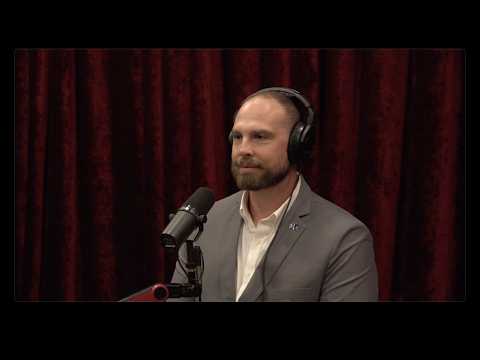
רוס קולת'רט מראיין את מייקל גולד, נשיא חברת החלל רדווייר וחבר לשעבר בצוות העב"מים של נאס"א. הם דנים בכיסוי ובשקיפות של נאס"א בנוגע לתופעות אוויריות בלתי מזוהות.
0 תגובות
עדיין אין תגובות. מה ראיתם? אפשר לכתוב שעה בסרטון (למשל 12:34) כדי שכולם יקפצו לשם.
רוס קולת'רט מראיין את מייקל גולד, נשיא חברת רדווייר וחבר לשעבר בצוות המחקר העצמאי של נאס״א על תופעות אוויריות בלתי מזוהות. גולד מסביר שהצוות נועד לבחון אם הנושא ראוי לתשומת לב נאס״א ואילו משאבים אפשר להקצות לו, ולא לנתח את התמונות החריגות שכבר נמצאות בארכיוני הסוכנות. לדבריו, סטיגמה סביב הנושא הרתיעה חוקרים, והוא מתאר איומים על מדענים שביקשו לחקור אותו.
השיחה עוסקת גם בתצפיות של אסטרונאוטים, ובהן אורות כחולים שנראו במהלך אפולו 11 וצורה משולשת הקשורה לאפולו 17. גולד תומך בבחינה מחודשת של ארכיוני נאס״א במסגרת קרן החשיפה, אך מדגיש שהמטרה היא לזהות ולחקור חריגות, לא לקבוע מראש מה מקורן. הוא מתייחס גם לוועדת רוברטסון ולהשפעת הלעג הציבורי על היחס לעב״מים.
בהמשך קולת'רט וגולד דנים בשמועות על עריכת תצלומים, בעדויות של חושפי שחיתויות ובאפשרות לחיים מחוץ לכדור הארץ. גולד מציג את עמדתו האישית, אך אינו טוען שהוכחה נוכחות של תבונה לא־אנושית. הוא מדגיש את חשיבות הנושא לבטיחות ולביטחון הלאומי, ומזהיר שהזנחת תופעות לא מזוהות עלולה להעניק יתרון ליריבות כמו סין.
עיקרי הדברים
מייקל גולד אומר שתפקיד צוות המחקר של נאס״א היה לבחון את חשיבות הנושא ואת המשאבים האפשריים, לא לנתח ארכיונים.
לדברי גולד, הסטיגמה סביב עב״מים הרתיעה חוקרים ואף סיכנה את מעמדם המקצועי.
גולד מתכוון לבחון מחדש ממצאים חריגים בארכיוני נאס״א במסגרת קרן החשיפה.
0:07Good day and welcome back to Reality Check. I'm your host, Ross Kulart, and today I'm in Washington DC dealing with the habitu of this swamplike environment up close and personal. And today I have with me Mike Gold. Mike Gold is an American lawyer, space policy expert, and aerospace executive specializing in commercial space technology, space law, international partnerships, and regulatory reform. He's been with Redwire Corporation, a publicly traded aerospace defense tech company since 2021, and he's currently president of Redwire Space. Mike served 13 years at
0:53Bigalow Aerospace and he contributed to the development of the beam, the Bigalow expandable activity module, a tip to Star Trek there on the International Space Station. And from 2019 to 2021, he held several senior leadership roles at NASA. Mike, for example, helped develop and implement the Arteimus Accords, norms of behavior for space exploration signed by dozens of countries. He also negotiated the binding international agreements with NASA's space partners for the proposed lunar gateway only for that lunar orbital space station, manned orbital space station to be axed in the current proposals. But he did for his efforts receive NASA's outstanding
1:40leadership medal for his efforts. Mike, and this is where he's most interesting, I think, served also on NASA's unidentified anomalous phenomena independent study team, the US. This was a 16 medal member independent panel chaired by astrophysicist David Spurle. to bring you in, Mike. Was NASA independent study team knobbled? >> First off, wonderful to be here, Ross. I'm a longtime listener, first time participant or caller. I'm very sorry about Australia. >> Okay, we lost at the football, but that's a low blow. You you you've wrongfooted me there, sir.
2:25>> Ross, it's America's 250th. It's our birthday, so let us have this one. I will concede the best team won on the day. >> Absolutely. And let's hope the best team will win in UAP. And relative to the independent study team, there's a lot of context I think that we need to be cognizant of and share relative to the good and the bad or at least the incomplete that came out of that effort. Let me begin that just the fact that there is a NASA UAP independent study team for us to talk about I think is important and a win for disclosure or at least a push back against the stigma that few if any agencies have the
3:10reputation of NASA for credibility for being positive. You don't see anyone walking around the mall with housing and urban development t-shirts. It's our most popular, I think, federal agency. And particularly in the scientific community, NASA carries with it a great deal of credibility. Sure. So, the fact that the team was formed at all, I think was wonderful, pushes back against the stigma. And I give Senator Nelson, Bill Nelson, who was NASA administrator at the time, credit [snorts] for forming the team. And I think, by the way, it was no coincidence that a former senator was the one to lead that effort because, as many of your viewers know, there was a cadre of senators, Senator Harry Reid,
3:58Senator Stevens, Senator Inoway, some of whom have unfortunately passed away that were very interested in UAP and were pushing for UAP disclosure. And I think Bill Nelson was part of that group and therefore when he saw issue gaining some momentum he wanted to help and do something to be productive on the topic. So I give him credit there. Now >> but >> but so there is a butt in that the team was formed and the hope certainly I think of many was that we would be looking at and reviewing UAP data >> including UAPs in orbit. >> Absolutely. >> Because I'll just bring you to the issue
4:43that really shocked me. While the terms of reference didn't say explicitly that they'd be constrained to looking at the the earth related phenomena, a lot of your focus was on just earth related phenomena, wasn't it? >> Yes. to the extent we were even reviewing any data and that's the point that I'm coming to that the UAP independent study team in the end its remitt was to say is the issue worth looking at as a threshold topic A and then B what resources does NASA have that could be applied to looking at the UAP issue and how should those resources be applied So
5:28the vast majority of briefings that we received and you can see this in the public meeting was not information or data or imagery being presented. It was people from NASA coming forward to say this is what we've got with capabilities. This is how it could be applied if we deem UAP worth looking at. So I think this is the first misperception that occurs relative to that group. So, it wasn't what I think a lot of us had assumed it would be. Yes. Which was an attempt to analyze all of the anomalous phenomena that's been reported or acknowledged in the NASA archives going back many decades. >> Yes. And that's where this confusion
6:13comes from that this group was determined if NASA should be looking at the issue and then how NASA should be looking at the issue. And that's where I get a little frustrated when I hear criticism that NASA didn't go through this or look at that. That really wasn't the purview or the remitt of the effort. >> So, let's let's talk about that because I think this is really important. I didn't realize this until I actually went back and reread the report preparing for this interview that even though there's no explicit terms in the terms of reference saying you shall confine yourself to looking at earth-based phenomena, the bulk of the data that you were given and that you talk about in that report is data relating to earth, air, space,
7:00atmosphere, sea. >> Mhm. And I think that was an artifact of the case that the UAP independent study team that a used to be aerial that when the team started out it was the unidentified aerial phenomena team and recovering attorney I believe nomenclature matters and that's why I was so excited when that name was changed to unidentified anomalous phenomena. It opened up the aperture so we could look at space. >> But okay, so a lot of people have been saying to me in the last few weeks since this tranch of NASA documents came out in the UFO files release. Firstly, my understanding is almost all if not the whole lot of that NASA information, it was all already public information >> for decades,
7:45>> right? [snorts] What was new in the Apollo 17 files was that triangular shaped blue dot object that we'd already focused in our work with reality check with Dr. Max Manley Derek Shani. >> Um that object was acknowledged by NASA or by some inter agency analysis maybe not by NASA as being possibly a solid object. >> Yes, progress. And by the way, that would not have been new if you watched NewsNation. I was on your colleagues uh Cuomo show with Lu Alzando talking about that very image and advocating for a review of the NASA archives with that as a phenomenal example. Okay. But why? I
8:31mean, the obvious question is, I mean, I'm not suggesting you were responsible for the knobbling or that there was some devious character pulling levers upstairs. Why didn't the independent study team get tasked at the very get-go to look at these anomalies? Yeah. >> When we've known about these anomalies for years, astronauts have talked about them. >> Certainly. And I think this goes back to the stigma that is most pernicious in the academic community in particular. I mean, it's difficult enough in Washington or even for journalists as I know you have experienced, but in academia, it's even worse. So there really is that much of a stigma that even though you've got NASA astronauts like I was reading just recently story Musgrave with talking about the plasmoid
9:16objects that he saw through the window of the space shuttle. >> Clearly something highly anomalous. >> Why why hasn't NASA acknowledged that as something anomalous worthy of investigation? I cannot again and sorry I'm a broken record on this from my congressional testimony this moment but it's so pernitious. So on the NASA UAP independent study team we were primarily comprised of academics. Those academics were threatened relative to their careers that they would lose their jobs that they would be unable to publish that they would not be able to receive tenure. Not for saying that UAP is NHI or something extraordinary extraterrestrial simply for having the
10:01tmerity to ask the question simply for participating. >> So when you say they were threatened was there actually a deliberate decision made by somebody to threaten them or or they just felt the threat. That's what's so tragic about this that in academia the stigma is so strong that if you even look at this issue there is a knee-jerk an automatic reaction against you threatening your career threatening your credibility and the best example of that unfortunately is Mony Derek Shai who has done wonderful things on your show he lost his job >> because he spoke to us because he spoke out on UAP and by the way he was very cautious in his language. He didn't even assert that there was something extraordinary or extestral. He just said
10:47it's worth looking at. And this is again why we need to do so much more work on the stigma that in the scientific community. If simply asking the question gets you fired, to me that's the antithesis of the scientific method not supporting it. So the one big positive takeaway from the independent study team, the IST, that I got was that you acknowledged that UAP's unidentified anomalous phenomena is a legitimate area for investigation. >> Absolutely. And this is where we have to give NASA and Senator Nelson and everyone who participated. And by the way, it's not well known that the members of the NASA UAP independent study team were awarded the silver group achievement medal by NASA acknowledging the risks that all of the members of the
11:34team took by participating. That was very kind and shows the support of the agency. I think three really good things came out of it. One is you said that NASA acknowledged this is a topic worthy of investigation. Two that we should leverage AI artificial intelligence and machine learning to review the NASA archives to discover more. And three that we should include UAP in the aviation safety reporting system. And just to say a quick word on ASRS, and this is something that Ryan Graves and Americans for Safe Aerospace has done wonderful work on. This is a system that's been in existence for decades, has hundreds of thousands of reports for pilots crew to report safety anomalies.
12:19>> The anonymous reporting system. >> Exactly. Confidential reporting that is then shared with the FAA. If we were to add UAP to that, you would turn every pilot, every passenger crew into a sensor for UAP, which is so important for national security, not just the UAP issue. >> So, let me get this right, Mike. It's not that there's some bloke in NASA sitting there saying, "You shall not talk about UFOs." It's purely and simply that there's this stigma. >> Absolutely. and never mistake bureaucracy and the stigma for ill intention that NASA I believe was actually leaning forward relative to formuling the team and asking these questions and this isn't something I
13:05think we see throughout the DO releases the hearings we all want more we all want it quickly but unfortunately this is more evolutionary than revolutionary and I didn't think that in my lifetime I'd see an ASI UAP independent study team. So, I was thrilled to see it. I'm shocked and and awed and grateful to our members of Congress who have held several hearings. Every time something like that happens, it helps build credibility, push back against the stigma, and while not everything, it's important. >> So, our audience at Reality Check, they're a tough audience. [snorts] I don't know if they're going to believe you when you say that there's nobody there pulling the strings because it's it seems like NASA's been willfully
13:50blind over the years to astronauts raising I think often legitimate concerns. Let let's go to some of those cases because what's fascinating is we're talking on a day where the Disclosure Foundation has just announced that you are part now of an executive committee where you are going to go back and reinvestigate anomalous phenomena inside the NASA archives. Yes, we hope to implement the recommendation of the UAP independent study team to actually go into the NASA archives, see what we've got, conduct analysis to the extent our voluntary capabilities allow, and at least ask the question. >> So, the big questions are, are they
14:35going to let you see the crown jewels? I mean, obviously, a lot of people think there are I mean, let's deal with some of the apocryphal stories. >> Yeah. Will you be investigating claims such as that the astronauts on Apollo 11 saw craft on the moon? I mean the apocryphal story that Neil Armstrong made some admission to somebody in a hotel room that was overheard clearly lousy evidence but uh you know the suggestion is that over the years astronauts have admitted that they were told not to talk and I'm aware for example that Edgar Mitchell told a very good friend of his who's a close friend of mine that he couldn't talk about what he saw on the lunar surface publicly because it was one word treason. reason
15:21to talk about it. >> Yeah. So certainly no one has at NASA ever accused me or others of treason and it was well known my interest in the topic when I was at the agency and I was given free reign to try and investigate do what I could to support efforts at the time by the UAP task force. >> But promise me this will you go back and reinvestigate some of those more notorious examples that have been cited? uh certainly happy to take a look but if you look at the team that we've assembled uh first of all it's comprised of Dr. Manelli Derek Shai who has done wonderful work, wonderful episodes uh with you. >> So let's go through that. So Max has raised Yes. >> a huge number of incredibly interesting
16:08anomalies. >> Yeah. >> Including the possibility I think of rectalinear artificial structures on the surface of the moon. Apparent vehicle tracks on the surface of the moon that aren't explained by any previous lunar missions. Will you be investigating those? We will absolutely be looking at those. why it's why Monelli is that's why Max is part of this effort and he has done >> so much fantastic work point out yes these anomalies and >> what we won't be doing necessarily is coming to conclusions as to what they are right because we may not be qualified don't know but again asking the question and trying to point out to NASA to Congress to the FBI to anyone who's interested these are anomalies
16:53what are these what more study can we do to open up the investigations. And by the way, we don't know whether it's something prosaic, although anything prosaic, if this is a natural phenomena, could be just as interesting. >> Now, just to make the point, the Disclosure Foundation is a completely independent nonprofit. Absolutely. >> It's nothing to do with NASA. >> Absolutely. >> So, you don't have any power to compel NASA to open its archives and tell the truth. >> We don't, but we don't need to to an extent because it's all there in the archives. The wonderful episodes that you've done with Max demonstrate that yes, it would be great to get declassified information, move forward, but I'm trying to go after the lowhanging fruit. >> Would you be asking NASA if there's more information there in the files?
17:38>> Absolutely. We will ask NASA. >> So, you'd promise me you'd make an issue of it if they're resistant. >> We will ask, we will go where the data takes us. And again, that's the purpose of this is to get data, real imagery, and to the extent we need more information, certainly go and ask NASA for what else we can get. And by the way, you know, the new NASA administrator, Jared Isaacman, is fantastic. Uh he's implementing energy at NASA, a focus on the moon that is unprecedented. We've had incredible success with the Aremis one, Artemis 2 missions, inspiring not only America, but the whole world. But what's really exciting for the UAP topic in particular is something called the commercial lunar payload services program eclipse. The new NASA administrator and this is a
18:23terrific initiative wants to have a robotic mission to the moon on a monthly basis. Monthly. >> Wow. >> Monthly by private sector companies. The more activities we have going to the moon, the more cameras we have going to the moon, the more we can investigate what Max is pointing out. There's been a lot of allegations over the years, including whistleblowers coming forward talking about it, saying that NASA was touching up photographs. And and one of the issues that Max has raised in his interviews with us on Reality Check is the clear evidence that at times there appears to be intentional blurring of key imagery in the NASA imagery. Is that something you'll be addressing? So we will certainly
19:08address when we look at the data and we see imagery and we see anomalies and if there's any evidence or we see an image that's blurred or an image that's missing. I know there's been discussions of ISS cameras being shut off etc. I I don't want to say one way or the other. Again scientific method let's begin with data and get to a conclusion. Now, if we're looking at the data and we see anomalies in that data or missing data, we will absolutely be asking about it. And this is where absence can drive information that if we see something that's missing that we want, we need to ask about that. So, what I'm really excited about is to delve into the publicly available data which is accessible. And again, as your viewers
19:54know, uh, Mony Max has done a great job already identifying some really incredible images and then extrapolating from that what's missing, what more analysis should we do, what more could we learn? And then another leading member of this group is Beatus who's done amazing work with the photographic plates. >> So this is Dr. Beatric Villerola, a Swedish astronomer who's done a peer-reviewed paper uh with a colleague which has basically revealed the existence of apparent artificial specular reflective objects in geostationary orbit pre 1957. >> Yes. And [clears throat] >> why is that significant, Mike? >> Well, let me emphasize the most significant two words that you just said. Peer reviewed. I mean the fact
20:41that we can get anything peer-reviewed and push back against that stigma in the academic community that's so fantastic. >> The implications are if these are artificial objects and that's the clear evidence that has survived peer review from Dr. toler [gasps] the implications are that there is some civilization not ours that has built artificial objects in geostationary earth orbit that were there before the first human satellite >> and let the chips fall where they may this is the purpose of the review we need to go into that data ask the questions and if it all you know comes out the way you're saying let's ask that question >> okay but you know where I'm going here because The skeptical me thinks there is
21:28no way that the US wouldn't know about that. They've got the best surveillance satellites in the world. Um they've had ro roaming satellites going out into the galaxy. Surely if it's there, they already know about it and they probably don't want us to know about it. >> Well, then this is a good way to begin to push back leveraging the data that we've got. if anything is being kept from us. Again, unfortunately, you know, I can't promise the world. What I can promise is to look hard at the data that we've got and leverage that to extrapolate answers. We're data driven. Let's get those images. And by the way, to the extent we can, let's get the metadata behind it so we can look at it. Would it be something that you'd be asking for like approaching
22:14organizations like the NRO, the NGIA, whether there's data that they've got that might allow you to make an assessment as to the veracity of Dr. Villa's claims? >> Yeah, absolutely. I'm actually hoping that in the NASA archives there's a lot of material or data that could help bolster or confirm many of her conclusions or not. Right. Let's >> Do you think we're often a bit in the media and outside in the public arena? Do you think we're often too quick to assume that it's a conspiracy rather than just a simple screw-up? >> I do. I will say that never mistake bureaucracy and confusion for necessarily ill intent. Now, that's not to say that there aren't things that are being kept from us. We've all seen the
22:59congressional testimony of people like David Grush and Lou Alzando. And I think the world of Lou, he's a wonderful person, American patriot, David as well. And I think all these people who have stood up and sworn before Congress need to be taken seriously. However, when it comes to NASA in particular and even just the declassification process, I think it's less that there's some villain behind the scenes hiding everything and instead it's the stigma which is real and we need to push back against and then just the bureaucratic process of trying to get things declassified. I have to say, Mike, the thing that really irks me about this, and no disrespect to you, >> when I was at Huntsville doing the SCUAP conference a couple of years ago, I went
23:45to the Marshall Flight Center where they were running the International Space Station down links. Mhm. >> I was there. I've told this story before. I was there with one of the principles of the Marshall Space Center and he was showing us the array of platform receiving cameras showing the um the video coming in from the space station, including a camera that was pointing into outer space from the space station. >> Mhm. as he's talking to us with his back to us, eight or nine eggshaped objects float into view. And I I said, "Oh, excuse me, sir. Sorry for interrupting, but are they Starling satellites? Has there just been a Starink release?" And he went, "No." And then he turned, looked through the
24:30window at the young lady who was on the desk handling the space station feed. and they flicked a switch and up came in uh transmission from the space station has been temporarily interrupted. I saw it with my own eyes and there were two other witnesses including the wife of a very senior former very senior NASA official. So I've seen what happens when something anomalous comes up on NASA imagery. And I'm sorry to imputee that there's something sinister going on, but I know there seems to be a decision to shut this stuff down. And Raj, this is where there's no such thing as a free interview that I would love to work with you and the team should >> to identify any incidents, timing, data,
25:15imagery that we can go after to raise these issues. Again, we're not beginning from a conclusion one way or the other, but to the extent you and others can help guide us, if there's anomalous imagery, anomalous data, let's go and ask for it. So the other thing I wanted to drill down in was in the Apollo 17 imagery, the photographs that were released, there is this incredible triangular image that you yourself have talked about and we talked about as well on reality check which does look like a solid object and astronauts [clears throat] have talked about how these blue [snorts] lights seen from the lunar surface appear to be craft. >> Mhm. [snorts] In the Pentagon notes that were tabled in the recent release, they say these are potentially the result of
26:02a physical object. >> Yes. >> Why hasn't NASA reached that conclusion before now? Like why did it take presumably the glare of potential publicity about that image to reveal the conclusion that had been made by all they say is inter agency agencies? >> Yeah. >> Why did it take that to reveal that somebody knew that that image was potentially the result of a physical object? I mean the only plausible explanation for that is that it was some kind of craft. >> Yeah. So Ross, I think again it's the stigma that even raising this topic five years ago, four years ago would have probably gotten you fired for being public about it. And
26:49>> you know, I a year ago on NewsNation brought that image forward. We talked about it a disclosure foundation event on Capitol Hill. Lou and I came on and highlighted it. And this is where I think the DO tunch drops are so important. And I give the administration a huge amount of credit for what they're doing, what they're trying to do. Uh, for disclosure, you know, we say, you know, well, the Trump administration should move faster, whatever. I'd love to compare what the Trump administration has done to previous administrations, but there's nothing like it before. This is historically unprecedented. And I did feel vindicated when we saw that image come out of DO with the acknowledgment that this is potentially a physical object, something extraordinary. We need this inter agency process and leadership from the White
27:34House to get people to pay attention, to acknowledge it, to look further and shining that light is what this new group is all about. We need to see what other images are there out there because >> if you look and I think Mony on your show has gone through a lot that hasn't been highlighted yet by DO. So we want to shine a light, ask those questions, look at the data and follow that data no matter where it may lead. So you've used the word earlier penicious which is I think it implies a degree of almost malevolence at times to describe the prevention of the serious scientific study of UAPs for years but it's very much fundamental to the way you're talking about this that you don't think it's intentional inside NASA. I >> I don't think it's intentional inside
28:19NASA now whether the stigma when it was initially developed or whoever you know developed it. It's interesting, Ross, and I know as a student of the topic, you're probably familiar. If you look at the way the UAP or then UFO issue was treated by the media, by the public in the 40s, early 50s, it was very different than it was today. There was no mockery. It was treated as potentially real phenomena. I mean, nuclear power, nuclear bombs had just been discovered. Then there was this pivot. >> And we know why that pivot occurred because it's in the third tranch of the documents. Even though they've been public for years, again, they were already available. But it's good to see them there. The 1952 Robertson panel decision that was made at the instigation of the CIA to run a public
29:04disinformation campaign is there in black and white. >> Yeah. >> The CIA basically laid it down that there will be ridicule, stigma, taboo to stop the public from engaging with this issue seriously. >> And that has certainly been my experience trying to get into the topic. And again, this is where I hope the UAP community, and I know I'm tilting at a windmill looking for grace from the internet and commenters, I think anyone who's tackling this deserves great credit because myself, all of us, what we're doing at risk to our careers, to our ability to feed our families and and even life threats, as you've heard from >> Lou, from David, from Congressman Berles. I mean, think of the place we are. I was on an episode of Weaponize that we filmed at the National Space
29:50Council, Redwire hosted, and Congressman Burlson, a sitting member of Congress, had to proactively say, "I am not suicidal." What kind of world are we living in where a member of Congress is saying, "And how dangerous is this topic?" So all I can say is my own experience at NASA that I didn't encounter a mustache twirling villain or anyone trying to push back but particularly again in the scientific community that stigma has been so successful relative to the ridicule that is difficult for anyone to look at. >> Max Derek Shani Dr. Max Derek Shani made the point on our show that that Trump, President Trump recently made NASA officially an intelligence agency. And I'm I'm intrigued by that decision. Why do you think the president did that? So
30:36I actually think there are some ancillary benefits to that relative to unionization which is why in part that decision was made as well as the growing acknowledgment that space is a national security issue which it absolutely is. So the Trump administration I give great credit for creating the space force which was very much needed in the first Trump administration for giving birth to the Artemis program the Artemis Accords. I give credit to the Biden administration for continuing and not fighting that. It was not a given that Space Force would continue to exist under the Biden administration. And then of course in the second Trump administration, the president doing even more. And I think that's an acknowledgement that space has never been more congested, never been more contested. We have to take the national security issue seriously.
31:22>> Let's talk about you. Why are you so interested in UAPs? Have you had any experiences yourself? Not personally, but I did grow up on a reservation in northeastern Montana. We left the reservation and moved to Billings when I was about eight. And I remember telling my parents, "We have to stay here with our people. We can't leave." And that's when they broke to me that I'm Jewish, not Lakota Sue. Haven't recovered emotionally ever since for the break with my tribe. But indigenous people have I think a different view that is less stigmatized of the UAP phenomena, different relationship with nature and certainly there were a great deal of cattle mutilations that occurred in the area and I don't know how much you your viewers know about ranching but
32:07fascinated by >> you lose one cow that's your profit for the year so it's a real issue. >> Do you think it's real? I know from having known ranchers in the area that certainly cows are being lost. So there's no arguing. >> But to characterize what you're talking about, this isn't just a dead cow. Often these are animals >> sanguinated. >> Literally there's no blood. >> Yeah. >> They've had key organs removed with often laserlike precision. >> Yeah. Really sophisticated coyotes do a lot of this, I think. >> Do you think a coyote could have done what you saw? Well, they would have had to have gone to medical school and access to laser beams to do so. So, I'm a little skeptical of that. Now, again, I'm no expert, but you grow up in Montana. You look up at the night sky
32:52and it's like you're in space. You can see the Milky Way. My grandfather worked on the Apollo program. My mother is still a STEM contractor to NASA for education. So, I grew up in the space world. I come by it genetically. And the thing I find fascinating in those Native American communities is there's often so much rock art, the Ananzi rock art particularly, that portrays things that frankly defy explanation. >> The Nazca lines. I mean, there's a great deal there. >> But this manted beings, beings that conform to the representations of what people are describing as experiences even today. [gasps] I mean, it's not outside the realms of fantasy, is it? that the Native Americans of today have a mythology that suggests they were
33:37seeing things that we're only now becoming aware of. >> I mean, I think we have to take Native culture seriously. Another member of our team, Dr. Travis Taylor, has obviously done a lot of work in the Unidita Basin in the former Skinwalker Ranch. So, that's a another aspect that I hope to bring into this relative to indigenous peoples and beliefs and their experiences going back hundreds of years. So in your time at NASA, you were there for what, 2, three years. Did you ever come across key anomalous phenomena events yourself where you thought, cranky, I really want to get to the bottom? >> No, I I did not and I proactively tried to. Yeah. So for example, knowing that I would never probably be in a position like this again to be able to
34:22investigate and to be clear, I was the acting associate administrator for a period of the office of international and inter agency relations. So leveraging the latter part of my title, I wanted to reach out to what was then the UAP task force. I had a friend from my big old days who put me in touch with Jay Stratton who a name many of your listeners and viewers I'm sure are familiar with >> head of the UAP task force. >> Absolutely. I met him while he was head of the UAP task force and I just had a conversation with Jay to say if there's any resources we can provide support to UAP task force. I'd absolutely like to do so. offered to introduce him at the National Space Council where a friend of mine was the executive secretary and just offer the UAP task force whatever
35:07cooperation and support we could. I think Jay Stratton's a terrific fantastic individual and it was my pleasure meeting with him and we've remained somewhat in contact ever since. >> So just explain this executive committee with the disclosure foundation. How are you going to be able to make an assessment as to whether or not an object is anomalous if you don't have access to all of NASA's data or all of those government databases that perhaps know a lot more than they're letting on. >> Yeah. So, not having all of the data is not not having none of the data, right? So there is already a great deal of data as has been shown on reality check with max >> that we can go through and utilize. Again, >> we can spend a lot of time trying to get
35:52new data and that's worthwhile to do. I absolutely don't mean to be dismissive of efforts to get more declassified data etc. What I would like to do and what the NASA UAP independent study team said we should do is let's look at the data that we've got that there's probably a lot there that we can learn from. So while we're not going to be able to answer all of the questions, I think at the very least we can say these are the interesting areas from the data that we had access to that deserve to be looked at. Whether it's prosaic, whether it's extraordinary, we can at least point out the anomalies. That will be the goal of the group in support of a lot of the good work that Max has done that Beatrice has done to help bolster that and try and push back against the stigma, gain support in the academic and scientific community. I'm just trying to think of all of the great NASA stories.
36:38I mean, there's the there's the woman who came forward and alleged that she was part of a team that used to touch retouch photographs to to disguise artificial structures on the moon. Um, there's a guy called, I think, Carl Wolf who came forward and talked about what he'd seen, anomalous structures on the moon. Um, there's been so many stories over the years about NASA. I would have thought NASA would want to definitively resolve these suspicions once and for all. I certainly hope that that can be part of this effort relative to debunking some concerns. >> So, will you be approaching Jared Isaacman and suggesting that he collaborate? >> I mean, we will certainly go to NASA in good faith and say this is something that we're missing or this is something to collaborate. >> I can't force NASA to collaborate or
37:24not. >> Would you make an issue of it publicly if they did? >> What we will do is talk about the information that we're missing. Yeah. >> And what should be looked at? We can shine a light on anything that's absent on on the anomalies that can be looked at. >> Okay. So, Mike Gold, you're there with the cookie jar wide open. >> I'm often with cookie jars too often. Wide open. >> But let's say let's say you're sitting inside NASA. Where would you go? What would you ask for? What do you think are the areas in their archives that you would like to see explored? So I I would like to look at first of all in space that if you look at a lot of the releases that we've had so far and and the NASA UAP independent study review like you said it's a lot of aerial and earthbound activity. I want
38:11to focus more on the space regime. And this is where Chris Melon I think had some excellent comments that we've gotten no data relative to our space-based assets about UAP activity and that's impossible. So, what I'd like to do, and this is just one of many, is to identify anomalies that we've seen in space via the NASA archives and then ask why aren't we picking this up on the defense side? >> Isn't the bear in the room that really we know that defense is probably seeing this stuff? I mean, this is what Chris has talked about. Chris has been quite open about his suspicion that the NGIA, the National Geospatial Intelligence Agency, the NRO, that they've got the best surveillance satellites and they are seeing objects coming in and out of Earth orbit. >> Yes, let's try to get to that data. And
38:56from what's publicly available via the NASA archives, I think we can identify places and asks that can be made for the data that Chris is looking at. Again, and I apologize to your viewers. I know everyone wants more and more quickly. I'm trying to do what I can sure, you know, on this side and move forward where we can. It's not going to be revolutionary, but we can bolster what Chris is looking for. We can bolster the excellent work that Beatus is doing. We can look into everything that Max is doing. So, you know, will this resolve the issue? No. But I believe it will be an important step forward. >> So, we're talking to you today and you've just come from the National Archives. So, I can ask you, >> I apologize. I was late. The studio archives. >> One of the things that's useful for us to know is is there more coming? Because there's some speculation from Representative Anapolina Luna that
39:42there's another tanch coming. >> Yes. My impression from meeting with the National Archives, speaking to people in the administration is there's just not a fourth tunch coming. There's an entire process that's occurring to not only release what we've got, and this is why I know there's frustration that this is material that was already available like in the NASA case or this is already declassified or should have been declassified. The way the government bureaucracy functions and it is frustratingly slow in many cases is they're going after the lowhanging fruit. That's what we've got in these tanches. My impression from what's occurring at the National Archives is now what they're working on is declassification. What is classified that we could declassify and having those conversations and I think the material that comes out of that will be even more interesting. >> So let's talk about that. Who's making
40:29the declassification decisions on the trenches of UFO documents that are coming from the Department of Defense? cuz that's obviously being done through a DoD or a Department of War website. Is the National Archives having independent oversight on that declassification? >> Yeah. So, National Archives is often the advocate for what the public is interested in and what they want and for sensible declassification. So, I'm glad that archives has a voice and a seat. >> But are they they're not the sole determining authority? >> They certainly are not the determining authority in many of these cases. is I describe them more as an umbman or an advocate for it. My understanding and again this is not based on anything that I know but my impressions is that it's department of war and it's OD and I
התמלול קוצר כאן. אפשר להמשיך לצפות מהרגע הזה בנגן.