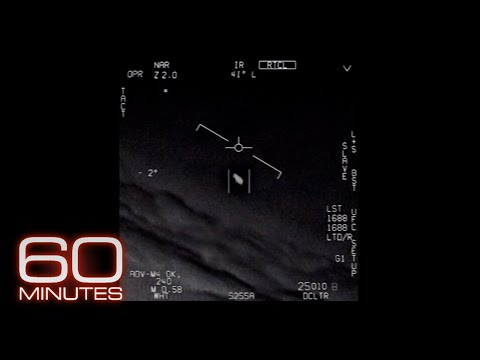
סגן מפקדת אלכס דיטריך, טייסת קרב לשעבר בצי האמריקאי, משוחחת עם ריאן גרייבס על שירותה כטייסת ועל מפגש הטיק טק מול חופי סן דייגו ב־2004. דיטריך מספרת על המשימה שבה הוזנקה בעקבות מגעי מכ״ם חריגים ועל העצם שראתה, ומבהירה שאינה יודעת מה היה. היא דנה גם בחוויות טיסה אחרות, ובהשפעה של השיח הציבורי על טייסים שמדווחים על תופעות לא מוכרות.
השיחה עוסקת בצורך בערוץ דיווח מסודר לטייסים ובאיסוף וניתוח אחראיים של נתונים, הן מטעמי בטיחות טיסה והן מטעמי ביטחון לאומי. דיטריך וגרייבס מדברים על הטרדות ומידע מטעה, על עדותה של דיטריך בקונגרס ועל הצורך להבחין בין עובדות להשערות. דיטריך מדגישה שאי־ודאות אינה הוכחה לחייזרים, ושיש לבדוק את הנתונים באופן שיטתי ומבוסס מדע.
עיקרי הדברים
דיטריך מתארת את מפגש הטיק טק מ־2004 מול חופי סן דייגו, אך אומרת שאינה יודעת מה ראתה.
היא מספרת על הזנקה בעקבות מגעי מכ״ם חריגים במהלך טיסת אימון.
דיטריך וגרייבס תומכים בערוץ דיווח מסודר לטייסים שנתקלים בתופעות לא מוכרות.
השיחה מדגישה את חשיבות איסוף הנתונים וניתוחם לבטיחות טיסה ולביטחון לאומי.
דיטריך מתייחסת לעדותה בקונגרס, להטרדות ולצורך להפריד בין ראיות להשערות.
0:00But from a serious ship captain, the carrier strike group admiral perspective, if I had air crew coming back and saying there's something flying around that's not an aircraft, it's not a balloon, it's not a flock of seagulls, and it's trundling through our military training exercise airspace, and just off the coast of San Diego, I would have said, hey, training time out. Maybe we can afford to send a few extra assets and endeavors and resources, time, energy, staff, fuel to investigate this further because it could be an adversary. It could be a safety of flight issue. There's something out there that we might smack into. Years later, I realized just how little
0:46was done to investigate in the moment and to capture even the basic information. So I think that part of what you're advocating for and what I advocate for is to have a standardized systematic process of way to report and to have a template to follow to collect that information and put it through the right channels into an archive or a database where it can be analyzed systematically and we can make sense of it. Welcome to "Merged." I'm Ryan Graves. Today, I'm joined by Alex Dietrich, and we're doing something a little different. Today, we're going to be doing a remote interview. A lot of my listeners and followers may be familiar with Alex from her experiences with the Tic Tac,
1:32but first, I would like to just get a little understanding about who she is and where she is today. Alex, thanks for joining me today. Thanks for having me. So what are you doing today? Well, today is the first day of school for my kids. I dropped them off early this morning with their backpacks and their lunches and their water bottles. I have three small kids, four, six, and eight, and then I headed over to a different campus where I teach. So we had a faculty day at the University of Colorado Boulder where I teach in the engineering management and engineering leadership programs. And you've been teaching for a little while, right? I believe you're at the Naval Academy before that? Yes, so I recently
2:17retired and moved to Boulder after serving 20 years in the Navy. The first 10 years was operational as a pilot and then deploying as an engineer. And then the last 10 years, I was living the charmed life of an academic, teaching at the Naval Academy in Annapolis, and then the consortium of schools in DC. So George Washington University, Georgetown, Howard Catholic University of Maryland College Park. And you went to the Naval Academy as a student? No, actually I went to GW, George Washington University in DC. Oh, you did? OK. Very good. And did you join OCS out of there? Did you do ROTC?
3:02ROTC, yes. I tell my students, as part of my introduction and my origin story, is that when I was a teen and looking at colleges and programs and what I wanted to do with my life, I was very selfish. I was very self-centered. And I wanted to do something cool. I wanted to travel and have an adventure. And so that's why I was interested in flying and doing that through the Navy, a service that traveled around the world and had these adventures. And I ended up going through the program successfully and commissioning in May of 2001. And then when I went down to flight school in Pensacola, went through ground
3:47school, and then headed to primary in Corpus Christi, I had my first flight on 9/11. Oh, wow. So that, yeah, that selfish, self-centered individual really was in for a shock. And it was a paradigm shift for the world, but certainly for me. And realizing that it's not about me and my selfish adventure, that I'm part of something bigger than myself. And I've taken an oath. I'm an officer in the military. What does that mean? And how do I contribute meaningful way? What was the feeling of your colleagues? I was still in school when that happened, and so it was a little bit different. But for a group of individuals that are joining the armed service and just going
4:32through their training, I'm just curious. What was the feeling? Yeah, it was shock. We were young. We were naive to begin with. Our prefrontal cortices weren't fully developed yet. But we all had this sudden sense of, what the hell do we get into? This isn't what I signed up for. My ROTC instructors and I think a lot of the Academy folks, their instructors at the Academy had told stories about Mediterranean cruises and having these very different careers and very different experiences. And we realized literally overnight, that's not going to be our journey.
5:21We're going to the desert. Yeah, that's interesting because for me, when I joined, that was the only place. That was my expectation going into some degree, although of course I didn't realize what it would actually feel like to serve in that capacity. But to even have a memory of what it was like before we essentially went to the Middle East for X amount of years is something I would say it was a very fine line. Some people have those memories and some people don't. So it's interesting to hear you had those expectations. My good shipment cruises, the summers between my college years, we went to San Diego and Guyana, Italy. Again, I had this very different pre-9/11 expectation and even snippets of a personal experience.
6:07And even getting my uniforms and my ID and going on and off of a base in Pensacola and then for the short time in Corpus, you just drove on. There was no sentry house. There were no gates, certainly no metal detectors or anything that we see now when you go onto a military installation. Having gone to school in DC, I used to do a run where I would run up to the Capitol steps. I'd run up the steps, high five the security guards, and then run back to my door from there. And you can't even get close to the building now. So yeah, I have just
6:52enough memory pre-9/11 to appreciate how different it is now. Yeah, that's interesting. And the dates slip into my mind. You may know, but for our listeners, they may not be aware. It's actually a relatively new addition that they allow females to fly in the Navy as combat aviators. Do you remember the year when or about the time frame? Because in 2001, it was pretty early as far as how many females were in those positions. Right, so the combat exclusion repeal was in 1991, I think. So the '92 NDAA would have-- I think when it was passed. But definitely, there
7:38was a generation of women who went out and were the first. But there was never a critical mass. There was always sort of a trickle of women going through the pipeline. And for a variety of reasons, it never really gained traction in terms of having a cohort of peers, a cohort of mentors, adjustments to policy to account for family planning and other things that women might want to do in the course of a career trajectory. So I'm certainly grateful for those women who went ahead
8:23and encouraging and trying to mentor as I can the women who are trying to make it today. Very cool. I'm sure she's not listening. But I had several female pilots that were within my squadron of space that I had the utmost respect for that were incredible aviators. And people, just for being and operating in that environment, I know there's-- you brought it up yourself. I mean, there are various challenges and issues that are present for women in combat zones and on boats just to the nature. There's not that many of you. And it's hard to connect with a full of guys goofing off. I know how that is. So I appreciate the sacrifice you made and to be able to pursue that type of
9:09adventurous lifestyle, especially in your position, it might be more challenging. So I applaud you for that. Thanks. Yeah, no, it was an adventure. And I certainly consider the guys of my squadron to be like brothers. You love them, but you don't always like them. Absolutely. Well, one thing I can relate with is that you had a pretty interesting experience when you were pretty junior in your squadron. And before we allow you to go into just a little bit of detail, because I know you've told it a million times, but just so we can touch on it. But I have to say, there's all sorts of interesting considerations when you have someone that's
9:54junior like yourself flying off of the wing of your skipper and other senior officers, especially in a normal situation. Never mind in a situation where there's a high degree of uncertainty. Did you feel that your rank-- when you were flying, you observing this, did you feel like you were relying on others there to help guide you through this situation, this engagement that you were in? Or did everyone just seem to rise to the occasion of some degree? I'm curious to how that perspective-- or how that worked during the flight. Yeah. So I know you're familiar with the dynamic in the cockpit. That we say there is no rank in the cockpit. That's part of why we use call signs. And we have a very standardized
10:40qualification pipeline. And everybody has to meet those standards and that we respect somebody, even though they might have a different rank on their shoulder that they're a section leader, a division leader, whatever their qual is. I just joined the squadron in July of 2004. So having just come out of flight school, just out of the-- I had just done the midair refueling syllabus. I had just done my carrier qual in that particular aircraft. So I really felt and really was new.
11:26I still had my FNG named Patch. And so yeah, I was trying to just be safer out of the boat. I was just trying to hang on when it came to tactics and still learning the systems and trying to make sure that I was technically and tactically proficient. So-- And then you get thrown into a situation where all that goes away. Yeah, exactly. Yeah, so I didn't feel-- I was as much of an FNG as
12:12anybody else in the squadron. There was no hazing. There was no thought. I don't want to try and stay here. Special new guy attention, perhaps? Yeah, I was just new guy bumbling along. And we launched what should have been a really mundane, routine training mission. And we did this by design. Ops and the schedulers would mix us up in a way that made sense. So the fact that I was the most junior or one of the most junior pilots, I was on the wing of the most senior pilot. So Dave Fraber, Commander Fraber, and the skipper of the squadron.
12:58But then also my weapons systems officer, the Wizzo, in the backseat was a department head. And then there was a more senior lieutenant in the skipper's backseat. So they were thoughtful and intentional about this scheduling and making sure that the careers were balanced and experienced. But in that particular situation, I was definitely the most green hanging on. I remember being a student at Aviation Preflight Indoctrination back when I was just proud to fit in my flight suit, basically. And that's about all I knew, or even to just wear it. And I remember them saying that there's probably going to be one flight in your life
13:43that you never forget. And yours-- and I would venture to guess that perhaps this incident is the one for you. But yeah, that was going to be my question, because I imagine that there are other flights as well. And I would like to ask if there are other non-Tiktak-related flights that are your key flights that you remember, and if you'd like to share any of those. Yeah, so people always ask or have this assumption that this Tiktak experience was somehow definitive, or that it was sort of etched in my psyche, that it haunts me. Do I leave sleep over it? Do I think about it? And I don't.
14:30In the moment, it was exciting, because it was something new and different and unexpected. But I didn't feel an immediate, imminent danger. I didn't feel immediately threatened. I was cautious. I was a little anxious about, what is this? What are we looking at? But we were just off the coast of San Diego. I was fairly comfortable that this was not going to harm us in that particular moment, balanced with the fact that we're in a relatively recent post-9/11 era. So all of that was going in my head, but we came back to the ship unscathed.
15:18The jets were fine. We were fine. So it really didn't scar me or stay with me in the long term. I certainly have had flights in Iraq and Afghanistan that were scary. The stakes were high. We're supporting troops on the ground with close air support. We were dealing with austere conditions, hostile conditions, diverts, blue water ops. We were coming back via Australia from that first deployment when--
16:04and I really-- again, I was still relatively new, but I hate to question this leadership's decision, but I have no idea why we were flying blue water ops with pitching deck at night. Those flights, those landings are really vividly in my memory. And I lost my hides over China Lake, and I had to try for a field arrestment and blew both main mounts, had a hook skip, and my wizard was preparing to eject. A healthy emergency. Yeah, yeah. I said, give me one more shot. For a flying arrestment, the past of my life.
16:51And so those are the flights that really-- I can imagine telling my grandkids about or flushing before my eyes on my deathbed. But the tech encounter, it doesn't stick with me in that way. Yeah. I can relate to that. I mean, most of my vividly clear memories of flying are of the tactical scenarios where I think I'm at least somewhat smart enough to know the risks that I'm exposed to, to some degree, and hyper aware and hyper focused on succeeding as we push those boundaries. Well, very cool. I know you participated in the carrier documentary to some small degree.
17:36I watched that actually just before I joined the Navy, so thank you for the additional motivation that you provided me. So if we may just step back a little bit to the Tic Tac incident, for people that haven't heard of it before, do you think you could just do a quick walkthrough of your involvement in that? Sure. So we had two aircraft, flight of two, that lodged from the carrier off the coast of San Diego. And it was midday. It was clear blue skies, calm waters. And we were launching to do an air to air intercept exercise, kind of like a scrimmage for folks who aren't familiar.
18:23So we're going to come at each other, blue air, red air, and practice our maneuvers, and then reset and do it again until we run out of fuel. So I was, again, the pilot in the Dash 2, for the wingman position on the wing of Commander David Fraver, the skipper of the squadron. We both had weapons systems officers, wizzos in our backseat. And so we launched. We rendezvous, and we were still in the administrative phase of flight. So as you know, that's when we check our fuel, and drink our water, and eat our snacks, and get ourselves in our aircraft ready to do that tactical portion of the flight.
19:10And we were-- and I say this because we get so many questions about why we didn't have our tapes on, why we weren't recording video at that point. And again, as you know, we don't flip the tapes on until we transition or flip the switch into that fight zone on tactical mode. So we were just transiting. And I don't want to say we were bored, but it was that boring part of the flight where you're just commuting to the office, as it were. And we were interrupted. We were asked to divert or change course, and intercept this radar
19:58contact that another ship, the USS Princeton and the carrier strike group. So we were off of the USS Nimitz aircraft carrier, and the Princeton was part of that battle group the way I describe it for folks who aren't familiar. I say, have you ever played battleship? You have all those little pieces. Those are boats, those are ships, and the carrier is the really big one. So one of the smaller ones had this high-powered sophisticated radar that was picking up these tracks. And I didn't know it at the time, but have since been told that they were getting these strange readings, these strange hits at weird altitudes and air speeds for days, if not up
20:45to two weeks prior. And so they did what anyone does when your machine's not working. They turned it off, turned it back on to see if that would clear it. And just as we do with the jets sometimes, I always thought that was funny. Lots of times, actually. Yes. Number one, troubleshooting. Yeah, yeah. But so they turned it back on, and they were still getting these weird hits. And so we were the first aircraft airborne when they were seeing these anomalies. And so they vectored us. They said, hey, go check this out and see if there's something there there.
21:30And so I think that they were as surprised as we were to actually find that there was something tangible, that there was something there there. So as they counted down the miles to merge plot, we started looking outside. Of course, we're working our long and short range radar mechanics, trying to lock it up on our aircraft radar. That's who it was, A-73? Yeah, A-PG-73. So the newest top of the line radar at the time. And then our squadrons were still were to ice us shortly after, but we were flying with the 73 at the time. And we looked outside.
22:17We tried to pick up a tally. And somebody among the four of us noted that there was something in the water, that there was a disturbance in this otherwise calm-- no waves, nothing going on, no other boats in the area or anything. And so that's what got all four of us looking in the same airspace. Because as you know, it's hard to get a tally unless you have some sort of funneling feature or something to talk onto. So as I'm looking at this sort of whitewater roiling, I see this thing, the zip across,
23:04and then start to look at that and try to figure out what it is and realize that it doesn't fit anything that we study for Reki or just through experience and exposure to aircraft and balloons and all that stuff that we see when we're out. It didn't fit any of those. And so that was-- people asked me, what was your emotional stake? I had a roller coaster of emotions from that initial boredom to excitement about, what are we going to go do? And I asked my wiz-o, I said, what's happening? And he said, well, maybe we're going to intercept some drug
23:51runners that are coming up the coast from Mexico or part south. And I thought, oh, OK. Cool mission. That's interesting. That's different. Yeah. And then when we saw this whitewater disturbance, I thought, well, whatever we were chasing has crashed and is sinking. And now we are on-scene commanders for search and rescue. So my heart sort of sank. But then almost as quickly as that happened, this thing entered the picture. And I said, what the hell is that? And confusion and what do I do? I don't have enough experience to know
24:36what to do in this situation. That's when Dave Frevers-- elected to go, nose down, like, all right. Yeah, so then I said, oh, cool. I'm high cover, which just means I'll hang out up here and have your back, whoever that means. Because we had no loadout, right? We had a cabin. A lot down there. Yeah. So that's what happened. And I think there's been a lot of questions about-- I've been asked a lot about the time discrepancy that Dave Frever had a much longer visual lock. And it felt the encounter was much longer. And as the Dash 2 most
25:26junior person in the flight, it doesn't surprise me that my tally was much shorter, that I was the first to lose sight and focus more on not smashing into my lead. And keeping my own jet upright and all of that. Your bucket's more full, the nature of the beast. Yeah, exactly. So he turned with it. And then it just disappeared, just slipped away. And we, as you know, there's two radios, two ICS, and four people just
26:13shouting and asking questions, but then also trying to be direct in the situation where we don't have a playbook. We don't have an SOP or standard comms. So the controller in the Princeton, I think, said it's back at your cap point. And I don't know whether it's been suggested that somehow it's a sentient being that knew where-- or it was otherwise surveilling and collecting information
26:58to know where a cap point was. And part of me thinks that maybe the controller just used that as a reference point, because we were all familiar with it. So I can't speak to whether how that ended up being the location. But it was so far away that it didn't make sense. And it also made us think, well, maybe it was our thing that we were trying to intercept just disappeared in some way. And another thing popped up over there. You can't discount that. Yeah, we really didn't understand what it was that we were seeing. And we didn't understand what it was that the controllers were seeing, because both the visual and the radar hits didn't make sense for
27:44what we were used to or what you would expect in a standard air-to-air intercept. So I know another aircraft eventually launched after you've returned to shore. They were able to capture the FLIR video, which was taken and presumed to be of the same object. My understanding, there was some, I'll call it par for the course, ridiculing. Or would you say it was more than that afterwards on the topic? Yeah. So we came back. And the fact that the four of us had seated visually that the other two air crew of that single that had launched in the cycle after us had
28:29managed to get the FLIR, the fact that the other ship with their controllers were privy to this, none of us were embarrassed or ashamed or in any way saying, ooh, you know. Should we not talk about-- We just came back. Yeah, we came back and said, hey, there's something out there. It's weird. We're not sure what it was. And again, being the most junior person on the wing of my skipper, I didn't pursue it. I figured if anything needs to be debriefed, if anything needs to be followed up on, there's three other senior folks in this flight, including the commanding officer of the squadron.
29:15You got it. They have it. And I shouldn't and I don't need to follow up on this. So yes, on the ship's TV, which is, as you know, this sort of closed circuit, there's three or four channels. They were playing Men in Black and Sirens and the Iliad, Bufo, usual suspects of movies. The airplane cartoon, is that all I imagined? Yes, yeah, for a couple days of the airplane cartoon, referencing the incident. So I would say it was all in good fun.
30:04But it wasn't until years later, when I was, I would say, formally debriefed by the folks in the Pentagon, that I realized how inadequate the formal response was. So you would expect to be ridiculed and the butt of jokes for a while, because we work hard, we play hard. And you bet you move down quickly. Oh yeah, nobody's feelings were hurt. Yeah, we were joking. What does it mean, the movies were up and people talked about it a little bit, and then probably the next day or the day after, you guys were back doing your mission, doing your briefs and moving around. Oh yeah. Because you were like, oh, yeah. Doing your briefs and moving around. Right, totally.
30:52But from a serious, they ship captain the carrier strike group admiral perspective. If I had air crew coming back and saying, there's something flying around that's not an aircraft, it's not a balloon, it's not a flock of seagulls, and it's trundling through our military training exercise airspace, and just off the coast of San Diego, where we have a high density population center, I would have said, hey, training time out.
31:37All this getting ready for deployment stuff that we're doing is important. But maybe we can afford to send a few extra assets and endeavor some resources, time, energy, staff, fuel to investigate this further, because it could be an adversary conducting some sort of surveillance on us. It could be a safety of flight issue. We sort of say it's national security concern, and it's also just safety concern that there's something out there that we might smack into. So years later, I
32:23realized just how little was done to investigate in the moment and to capture even the basic information. Like I was turning over my logbook and these air plans with the cartoons on them and providing contact information for everybody who was in the flight, putting the pieces together for these folks who were doing the investigation and the analysis, again, years after the fact. So I think that part of what you're advocating for and what I advocate for is to have a standardized, systematic
33:08process, a way to report and to have a template to follow to collect that information and put it through the right channels into an archive or a database where it can be analyzed systematically and we can make sense of it. You know, speaking of making sense of it, how have you made sense of your experience over the years? Have you attempted to make sense of it? Have you just taken the experience for what it is and it's your memory but you're not there to really delve into it much more? Is this something you don't really engage with, I guess, philosophically
33:54or push the boundaries? You're just waiting for more information to come out before you kind of take that plunge, perhaps. How do you approach this topic, I would say? What is the topic even? Yes. Yes, and so in part of my teaching, I talk a lot about critical thinking. And I teach all class on critical thinking. And I've been doing this for years before this really, not since I've been thinking about it and talking about it, but since I've been sort of in the popular zeitgeist. I would start each semester, I would ask my students,
34:41but I would tell them, "We're gonna do a critical thinking exercise." And I put up this resource from criticalthinking.org, which is a great resource. They have a good website, they have books, they have tools for teachers from kindergarten through graduate level higher ed. And I say, "Okay, here's the framework. And we're gonna talk about whatever subject you wanna choose, we can choose the opioid crisis. We can talk about gun control. We can talk about climate change. Or we can talk about UFOs." And 99% of the students say, "Oh, I wanna talk about UFOs." Because all those other topics are kind of a bummer
35:28and they're talking about the minority policies. - Do they understand your context in this conversation? - Not always. Now students, if they Google me, a lot more UFO stuff comes up. But this is, I'm talking about like 2014, 2016, way before the 60 minutes, or I've done a lot of these interviews since. So I think it's fun to use the UFO topic as this critical thinking exercise because we ask the question, what is the question at issue? What are we talking about? And students immediately
36:13start jumping down rabbit holes and making assumptions. And then we start to say, well, what is the evidence? What sort of facts do we have? And we get more facts and more data. And who cares? Who are the stakeholders? Why does the government care? Or why do you as a citizen care? Why do pilots care? Why do private industry? Or academics? Or just go down the list. And when we start to unpack this topic, I find it much more interesting to look at those elements.
36:58I refer to it as the phenomenon behind the phenomenon. And I don't spend a lot of time thinking about what is it that I actually saw that day. - Mm-hmm, I mean, that's how, I would say that's my modus operandi as well. Well, let me ask you, what are perhaps some of, if you're aware of them, of some of those assumptions, your underlying assumptions that you use when engaging this topic? - Right, well, so many people use the term UFO as a euphemism. When I say UFO or UAP, I mean it literally. So I saw a UFO on November 14th, 2004. And what I mean is that I saw an unidentified,
37:44an unidentifiable flying object. And in the pure sense that we don't know what it is or what it was. And so many people, when you say UFO, they go straight to the Hollywood version, the flying saucer, extraterrestrial origin. And so words matter, language matters. And I think that we're struggling with sort of unraveling and undoing a century or more of science fiction and Hollywood sort of narrative.
38:29- Yeah. - Conditioning, yes. And allowing ourselves to get back to the root of what we're talking about, which is making sense of something, which we do in all sorts of situations and all the different fields of science. I've been thinking about understanding microscopic organisms or, if you'd given me an ISO 20 years ago, I would have said it was some sort of voodoo magic. But it's important to
39:14have a good imagination because it leads to innovation and things that we might not otherwise reach for, but we also have to stay grounded in the world of science fiction. And so I think that's a good thing to do. But we also have to stay grounded in science and facts and work out where we systematically towards that fantastic idea that we have. - For me, the issue itself, as far as I've been able to identify it is uncertainty. And for me, that was very pertinent to me as a tactical aviator, as I'm sure it was to you, 'cause uncertainty in the battle space is like, the first thing that we have to resolve before we employ our weapons and consider tackling what we're going to do. And for me, this conversation, whether it's national
39:59security, aviation safety or science, it's a matter of uncertainty. And we're seeing, we have uncertainty because there are objects that are not meeting our expectations. And that's really as far as I can get in the conversation, frankly. I know for a fact there is uncertainty because I've been there and I have been uncertain. We've seen and have detected these objects. And so I understand from a first person perspective how that uncertainty can exist in the space. And again, from national security, all the way to aviation safety, if we ignore any of these one factors, they're going to eventually, if we don't mitigate them, they're going to cause an issue over time. And that's just, that's the lesson we've learned in aviation safety time and time again.
40:45So, to the point you made earlier about reporting, that's one of the things we're trying to do at saferowspace.org is to be able to provide an outlet for these aviators that are dealing with uncertainty. It doesn't mean every aviator that we speak to is seeing aliens flying around up there. But the fact of the matter is, is there a lot of pilots reaching out because they have uncertainty in their operating space. And that's something we work very hard to mitigate. We would expect the normal processes to step into place, such as the safety reporting mechanisms that already exist to be able to mitigate those safety risks. But for this particular topic, they seem to ignore that. Maybe ignore is not the right word, but it seems to slip through the filter to some degree. Do you think that there is more to be learned
41:30if we can encourage more reporting from pilots? Or is this purely just a safety issue and not necessarily a scientific issue? - Well, I think it's all three. I see it as a three-legged stool where we have concerns of national security. We have concerns of flight safety, and we have the natural curiosity of science, and we have to balance those three. And I saw that on full display when I attended the NASA Independent Studies session last fall. And it was the first session, first meeting, and they had invited me to sort of present as a credible witness, somebody who had seen a UFO unidentified flying object
42:15in the pure sense of the term. And then they proceeded over the course of two days to wrestle with this existential question of, you know, what is it that we're talking about here? And what is that, you know, do we actually have operators out there seeing things that can't be classified? And, you know, Q, Alex, Dietrich, yes. (laughs) They're hard. And then you had a representative from the DOD. It was actually Sean Kirkpatrick, Dr. Kirkpatrick, current head of AERO. You had a representative from the FAA, and you had these folks from NASA. And then across the
43:00country and across the world from the academic community, wrestling with that question of, is this something that we should invest in collectively, you know, as a taxpayer? Do I want the government writ large to be spending my hard-earned taxpayer dollars on a program that collects this information and then analyzes it? And if yes, you know, how do we justify that? Is it security? Is it safety? Is it science? Is it a combination of those three?
43:45And if yes, how do we execute? Meaning who's responsible for the hardware, the radars, the fliers, the high-resolution cameras, the sensors, the servers that are gonna store all this data, because we're talking about massive data sets and really looking for a needle in the haystack if we're talking about these tiny objects and massive airspace. And then the staffing, you know, who's gonna man all of that equipment and analyze all of that information. And then access.
44:32So the DOD is gonna say, well, if we've collected it all and we've analyzed it, it's probably gonna be behind our classified firewalls. The FAA and NASA scientists are gonna say, this should be open source and available for peer review and for safety operations and implications. So it was really interesting to see them have that debate and to see what they're going to recommend, I think, and I'm not sure the timeline for their next report. - Sure do, I believe. Yeah, pretty much any time. And we're recording this on August 23rd right now.
45:18- Right. But it also, I felt like, although I haven't been thinking about it constantly, I have been forced to think about it enough because of so many other folks wanting to have the conversation. I watched that room full of executives and PhDs, people who were absolutely brilliant in their professional and personal, sort of, the peak of their careers. And I just, I found myself being really impatient with them as they got caught up.
46:03I was like, okay, yes, all right, you need to move along this sort of, I'm thinking of the grief curve or the, emotional response to change, where you go through shock, anger, rejection, and acceptance. And so many of them were sort of in the shock, anger, rejection phase. And I was like, okay, we need to speed it up people because we've only got a few more hours. (laughs) And you need to accept it. - I'm of the reality, but what to do about it, right? And you couldn't get past the former. - Right, and it was really interesting to see the most recent, NASA independent study session with that they,
46:50that they aired, right? They put it on a live stream. - A public meeting, yeah. - Because they kicked it off by acknowledging how many of them had been subject to harassment and bullying and online, you know, stalking and threats. And they had been concerned about it in that first meeting about a year ago, sort of their professional reputation, you know, oh, what am I gonna be taken seriously among my colleagues and my peers in a professional sense? And then realizing very quickly that not only are they at risk for
47:38ridicule at that level, but also just being bombarded by these rabid people, which I don't really understand the motivation these folks who are, I didn't even wanna say they're advocating, they're really sort of about this. - I'm not too familiar with the nature of the harassment, but I did hear that they were having problems with it. - Yeah. - I think if there's one thing we can agree on, regardless of the nature, is that everyone should just be encouraged and able to be able to report this and talk about this freely. And that should be scientists on either side of the spectrum of whether, you know, I know there are people that are, they have, they're setting various beliefs on this topic and that's fine, but you know,
48:23there's no reason to harass those that are still looking into data on this topic. And you can't force someone to believe the same thing as you. - Right. And that's part of my curiosity with the subject is not necessarily figuring out what it was that we saw that day, but trying to figure out why people are so emotional about it. It's almost like a religious fervor that folks get when they're having these heated debates online or, you know, I've gotten a lot of this sort of harassment or direct messaging myself where, on both sides of the spectrum from the sort of conspiracy theorists, you know, demanding disclosure
49:09and accusing me of somehow withholding information or not being fully transparent or anything like that to the other end of the spectrum where there's the hardcore debunkers who, I get a call from a reporter, "Oh, I don't want to say the wrong thing. Oh, I don't want to say the wrong." But it was like a, I want to say it was popular mechanics, but it was a reputable sort of established media outlet. And, you know, he called, he said, "I want to interview you." And by the end of the conversation, he was like yelling at me saying, "Don't you believe in science? And how dare you fuel the computer?"
49:56'Cause he wanted me to say something along the lines of, you know, there's a perse explanation and whatever we saw that day, I'm sure is, you know, an adversary, some advanced texts by, you know, some, I said, "No, I won't." - It's not necessarily a comforting thought to be frank. It's strange that that-- - No, and I said, "I can't say that because I have no, I have no evidence. I have no reason to say that." And I said, "I don't know what we saw that day." And he started yelling at me and saying, "How dare you? I remember that. Don't you believe in science?" And I thought, "Well, yeah, that's exactly why I won't." You know, speculating. - I mean, isn't "leaf" in science almost an oxymoron itself? Point of size, it doesn't depend on belief.
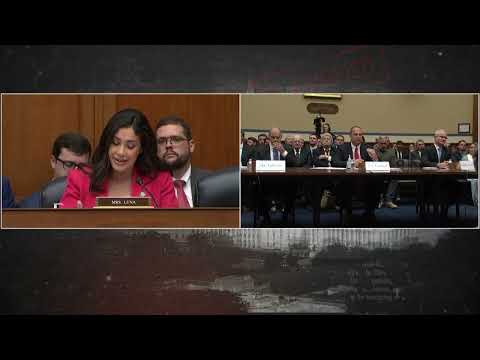
50:41- Right. - Well, I'll tell you what, Alex, you know, I know this conversation has changed a lot and I've had some conversations and interviews where I've had to kind of battle it back to the middle ground in either direction, perhaps just like you have. You know, how do you, you know, now it's 2023, this conversation has gone to the highest levels, at least within the United States, at least almost to the highest level. How do you interpret what's happening now and what do you think lies in the future? - Well, I'd like to turn that question back around to you because you were recently testifying before Congress and I'm curious as to, you
51:26know, how that trip went, what sort of conversations you were able to have before and after the official testimony in the sense that you got while you were boots on ground on the Hill about whether the representatives are taking this issue seriously and, you know, whether they made any commitments to follow through on their end. - Yeah, that's a great question. I'd be happy to talk about that. So I actually, the hearing was on a Wednesday and I went down, actually on Sunday, but I was visiting with staffers and representatives on Monday and Tuesday before the hearing. And the purpose was, I met with some of the representatives like Representative
52:11Burchette and Representative Luna who had been very vocal on this topic. But I also went and spoke with Representative Garcia, Jeremy Grothman and others. And to be frank, a lot of them were not overly approachable I'd say initially, they were pretty cold to the topic. And, you know, we had a good conversation and I really was able to just talk to them about why this is a national security concern and a domain awareness gap issue. And you really did make a big difference talking to them and having that conversation before the hearing. In fact, some of those representatives weren't even planning on attending and put on their calendar while I was in the meeting with them.
התמלול קוצר כאן. אפשר להמשיך לצפות מהרגע הזה בנגן.