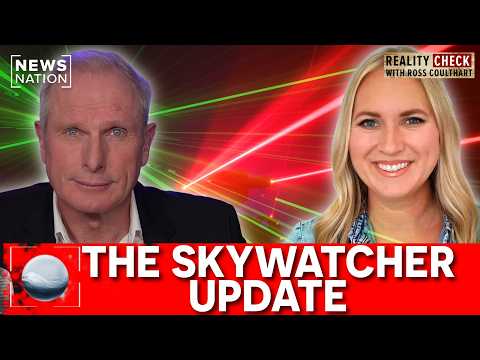
Ross Coulthart interviews Jacques Vallée about Forbidden Science 7, the final volume of Vallée’s diaries. Vallée discusses a database of roughly 260,000 sightings that he built for a Bigelow Aerospace project funded by the Defense Intelligence Agency. He says the project was cut short after about three years, before the analysis he had designed could be carried out, and that he was never debriefed after his clearance ended.
Vallée recounts correspondence with a man he calls Gilbert, who said he was taken to a laboratory inside a mountain and met a living nonhuman entity that communicated through patterns of light. Vallée also says he once encountered an entity himself. He argues that no single person or office in the U.S. government is in charge of the phenomenon. These accounts are claims and testimony, not independent confirmation of the encounters.
The conversation also examines a 1966 case in Haynesville, Louisiana. Vallée discusses an object that, according to the account, radiated enormous energy, and a piece of tree bark he has kept while waiting for a way to test it without cutting into the wood.
Key points
Vallée says the Capella database contained about 260,000 sightings and was built for a DIA-funded Bigelow Aerospace project.
He says AAWSAP ended before his planned analysis checks were performed, and that he was never debriefed afterward.
Vallée recounts Gilbert’s claim that he encountered a nonhuman entity in a laboratory inside a mountain.
Vallée says nobody is in charge of the UAP phenomenon within the U.S. government.
The interview revisits the 1966 Haynesville case and a piece of tree bark Vallée has kept for future testing.
0:07Good day and welcome to Reality Check. I'm pleased to welcome back to Reality Check today quite simply one of the most important and influential figures in the history of UFO and UAP research. Jacques Valet is unusual in this field because his extraordinary career extends far beyond the study of unidentified phenomena. Born in France in 1939, Valet trained as a mathematician and astrophysicist and began his professional career as an astronomer at the Paris Observatory. He later worked at the University of Texas where he helped develop one of the first
0:53computerenerated maps of Mars. But Valet was also a pioneer of the computer revolution. After moving to the United States, he earned a PhD in computer science and artificial intelligence from Northwestern University and went on to work at the Stanford Research Institute. There he played a significant role in the development of Arpanet, the pioneering computer network that became one of the foundations of the modern internet. He subsequently became a highly successful Silicon Valley venture capitalist, investing in emerging technologies ranging from medical devices to information systems and space
1:40technology. But running in parallel with that remarkable scientific career has been an obsession lasting almost 70 years. The UFO mystery. As a young astronomer, Valet became fascinated by reports of unidentified objects that appeared to defy conventional explanation. In the United States, he became a close colleague of Dr. J. Alan Heinik, the astronomer and scientific consultant to the US Air Force's Project Blue Book. And over the decades, Valet developed ideas about the phenomenon that challenged UFO orthodoxy itself.
2:26Rather than simply assuming that these objects were spacecraft carrying extraterrestrial visitors from another planet, Valet began asking a much more unsettling question. whether UFO encounters might represent something considerably stranger, a phenomenon capable of manipulating human perception, consciousness, and perhaps even our understanding of reality itself. His books including Anatomy of a Phenomenon, Passport Demagonia, The Invisible College, Messengers of Deception, and Dimensions have profoundly influenced generations of researchers.
3:11And unusually for someone with such a long history in this subject, Valet hasn't merely studied old cases. He's remained involved behind the scenes with some of the scientists, intelligence officials, and government programs investigating the phenomenon right through the modern era of UAP disclosure. For decades, he's also kept extraordinarily detailed private journals recording those conversations, investigations, and personalities. and they've subsequently been published as his remarkable forbidden science series. And now at the age of 86, Jacques Valet
3:56has published what he describes as the final volume of those journals. It's called Forbidden Science 7 final report and it covers perhaps the most extraordinary period of all, 2020 to 2025 as UFOs became UAPs and a subject once dismissed as fringe moved into the Pentagon. the United States Congress and an increasingly public debate about what governments actually know. Jacques, welcome back to Reality Check. Sir, I love Forbidden Science 7. It's a very tantalizing book. You dropped lots of
4:41hints. And one of the things you say is that only around 2025 did clear answers finally emerge. Jacques, what were those answers? What were the clear answers that finally emerged in 2025 for you? The um first clear answer came from you know the US government and other governments around the world had been waiting for that and it was that the subject was was a real research subject valid research uh topic uh and that uh the conventional
5:28explanations did not work. Now that is not exactly disclosure in the sense that people expect uh that is maybe still to come but at least that was a a clear breakthrough and it immediately triggered you know in in Europe and around the world. uh it was like giving permission to the the scientists who had been working on the project to start their own to restart their own organizations. >> I I guess it legitimized the idea of taking the subject of UAP seriously for the first time.
6:13>> Yes. Well, they, you know, as you know, France has had a long-term uh group actually two two different groups that have been studying this, you know, since the 70s, the 1970s. So in a an official capacity, it was a very small cell of just watching for things coming over and and it was sort of an alert system. Uh but they've accumulated a database that's very interesting and I was in contact with them and I co collaborated with them. Now um that that group is
7:01being re re-established and I've been asked to join it officially. So I will be um you know this is an advisory board essentially for the French government and I will be joining it you know in two weeks. >> I'm glad you mentioned your database because this is a database that you compiled. I think there were 260,000 UAP UFO sightings that you compiled a history of during your time working with the OSAP program or the BASS project uh with Bigalow Aerospace and it was a massive database. Where is that database now? The so-called Capella database. uh the the project as you know the the
7:48bas project was funded according to the proposal that all of us made um with Dr. Put off uh and and you know a team a team of people um Dr. Keller Dr. Davis. Um, we proposed a five-year project because that's really what it takes to take a measure of of the whole body of sightings and so on. Uh, I was, you know, as the the information scientist in the group, I was responsible for the data warehouse.
8:34uh it's not a database because you have pilot sightings, you have you know civilian sightings, you have different kinds of military sightings and so on and those had different structures and connotations. So the idea was [snorts] to start and we started with 14 different databases uh all of them quite large uh not so much large in terms of the number of cases you mentioned 260,000 these days for a computer it's not it's not large but the the data is very large in each case sometimes it ties to videos sometimes it ties to radar so it's
9:20complex So, who's got that data now? I presume it's with the defense department because we know Arrow just this week actually the Pentagon's UFO office has asked for access to David Mara's wonderful private database which he's compiled himself over many many years. Um, does the Defense Department actually need access to a public private database like David's when it's got your excellent Capella database that was paid for with public money in which they don't seem to be releasing right now? I haven't seen anything from your database in the releases that have been released, for example, under the Pursue Initiative by President Trump. >> That's correct. the what I I designed
10:05the proposal that went along with the the database that I turned over to them which was my work of many many years based on the work of correspondents and other people other researchers in other countries and in the US. Um and the idea was to uh convert it to a structure that I designed that would be sort of a universal structure to which other people could attach their own data. Okay. So that was the idea of serving the community uh which is what you do in you know in information science you I've done that as you may know in my career with
10:51medical data at Stanford you know at Stanford medical school and at many other many other settings so I I know how to do that. The problem is that we don't have a god-given structure. You know, if if you ask me if I was running databases for General Motors and you you know, I had a team and we were going to build a database of all the parts in General Motors. It would take a few months or years, but I could go around to all the factories and every part had a number and a composition. We don't have that. We don't know the answer. So the database is is an exploratory
11:36database which is you know again is more akin to an epidemic database or medical database where you don't know what the agent is. Okay. So people need to understand that it's not just a catalog of you know a bunch of bits. Okay. It's not a bucket of bits. Uh it's an organized thing. There were three phases. We did the first phase that was to clean up everything and we had 40 people you know in people don't know that you know there were 40 people in you know in Bas who were hired by Keller and by Mr. Megalo and so on to serve
12:21this and also to redo some of the investigations. Okay. So these were qualified investigators and we did that first phase. The second phase was an AI level that I had designed. You don't need 260,000 cases. >> Did you did you did you did you ever get to the stage of using the AI to do the analysis that you wanted to do or were you shut down? the project was shut up uh shut off after uh essentially three years and so um after two and a half years. So we we could never get into the design of the first layer of of AI that
13:07would have reduced the number to about 40,000 cases that were we know that in most of those cataloges uh up to 95% of the data can be explained. Now it may be difficult to explain it but with the computer and with AI we can we can test all the possible explanations we can do that that needs to be done. So the number doesn't need to be to be piled up with more and more data. I mean I I I could have I had access to a million cases. So we know >> we know >> I guess though Jacques, forgive me for interrupting, but I guess the point from
13:52what you're saying though is that we know that there must be your extensive Capella database somewhere in the bowels of the Defense Intelligence Agency that funded that project. Why are we not why are we not seeing any of that data being released? If the president is serious and open and transparent about what he means, wouldn't it be a good idea to ensure that that database is provided to Arrow and everyone else to make sure that it is used and incorporated into an understanding of the phenomenon. >> Listen, I did my job my you know job in science and technology the way I know how to do it. I've built many databases for different things. uh and uh I
14:41delivered it and with directions for those two levels. The the ultimate level and that would have taken us five years. The ultimate level was to crack the sort of the secret of the UFO data. You know what is the structure? We don't have the structure. We don't know what those things do. We we know about the light. We know about the traces on the ground. We know something about the weight. We know about the composition. As you know, I'm working with Dr. Nolan on composition analysis of many, you know, many samples. I have um I have samples here from different
15:27sightings and crashes around the world. uh the so the the idea is out of the structure extracting what the invariance of the phenomena are not just in the US but in France in Argentina in Brazil in Mexico in all those places that has not been done because the subject was cut off after two years. Do do you think that if you had been allowed to continue doing that second stage deep AI analysis that you wanted to do on the Capella data, do you think that by now we might have had an answer on just what the phenomenon is?
16:15>> Well, 16 years later, there has been no continuing investigation. When when the funding was stopped after two years, the the people on our team that we had trained in understanding the structure of the data that we were looking for were let go on two week notice. Okay, they're gone. I know some of them. I know where they went. I fully respect that team. We had trained them in that kind of investigation. They're gone. So the the human intelligence is dispersed 15 years ago. Okay. I can't go and get it again. Now the the the the data, you
17:04know, the the the uh the the bunch of bits has been transferred somewhere. I you know, I don't have a clearance anymore. As far as I know, I have never been debriefed from my clearance, which is very unusual. As you know, I had a clearance on the parasychology project at SRRI. when that project terminated, you know, I sat down for a couple of hours with someone who debriefed me and and read to me the, you know, the riot act uh on on not betraying the the data even if it became public. Okay. So I I understand the rules. I was never
17:49debriefed from the B project and my colleagues were not. I went around saying when you go to Washington and debriefed by somebody will not okay so it's a very strange process and the data is somewhere and again it's a bucket of bits uh the question is that those two levels of sanity checks that I had designed were never applied so they have something with up to 95% false positive. Okay. Now I respect those people. I I you know I have a good idea where it went. Okay. Uh it it's a prestigious
18:36organization and those are colleagues you know and I respect their professionalism but they they haven't investigated those cases. They don't know the witnesses. They don't know where the thing is wrong. And AI as good as it is now cannot resolve something which is 95% false positive. Okay? If if it was the other way around, you know, if 10% is wrong data, the AI could figure it out. It's getting very good. Okay? But not at the level where we are. And that's that's my frustration that I think you can feel in in my voice. Beyond that I have no um authority to you know argue
19:25one way or the other. I I did go to Washington and uh uh you know recorded that part of the the situation with people in the intelligence committee of the senate uh because I was asked to do that. I was asked to go there and recall and and that's that's the extent of my testimony. >> So Jack, tell me what's going on then because I mean what that suggests to me is that somebody wanted to sabotage your opportunity to get an answer out of the bus project. They didn't want you to reach a conclusion. Are we being played? Is the whole UFO UAP disclosure process
20:12all a bit of a joke? Are we ever really going to get to an answer? >> Again, Ross, I I don't want to go beyond my my level of professional uh authority, if you will. You know, I understand the data. Uh I still have the original data, so I I can redo some of that. And that's what I'm doing now. some the some some critical questions that I can answer with my own data. So, uh I'm going to be doing that on a small scale. Fortunately, you know, this computer is is wonderful. It does things that were impossible 10 years ago and I can do most of that on my own.
21:00Do you think eventually AI will become so powerful that it's inevitable the public will arrive at an answer despite the government obuscation and unwillingness to be open? I I I get I'm constantly blown away Jacques by the process of the growing intelligence of AI and its capabilities. Is it possible that AI will give us an answer before the president does? >> Um I I'm very skeptical and you know I'm here in Silicon Valley networking with people who are developing and funding AI. As you know, I've invested in a
21:47number of AI companies, including in in in medicine, including in surgery, uh, with robots that were intelligent enough to work by themselves and operate in inside the, you know, with with radiation inside the body. So, um, and those companies we've taken public. So the you know there is some AI can do a lot of things. AI has existed for the last 20 years. It's been in a hospital factories and so on and it's wonderful and it's it it's a great help in understanding the in pushing science to
22:34that. Yes, AI already does that in astrophysics for example, but uh and certainly in biology. But the data has been filtered. The data has been filtered by humans, by people in hospitals, by people in observatories who who had precise definitions for what they were looking at. Now they may not understand the total phenomenon and AI is a an extraordinary tool for a scientist to understand the phenomenon he's looking at. But this is not the AI you want. Let me give you a the only analogy I I can think of is a
23:22Vietnam War. the the the Pentagon and some of the people who have our data now would remember that because they were involved in the Vietnam War. There were statistics on the computer every day. They were getting massive amounts of data from the field from combat units. They were putting that on the computer. And then a couple of analysts in the Pentagon started thinking, why don't we go to Vietnam and talk to the guys there to find out how the the database corresponds to what's going on in in the real, you know, fighting. and they found they would they would go
24:08there. They would find a bunch of people in a unit somewhere and they would say, you know, we've got this thing here from the database that said, you know, you you know, you're you're controlling this territory. It's things are pretty good. And the, you know, the guys would laugh and they would say, "Well, we go every night, you know, to the places where the VC isn't because we're completely outnumbered here. And if we if we go to the left, well, you know, we're going to be killed because we don't have the reinforcements we need." So, and so why didn't you send that to the Pentagon? Well, you know, we they they don't want to hear that. I think we have the same
24:54situation here. You have a bunch of data and they are acquiring more and more and more data to put on top of it. So you can sure you can have a million cases okay in a big computer with with very good people analyzing it doing statistics. They've never talked to this witness, you know, in the field uh who uh whom I've, you know, I've met and I've met his family. I've been there and and I say, you know, there's going to be disclosure that this is real. And they'll say, Jack, you know, you're crazy. You've been here three times. We've shown you the traces that we told you the the dog went back into the
25:40house. The guard dog, okay? went back into their house. That's a job. >> The god dog wanted nothing to do. You know, the the you know controlling the the cows or the bulls. So wanted nothing to do with what was there. And to continue to continue your Vietnam analogy there, Jacques, of course, the truth about Vietnam was only subsequently released by Daniel Ellsberg in the Pentagon Papers where he basically he he he basically revealed in a leak, a massive leak to the New York Times and the Washington Post, he revealed the dirty secrets of the Vietnam War. It kind of begs the
26:27question, uh, are we ever really going to know the full truth about disclosure, uh, without a massive leak? Is there going to have to be a a a catastrophic disclosure before we all get told what the government really knows, if the government knows anything at all? Well, um you know this is a social phenomenon not just a scientific not just a scientific question and um we have to you know I'm not a sociologist as you know there are number of people are entering the field now you know and so I who are looking at the psychology
27:13the sociology of the phenomen phenomenon and I think that's those are will have the the answer. Uh I see my role now you know I'm changing my role again I I want to be a resource person. I'm not a whistleblower. Um the a lot of the knowledge people have the impression and you probably do as well that things are moving towards disclosure. they are. But they need >> is moving the other way. It's going darker, deeper, deeper, and deeper. The the the group that has database now is
27:58now going around the world because I have correspondents everywhere. They say, "Oh, we've had, you know, three officers from Pentagon here and it's great. they wanted our data you know and they uh they asked all the right questions. So that investigation is going on. It is going on today in the open in around the world. Okay. So uh in the meantime the data itself whoever is in charge of it will have to reconstruct all this with a new team on the ground. Absolutely. So Jacques, your book Forbidden Science 7 covers the period
28:442020 to 2025. What did you learn by 2025 that you didn't know in 2020? What was the big revelation in that half decade period? Um I I think the biggest conclusion is that we have been working at the wrong level. We've been doing what people always do. They assume they can they can study the phenomenon and it's it's true in much of science without themselves changing. If you talk to the the people who have been communicating with whales and orcas
29:29and dolphins and so on, they will all say right away that they've been deeply changed by the experience. I don't hear that from the people looking at UFO data. They think, "Oh, we'll analyze all this and then we'll establish some form." That's not going to happen. you know um the uh Dr. Taylor, Travis Taylor, who as you know is uh I highly respect his, you know, scientific background and the work that he's doing in Utah with the with the ranch. uh has said that he he has some clearances in his own work and he tried
30:15to see where other data could be found usefully from all the things we do in space now. So he looked at one particular project that's launching a special satellite for data acquisition in space. uh it's classified but inside there are 15 different classified projects from different agencies. Remember there isn't just one one agency in the you know in the classified world. There are 14 and they all have their own task and their own business. And this is not that anybody is trying to hide anything is that the structure itself is
31:02impenetrable. So there has to be a a change in in our culture. There has to be a a willingness to be open to um not just physical data but to so to to come back to your question I think we're going to find that we need to go up a level. we need to change in order to be ready to communicate. As you know, in the book, I've mentioned efforts in communication that are ongoing that have been ongoing for many years. And um
31:48I think we we need to uh change our attitude towards the whole the whole problem. Well, let's talk about those efforts at communication, the secret covert efforts that have been going on inside the defense national security structure. You write in your forbidden science diaries. In October 2021, for the first time, you mentioned someone called Gilbert. Uh, it's a pseudonym, but essentially it's a longlost friend, a discrete master remote viewer at the level of Yuri Gella and Ingo Swan. >> And Gilbert tells you that through official channels, presumably government channels, he was taken to participate in
32:35a controlled personal exchange with a supposed alien. And you acknowledge in your diary that these revelations are explosive. And by September 2023, you've received five closely typed pages detailing how Gilbert says he was taken to a US laboratory sheltered inside rock where military guides exposed him to what they explicitly told him was a living alien entity. Now, do you believe Gilbert's account, Jacques? I I I know at one stage you query was this a fully veritical account. Do you think Gilbert was telling you the truth?
33:21>> I I have I believe it for two reasons. Uh you know believe is is a bad word. It's it's a religious word. It's a it's a commitment and so on. And everybody is free to believe whatever we want to believe. Um in in science you know belief is is a uh is a contingency. You you you you face a phenomenon. You build a theory of a phenomenon. But the theory there is no such thing as a theory without a way of testing it. Now I have no way of testing what Gilbert has told me. I'm not going
34:08to reveal the rest of his data because that's his data and I know there are plans to publish it in in the proper way so that everybody has access to it. It's not I have the data but it's not up to me to to to publish it. Uh there are there have been other cases and I've had one personal occasion of coming face to face with an entity that is very similar to the entity that he describes. Uh but what to to to my my shame I was so scared by because this was unprepared. I was I
34:54was not intending to do that and this >> so you so just are you saying that you had your own personal encounter with an entity? >> Yes. >> When did when did that happen? >> I had no communication with with that entity because I I I was simply too too scared and I mention it in in in the book. Now in his case this was very structured. He was asked to be there and by the way it's not classified. I asked him if it was classified. He said no because and this was 20 years ago. This is not recent. This was 20 years ago. >> So let's go through some of the detail of what you do reveal in Forbidden
35:40Science 7. In December 2024, you write that you've seen Gilbert's structured results and he he says he was apparently instructed to put specific questions directly to the entity. And uh it gets fascinating. Some some of the questions generated impressions and responses he couldn't decipher. Um, and what you conclude is that there may be two different levels of NHI, non-human intelligence. Your interpretation or your friend's interpretation of what he got from the being is that the higher level controllers are genuinely alien.
36:25Whereas the small beings, perhaps the grays associated with UFO encounters, may be primitive biological hybrids specifically engineered for terrestrial OB operation. Is is that your conclusion, Jack? >> Well, um again, uh I'm I'm an information scientist. I try to look for patterns of things, so I don't look at one case, you know. separate from others. I look for patterns of cases in Trinity, in Sakuro, in Valencol and now in the case in Brazil that was revealed recently. >> Vahin
37:10>> entities where we have a dozen entities. These entities were small. They were the size of a, you know, a 10 year old or 12 year old kid. They had two eyes and a mouth. They were breathing air. They did not look like our astronauts with, you know, all kinds of of suits, support system. They were breathing air. They you could you could understand the, you know, any sense from their their eyes, you know, uh the and um overall their their structure was human. >> [snorts] >> One of the things you
37:56forgive me sorry I didn't mean to cut you off. What were you saying? >> Over the years there have been efforts to theorize in biology about what it would take to create a different kind of human adapted to certain things. So we are going to face that problem in space. So NASA has looked at that. But before NASA, you know, certainly in World War II, that question was raised already, you know, uh and there there are and I I mentioned a case from an American biologist who came back from Russia with a at least a a rumor that the Russians
38:43were developing short humanoids. for future space missions because that would save, you know, the the most expensive part in the space missions we have now like the moon is the the human pilot. Okay, if we could do away with the human pilot or if we could minimize that pilot um then the technology would be safer and would probably function better. So the that question had been discussed in biology. Now the the threshold was uh you know moral
39:28threshold. Are we permitted to create? I mean we are clearly at a position where uh as you know that the question arose in China recently, you know, was there an experiment to to manipulate an an egg and create them? So those are very current questions in in biology. Could some of the beings be just operators? because in in Brazil especially, they did not seem to be in control at all. And the same thing in in Trinity, Trinity is a very important case. >> Can I just pull you back for a moment though to Gilbert's story, Jacques, because I think it's incredibly important. What it's unique for is it's
40:16actually somebody you have spoken to directly giving a firsterson physical account of an encounter with a nonhuman being in what sounds like a US military government facility. And there's actually a moment in your diaries 12th of March 2025 where you actually get from Gilbert a physical description of what he saw. He was apparently brought in as a specialist. Um he didn't know whether there were other captured or interestingly enough volunteer beings, but he had a rough idea of approximately where he was being taken. He couldn't see outside the vehicle, but he was inside a small mountain, some kind of
41:01perhaps deep underground military bunker. Inside was a large well-lit laboratory staffed by men and women wearing uniforms without rank or unit identification. There was no medical procedures or drugs. And then Gilbert says to you he was brought face to face with the alleged entity and it wasn't a gray. It was over 6t tall. Uh it apparently emitted light from different parts of its body. may have been enclosed in some sort of wired suit test article or a containment apparatus and it apparently communicated through combinations of light and permitted questions concerning psychic functioning
41:47and he had several hours of communication with this being. Now you've made it clear you believe Gilbert Sakant, you accept Gilbert Sakant. This is extraordinary >> long time and I I know what else he's done which is >> extraordinary. >> Uh so the >> I mean this is very this is very important Jacques. Is this person willing to give evidence to a congressional inquiry if they're not subject to classified limitations, security oaths or NDAs? >> Why asked him that? because obviously I did not want to get into something that would take me you know beyond that that range and uh he said no he was not uh he
42:33asked you know do I need a special clearance for this he has done other work you know for the military and >> right >> but the I was I was I was analyzing the implications of what you say in the diary about Gilbert and to summarize it it's more than a psychic m once met an alien. What it is is a classified US group allegedly possesses or hosts a living nonhuman intelligent being and they've been operating a a systematic multi multidisciplinary communication program with it over time and Gilbert was brought in as one specialist to conduct controlled communications with
43:20it. Do do you accept that that's the implication of what you say in the diary? >> This is logical in terms of what we know the from a long time what the procedure would be. You know um the the the structure was did not go into psychic functioning. You know the the questions that they had been asked were were basic physiological and physical questions. They brought him in so that he he was authorized to create his own questions and to probe to to see to what extent
44:06uh he could elicit a comm a response that would be a psychic response from that entity. The question is at what level do they function? We know we have some ability to function on a psychic level. Um, some people can practice this better than others. We know from the SRRI work by Hal Putoff and Russell T and others that this can be trained as you know I was involved in that project to some to some extent over several years and and with so um I I went through the procedure with go for an entire year.
44:53the what what what Dilbert is describing matches that very well. In other words, there was a procedure. So you you allude, Jark, to the fact that Gilbert is apparently writing his own book about what he encountered. Uh can you clarify for me though, is Gilbert willing to give evidence to the ongoing congressional investigations into this? There are very few there are very few people who are willing to give firstperson evidence and if he's not restrained by classification security oaths constraints what's stopping him from coming forward even confidentially to a secure skiff in the in the Congress and giving this evidence
45:39>> I I cannot answer you know for him he has a long career in helping you know different projects uh in a classified setting. So he's quite capable of answering that. Uh I what I know is I I don't know that he's writing a book. There there is a a a project for a series of interviews and I I've participated in that. I've given a few interviews about my own work but I know he's been part of that project. I don't know how it's going to be released or whether it's going to be released and
46:24I'm not part of the of the business that that owns that data. >> I I'm very excited by the Gilbert character and forgive me for harping on about him. Can I at least clarify Gilbert is a he? >> Um I I don't want to give away any indication. uh you know I have not had communication recently uh I don't know how far that project has gone it's it's their project and I I I you know there is a boundary to what I can >> but but who are they Jacques like when you say it's their project you're talking about the individual known as
47:10Gilbert by pseudonym >> and and the the the release of that information. His >> right >> intent is to is to release it. >> Is it I I I've got to ask you this and I appreciate you may not want to disclose, but is the person that you're talking about Keith Harrari? >> Um, no. I I can definitely tell you it's not Keith. Um, >> is it Joe McGonagle? >> [snorts] >> Um I I I I shouldn't play play. It's an interesting game, but uh you know there are there are two or three other names.
47:55No, >> ju Joseph McGonagal of course Shark as you and I both know he worked with you at SRRI. He was remote viewer number one in the US Army intelligence program. >> Not of respect for >> So do I. Joe is probably one of the most respected remote viewers known to the US military and the US intelligence community. And I noted back in Forbidden Science 3, Joe told you about UFO related material. And Joe talked about how a photograph of a disc had inexplicably disappeared from a classified safe under his sole control. And uh he you quoted him saying to you there must be a higher level of authority that controls UFO data.
48:44What what's going on here Jacques? Clearly someone if it's Joe McGonagal let's just call them Gilbert. Someone invited Gilbert to a secure facility presumably a secure government facility. Yet at the same time we have the government in the form of Arrow the Pentagon asserting blue and blind that there is absolutely no evidence of extraterrestrial non-human intelligence engagement with this planet. We know that's not true why what's going on sir you you probably more than anyone know the know the answer to that question. It's a central question of course and I I don't want to make you know to to
49:31treat it in a humorous way but I recall a conversation with Dr. Heck when I was working with him back at Northwestern and I said, you know, that does the what does the air force say? You know, what does the air force think? And he sat me down and he said, Jack, you have to understand there is no such thing as the US Air Force. There are projects within the Air Force that do different things and that's legitimate. They're looking at different parts of you know the whole planet with the tools they have and they have different opinions about things and they have budgets to pursue different things with different projects and many times
50:18they don't know about the other project. Uh, I testified in um I I wasn't part of the UFO hearings, but back in the 80s, the late 80s, I was part of this study that was a study of emergency management and how computers could be used for emergency management in the United States. Uh and we were we were told that there were only two of us who were not cleared for for anything at the time working in industry working with wave science and
51:04all the others were from different agencies. Uh this was um organized by um by Congress uh by Al Gore and this happened on two successive years. This was I had three occasions to be part of congressional hearings uh on emergency management and this these were two of them. It was it was fascinating because the the the people there and those are some two of the people are people I respect more than anything anybody else in the world uh Mr. Tom Beldon who was with
51:52IDA, the Institute of Defense Analysis, and Sir Arthur Londar, who was head of the photographic uh agency that has now been absorbed in other agencies and so on, but was responsible for the UTOS, for the photographic intelligence around the world. and and also he he testified he he broke the story of the uh you know what the YouTubers were doing. He also broke the story of the uh the rockets on Cuba and we became friends. uh these two men sort of took me under their wings as a result
52:38of these of these hearings in Congress that my testimony here is has been published and it's black and white. >> This is October 9, 1984, information technology for emergency management. We are in a similar situation now and there was uh and yes we can disclose but the the structure is complex. Tom Beldon told me that as part of his career he had been in charge of studying crisis. He had reported to the president on the five major crises over several presidential
53:24uh presidential periods and including the the Cuban crisis and um he told me that he had been in charge at one time of getting together all the people who would be involved if there was a nuclear attack on the United States. He said he got all the clearances because he was in the right place to do it. There were 54 projects that would be operating in if there was a a notice of an incoming nuclear missile from Russia. Um so he got clearances for all the projects and he
54:09called people to a room for a meeting. He said the first 10 minutes were amazing because half of them did not know the other half. They did not know the existence of the other half. And there were people there in blue jeans and you know and and some general would say well who are you know why are you here and the guy would say well I'm with AT&T sir you know and when you push the button on your right phone if I'm not there that right phone isn't going to work. Okay. Because you're in Kansas and I'm in Boulder, you know, inside a mountain and I see when you push the button, then I have to push my button.
54:56And they had no idea. He said it was amazing. He said the first 10 minutes were really the the the key to the entire awakening that we wouldn't know what to do if there was an incoming miss. Unfortunately, I think time has passed and I assume we're better prepared. But the situation with UFOs is the same. You know, I mean, UFO manifest in the water as you know from uh they manifest in the air. Uh they may be tracked, you know, the way Dr. Lo wants to do it at Harvard. In my cases, they are not tracked. They appear out of nowhere.
55:42in on in the field and I'm I'm continuing to publish those cases because people don't know them. People assume they come and they can be tracked. Some of them can, not all of them. >> It's interesting. I I just to echo what you say there about how it continues on, the same problem of compartmentalization continues in the UFO field. In your book FS7, you talk about how Dr. Eric Davis probably knows more about the the real legacy program uh than Dr. Sean Kirkpatre who was running the uh the ARO program inside the Pentagon. You can see the probability that the people charged with investigating UAPs inside the Pentagon probably know less
56:28than someone on the outside. I I I think the disclosure um that we need is that there is a real problem and that we don't know what those things are and that they are just just as real as this computer in front of me. Now beyond that the disclosure would be that we don't have any idea what their goal is, what their structure is or where they come from. I mean, everybody has been assuming they must come from another planet like ours. If you talk to to an astronomer, he'll say, you know, you you you know, you're free to believe whatever you want, but that's
The transcript is shortened here. Keep watching from this moment in the player.