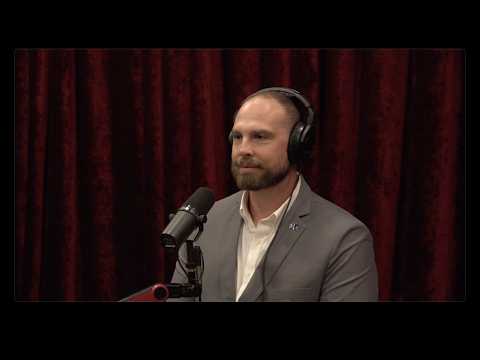
An interview with Dr. Eric Davis, a leading researcher in advanced propulsion physics. He discusses recovered UAPs, reverse engineering, and the possibility of time travel.
0 comments
No comments yet. What did you see? Drop a timestamp (like 12:34) and everyone can jump straight to it.
On Behind Greatness, Dr. Eric Davis discusses his path into physics and advanced propulsion research, and how his interest in UFOs connects with breakthrough propulsion physics. Davis, who has worked on projects for NASA, the Department of Defense and other organizations, is asked about non-human craft ending up in human hands. He says he is aware of at least two cases in which craft were handed over, but says the information behind that claim is classified.
The conversation also turns to reverse-engineering claims. Davis rejects the story of an alleged Alien Reproduction Vehicle, while referring to statements by Jim McCaskill and Jay Stratton about classified information. He outlines ideas in propulsion physics, including traversable wormholes, which he says could connect places and even different times. These are explanations and theoretical possibilities, not proof that such technologies exist or are in use.
Davis also considers possible sources of UFO phenomena and whether visitors, if there are any, must come from other stars. He estimates that recovered craft could represent at least a century of technological advancement, while presenting this as his personal assessment. The interview moves between his life story, classified claims, physics and speculation about UFOs and time travel.
Key points
Davis says he knows of at least two cases in which non-human craft were handed over to people.
He says the information behind his claim is classified.
Davis rejects the story of the alleged Alien Reproduction Vehicle.
He describes how traversable wormholes could, in the ideas he discusses, connect places and times.
Davis personally estimates that recovered craft could be at least a century ahead technologically.
0:00You said we have hard craft. That there was craft that had crashed or landed or whatever and the occupants, the non-human intelligence as you said it, actually handed it over to us. >> Yeah, we've had at least two examples of that that I'm aware of. I don't know that there's more than that. There might be a few more of that. >> How do you know it's bring us through that, huh? >> That's classified. So, that's classified information I'm officially briefed on. >> Dr. Eric Davis, welcome to the show. >> Thank you. Thank you for having me, Luciano. I'm glad to be here. >> So, I'm glad you're here, obviously, cuz you know, we invited you. And I didn't know how intense you were. Excuse me, like I'm coming up with a compliment right away. I didn't know how intense you were until I the the first
0:46time I spoke to you. So, this could be a 12-hour podcast easy. >> >> But we're we're not going to do that today. >> 12 of them. >> Yeah, exactly. Okay, so what what what what we've done in the recent past, we've asked we've asked our guest to introduce themselves in 30 seconds. But what I'm going to do here is because I have your 11-page CV >> >> I'm just going to read a couple of bullet points just for the listener cuz I I think it's important for them to know. You're not going to go into the details, obviously, for the listeners to know exactly who you are. So, I'm going to fill them in and then and then we'll talk a little bit more fluidly. So, you have 42 years combined experience in aerospace engineering,
1:31physics, astronomy, and astrophysics. You are an astrophysicist. You have 42 years combined experience in breakthrough propulsion, power engineering, physics, space nuclear propulsion and power, space mission analysis, design disciplines, directed energy weapons, and launch and space propulsion, future and transformation concepts evaluating Maverick inventions. You have 31 years combined experience in scientific and technical leadership, program leadership, and program office technical SME support roles, national security disciplines, 24 years experience initiating, leading advanced, high-risk, high-payoff research projects at NASA, DOD, DOE, intelligence community, and aerospace industry contracts, and special projects. You have practical experience in astronomical and spacecraft systems, instrument instrumentation,
2:16observational techniques, and so forth, and so on. >> Yep, been all over the map. >> So, if somebody asks you, "Hey, uh Eric, what are you about?" How How do you tell them in 30 seconds what you're about? >> I'll just say I'm an astrophysicist, and my the loves of my life are astrophysics, cosmology, and breakthrough propulsion physics, and power technologies for interstellar and deep space flight applications. And I'm really interested heavily in manned interstellar flight, not just the robotic kind. And I have been since uh high school. This entails advanced space propulsion concepts like nuclear fusion, rocket engines, nuclear fusion rocket engines,
3:02matter-antimatter annihilation rocket engines, and warp drives and traversable wormholes that allow you to go faster than light within the principles of general relativity theory. Um >> >> um So, I I look into future and um innovative concepts uh heavily. It's part of my work. I do the blue sky work. Um I've done it for years. Had a 15-year career at uh EarthTech International Incorporated working for Dr. Hal Puthoff on that. And uh collaborated with the NASA breakthrough propulsion physics program from 1997 until uh Mark Millis, who's the program director, uh and I published our book on that project in 2009 with the updated uh
3:50second printing in 2012. And um >> [clears throat] >> it's considered uh uh you don't make money by publishing technical monographs through the American Institute of Aeronautics and Astronautics Press, or even the American Institute of Physics Press or the Institute of Physics Press or the American Physical Society Press. No, no. You you get really low amounts of money cuz sales are low. Our book smashed sales. >> >> Oh, very cool. >> Yeah, we were generating royalty checks in the five-figure range for the first three years and it got down to four figures over the following years and down to three figures over Oh, here we are going on We're getting close to 10 years after Let's see, 20 years after
4:37the initial publication and we are at 14 years after the second printing with corrections and we're still getting several hundred dollars a year in royalties. But during the first three years, man, lots of royalties. >> That's a nice little gift to not expecting anything from the beginning and getting and getting >> about. So, UAP, that's the second part of my life that that goes with the interstellar flight. That's motivated by my interest in search for extraterrestrial intelligence as well as contact with extraterrestrial intelligence and what's called xenoarcheology. And xenoarcheology is the archeology on Earth or any other planetary body such as Moon and Mars looking for
5:23alien artifacts. And there have been published peer-review papers in Acta Astronautica on that topic looking for alien artifacts on the Moon and on the Earth that could be as much as 200 million years old proposed by one of the pioneers quantum gravity theory back in the 1970s who's still quasi active in the field. He's He's well retired now, but he changed his career as a senior or late career physicist. He was a quantum theory physicist. And this is Paul Davies, PCW Davies. And um Davies changed his career while he was in Australia into astrobiology. And I
6:08don't know what moved him to do that, but he jumped into astrobiology and from there you automatically jump into the community of SETI researchers. >> Yeah, right. >> Astronomers and astrobiologists that are searching for extraterrestrial intelligence. SETI has to do that. >> sort of quick a quick insert. We had you reminded me of conversation we had about 3 years ago with Steven Dick and he's he's the NASA or was the NASA chief historian also astrobiologist. Super interesting conversation. >> Oh, Steve Dick. Yes, he was the he was the chief historian of the Naval Observatory for many years and I had interactions with him when I worked for Bob Bigelow at the National Institute for Discovery Science during the during the late 1990s.
6:53And then he became the chief historian of the organization you just mentioned. >> And your grandfather was a cowboy. >> One grandfather my my maternal grandfather was a free blue cowboy, high school dropout, had to work to help to support his parents and his four other younger siblings. He was the oldest. And then he met my maternal grandmother there. She was one of the cooks that served the food to the cowboys in their bunkhouse on the ranch. And he actually rode and broke horses and he learned how to and he rode bareback. He didn't work with cattle, he just worked with horses. >> You told me he got kicked in the shoulder by a horse and that and that is probably where he got >> I don't know I don't remember the whole story. I
7:39think I heard that story when I was like 8 or 9 years old and I don't remember the whole story. All I know is he was dealing with the horse that that got out of control and reared its hind legs up and one of the hooves just got him got him in his shoulder so hard he had a life of lifetime the rest of his life he had severe shoulder pain. >> And here's his son astrophysicist wondering about the universe. Actively wondering about the universe. >> in the farm He was a farm boy. He grew up born and raised on farm just north of the Kansas-Nebraska border. Same with my grandmother. She and her siblings grew up on a farm in Nebraska. My parents were not farm kids. They especially my dad. My mom said the one that was born on in Nebraska, but she grew up
8:24during the Great Depression and the early part of World War II on the family my grandpa's family's farm north of the Kansas border. It's a small town just north of the Kansas-Nebraska border. It's called McDonald, Kansas. And the farm was called the McDonald farm. So, anyway, so my dad and aunt and his sister, my aunt, were both born in the city in the LA area, which no longer exists. It got absorbed by two other cities that were growing and they kind of absorbed that little city in between and they all became renamed one new city. And I don't I think it's San Ga- I'm guessing it was San Gabriel, California, what it is now. No, what it's now called San Gabriel. And I have to remember the name back then. Huh?
9:09>> You're in Arizona? I I always forget. Arizona and New Mexico. >> No, I live in Austin I live north of Austin, Texas. >> Austin, Texas. Okay. >> up in Phoenix. Yeah, I was born in Arizona and I grew up in Phoenix and then I spent the first 21 years of my life in Phoenix and then after graduating from the community college, I transferred as a junior to the University of Arizona. >> Got it. >> Attended attended there 2 years to get my bachelor's degree and stayed for my PhD. And I then met married my wife there. We had our three kids there. So, I was in Tucson 17 years. >> Okay. Okay. It's All right. So, going back to your dad very quickly. >> was my second home. >> Yeah. >> And then moved to Vegas to go work for Bob Bigelow. >> So, before we get there, just to set the stage, too, because I want to talk about Bob Bigelow. You I mean, you mentioned
9:54how put off Blue Sky like xeno- xenoarchaeology. I've never heard of xenoarchaeology. Let's go, man. >> yeah, alien artifacts. You're actually it's an archaeology looking for alien artifacts. It is used >> as Bigelow. Bigelow is kind of a xenoarchaeologist, too, I guess. >> Well, when he worked on that Atacama mummy, but that turned out not to be xeno, it was human. >> >> Yeah, oh yeah, right, right, right. >> severely diseased child that was that miraculously lived I think it was 6 years >> Yeah. >> after birth, I think it was. I mean, if I'm if I'm thinking 6 years wrong, maybe it was 4 months. >> Okay. And so, it was surprising. It had genetic defects and congenital defects and it stayed alive. But it was not
10:39alien by any means. It was 1 1,000% human. >> Okay, so scrap that. He had a he had a very short career in xenoarcheology. >> >> He's more concerned with materials analysis of recovered UAP materials right now. >> Exactly. Your dad gave you physics books when you were 12 or 13 and you said, "Spectacular what I learned in those books." and I didn't turn back. >> Those were his his college textbooks. He had to take a college physics course. And of course, as a business major, he had to have mathematics. And in the mathematics courses, they say, "Hey, look, you want to get the physics and chemistry CRC manual." I don't know what the initials stand for, CRC, but they're
11:24famous series of books in throughout physics, astronomy, and chemistry, and and what and mathematics. And these these are mathematical tables, formula, and numerical tables. And they even include accounting tables, the formulations for interest calculating interest on a principal, things like that. So, there's financial equations equations you would program into a computer to calculate numbers as a businessman representing whatever whatever financial things you're dealing with. So, they've got the tables of numbers for that as well as the formula and definitions of the terms in those formula and how they're used. So, he used that for that
12:09specific reason. And when I started showing an interest in heavy interest in science starting in middle school, he just he started giving me those books to read when I used to go visit him in Las Vegas, which is where he and my stepmom moved to live after they got married in '68. And so I you know, I'd be home alone. I'm a latchkey kid and needed something to do and not be so bored watching the Mike Douglas Show during the day. >> >> Sure. >> And in The Price is Right and Truth and Truth or Consequences game shows. So I would read his books. He had them in his office library in the house. And one thing led to another. It's like, "Wow, this is great stuff." And um I read all about special relativity
12:54theory, Planck's theory of quantum quantum mechanics, the the the part of Planck's theory that led to quantum mechanics. I mean, Planck's theory quantum mechanics actually emerged from Planck's theory. And and and Einstein exploited Planck's theory to fit to give a theoretical description to the photoelectric effect, which predicted what would happen if you had a certain arrangement of metallic conducting metallic alloys or semiconductors. We didn't have semiconductors back then, but metallic alloys would work, certain types. And he would predict that if they're hit by light from the sun, sunlight, they would they would emit electrical current or they would produce an electric electrical current. So that's the photoelectric effect. That's That's
13:39followed the idea for solar cells to convert sunlight into electricity. So I was reading all this in these books, special relativity theory, and it's like, "Oh, this is really great stuff." And then then the CRC manual, I kind of thumbed through that. I didn't understand a lot of it at the time because the only thing I did understand was the algebra tables, algebra equations, which I already had by eighth grade. But there was more advanced stuff in there and geometry that I didn't have until high school. So >> I don't think I even knew how to spell algebra in eighth grade. >> Yeah. So it had all the calculus equations and tables and for integrals and differentials. That came in handy by the time I got to high school calculus, so.
14:25>> You wanted to work as a breakthrough propulsion physicist by the mid-80s. So, you were studying astrophysics because you wanted to be an >> Actually, starting in high school when I saw >> Of course. Of course. Sorry. >> When I when my dad let me my dad read a newspaper article in the Las Vegas Review Journal. Multi-page spread. The whole pages on each side and on more than three page numbers. Actually, on two sides it'd be 1 2 3 4 maybe five pages. About the American Institute of Aeronautics and Astronautics having their annual joint propulsion conference at the Sahara Hotel. And this is summer of '79. >> Summer of '79. >> And and they're talking about Robert Forward of Hughes Research Labs in
15:10Malibu and Al Worden of the the the NASA Johnson Space Center and Ben Bova, the editor of Omni Magazine and James Doohan who played Scotty in the original Star Trek talking who's going to be talking about this hadn't already transpired. This is what's going to happen at their at the conference's future flight session which they hold free to the public in the evening. And you don't have to pay anything. You just show up. And so, my dad thought I'd love that because I was big on the sci-fi movies and TV shows growing up in the '60s and early and early to mid-'70s. So, and he was interested in all that as himself a lot cuz he grew up mostly in the
15:55'40s and '50s. And so, he said They're They're telling the date and time and where to go. You want to go to this and meet these people? And I said, "Gosh, yeah." Glad to. So, he took me there and he dropped me off and I stood I stayed the whole time. I went up and I met Scott I went up and literally met Scotty and got an autograph from him. >> That's cool. >> Yeah, I met Al Worden, got his phone number, got actually got his NASA business card. And uh but um Robert Bussard, he was one of the uh nuclear weapons uh experts during the 1950s, got his degree in nuclear physics and engineering. And uh he later in the '60s proposed the Bussard ramjet. And that was an interstellar spacecraft that had giant uh magnetics uh windings out in
16:42front of the spacecraft. And the idea is that is that most of interstellar space is just uh isolated protons, right? Roughly one proton per every cubic uh cubic It might be every cubic centimeter or every cubic meter volume. I'm kind of vague on that. That's such an old number. Yeah, so a pro- a proton is positively electric- electrically charged. So, that means a magnetic field can it grab it. And so, the idea is for this ram scoop to have like a superconducting magnet. It's like a maw that opens wide. It spirals around larger larger radius further away in front of the spacecraft to get And the idea is it would grab these protons by magnetic Lorentz force. Um which is the force applied by magnetic field and electric charge. It would suck in the
17:27hydrogen. The hydrogen go into the nuclear fusion reactor, produce heated plasma exhaust that would go out the rear and push the spacecraft forward. And the idea is that you don't need to carry propellant tanks on the spacecraft. Probably initial tanks to get it to get it accelerated up to an initial velocity. But after that, you don't need propellant anymore uh in a tank because the propellant is now in free space between the stars. And so, you you just keep accelerating up until you get up to uh cruise velocity, turn off the magnet, and just cruise to your next star. So, that's his claim to fame. Um Al Hoult's talking about UFOs. He was talking about his work with Project VISIT, v i s i t. I don't remember what the acronym means, but that was the
18:13project that was uh unofficially established at the Johnson Space Center in the '70s. And uh he worked with the man space program human factors engineer named John Schuessler who is one of the co original co-founders of MUFON, the Mutual UFO Network. And and he worked with the NASA center director and I don't remember his name now. They also had an Air Force radiation oncologist at the time was an Air Force lieutenant named Richard Mean Saul with the T Mean Saul. It's hard to say it with that T in the middle. So they investigated close encounter cases where there were physical effects reported by the by the witnesses or
18:59physical effects that were impacting the environment or recorded by instrumentation or whatnot. And this was what their whole thing is. Their claim to fame was they are the ones that investigated the Cash-Landrum UFO encounter in I believe that was December 20 1980 North North East of Houston. Yeah, so that was really exciting listening to him. He was talking about his master's thesis at MIT. He got a bachelor's in physics and I forgot where he went to school. It was a yeah, I forgot. He wasn't living in in Texas cuz he wasn't from Texas. He was just working there at the Johnson Space Center and then living there as a resident at the time but he had his bachelor's degree before joining NASA.
19:44He too joined the man space program but I think he joined with the beginning of Project Apollo whereas John Schuessler started with Project Gemini I think. >> So let's book it. Sorry sorry interrupt you Eric because let's use this as one bookend because that's you at kind of the end of high school. We're talking about late 70s more or less. Your your dad introduced you to this conference and >> Yeah, well see I I met these guys and Robert Forward was talking about his work for the Air Force Phillips rocket propulsion lab at Edwards Air Force base on matter antimatter rocket propulsion. In other words, you're using like in Star Trek matter and antimatter as propellants and they annihilate each other according to the laws of elementary physics particle physics. They their counterparts in quantum field
20:31theory and and when they meet they annihilate into pure energy in in the case of electrons and I don't annihilating with positrons you only get gamma ray energy out of it. But in the case of protons which are more complicated objects, they're not an elementary particle. They are composed of quarks and neutrons and atoms and molecules. Well, if you have protons neutrons annihilating with antiprotons and antineutrons or atoms and antiatoms or molecules and antihydrogen molecules they will produce a spray of not only gamma rays but some x-rays and a lot of subatomic elementary particles that will be particle antiparticle pairs with another
21:17and they'll annihilate into pure energy or like gamma rays or they won't annihilate. Some of them will be electrically charged. They could be grabbed by magnetic field and exhausted out the rear like a ionized plasma to produce thrust. And so that's [clears throat] what he was doing for the Air Force Rocket Propulsion Lab and that was known as the Air Force Rocket Propulsion Lab. In the late '90s it became the Air Force Research Lab and Bob Forward had already retired before that time. But anyway, so I got excited by all this. I I saw their transparency presentation. >> Sorry Eric, let me interrupt again. Sorry. Cuz I I want us to go back to this. But that is one book end. So you're you're now you're young you you have a you have an elastic mind. You're super interested in all these scientists were who are studying also the
22:04super scientists in the now studying also in the what if >> future. Yeah. >> And and then the other book end is like now where you uh >> I'm still doing that. >> Well, okay. >> I'm training my PhD students at two universities on warp drives and wormholes and >> And you but you're you're also asking you're asking the president United States to dissolve the NDAs or to waive the NDAs so that you can talk about like this is today like right now this is the other book that >> have a government waiver where we can speak to other people in the executive well mostly the White House. So we can talk to the White House about the things we weren't allowed to talk to the White House about on classified UAP topics
22:50issues and and and whatnot. Um so that has been waived. We could do that now. But we still cannot talk to the public uh about that same information. The ND the the NDA waiver is a waiver only for the government not for the public. It doesn't waive me from talking to the public. It waives me from talking to the White House. So it allows me to talk to them. Okay. >> So everything that you know, everything that you've seen, everything that you researched is open game to share with with your >> And I've already done it but I don't know that it's gotten to the White House. I know it's already gotten to Okay. the Pursue office because one of the um one of the agencies that leading Pursue is the FBI. And so they have my
23:36information. They Representative Luna's UAP Task Force on the House uh Committee for Government Secrecy and Transparency. She she and her committee members have and task force members have my information. So they've got that information because in the standard form 312 NDA for people for civilian contractors who hold security clearances allows me to communicate classified information to Congress. I am already allowed by the language in that in that official security clearance non-disclosure agreement called the SF 312 standard form 312. I'm allowed to talk to Congress on classified basis and I've already done that. I've done that back in 2019 with the Senate Armed
24:23Services Committee staff and with the Senate Select Committee on Intelligence staff. And then I did Luna's committee um just once on May 15th of last year um even though I met the committee members on May 1st of last year and we weren't able to do a a classified briefing that got canceled at the last minute for the May if it was really an April 30th event. So we went to the May 1st public event with the Disclosure Foundation involved. So these organizations have got my information. Even AARO has my uh proprietary and classified information uh because I interviewed with Sean Kirkpatrick and uh his assistant who's a retired Army Lieutenant Colonel and um
25:08uh the two of them interviewed me in a SCIF. That's a sensitive compartmentalized information uh I guess it's should be sensitive compartmented information facility uh which was located at the uh Missile and Space Intelligence Center of the Defense Intelligence Agency at the Redstone Arsenal in Huntsville, Alabama. Why there? That's because that's where I was living when I uh worked for the Aerospace Corporation to support NASA's space nuclear propulsion program. Anyway, so you know, from this I'm growing up in the '60s watching The Twilight Zone, The Outer Limits, uh Star Trek, uh Lost in Space and then the movies from the '50s that you're already know about um and '60s as well like Planet of the Apes is like oh that was really right up my
25:53alley. >> One of my favorite movies. >> So I I'm interested in the breakthrough propulsion physics of how you travel through time like in The Time Machine or how you go go into the future of Earth and find apes that talk and they've got a primitive civilization and the humans are all slaves, type environment. Uh and then the and then the regular regular uh space movies like uh Star Wars and whatnot. Um and then the future Star Trek movies that came along uh in the '70s and uh yeah in the late '70s and all through the '80s and early '90s. So anyway, I I'm I'm bringing two things of interest to me, UFOs, alien encounters, and breakthrough propulsion physics, because there was an overlap between the
26:38two uh involving Alan Holt at NASA Johnson Space Center and a few other folks. Even Bob Forward had a connection with UFOs when he worked at Hughes Research Labs at Malibu back in the late '50s. >> >> So, so some of those folks on that in that future flight session in June of 1979, uh a few uh like just two or three of them had overlapping interest in looking for UFO propulsion. And to look for UFO propulsion, they would want to look at the advanced physics or exotic physics propulsion that could be speculated and um see if they could bridge the two to help use the human uh theory and engineering knowledge to explain
27:24UFO propulsion and behaviors in the in the sky as we observe them. >> Let's use this as a segue then. Um I saw a small clip of you as well, cuz I know that you um uh and that you know Jeffrey Kripal at Rice University. >> And there's a small clip of you uh speaking or at least answering a question. It doesn't look like you were speaking, but you had the microphone and you were >> yeah, I was not a speaker. I was in the audience. I was invited to attend and they covered my expenses to join that >> That's awesome. >> to join that meeting uh because I had been a part of a workshop that they had organized the previous fall. Um >> Well, >> So, in >> in this in this one here in 2025, um you you had the microphone and you and you told the crowd there that
28:09uh we you said we have hard craft. That there was craft that had crashed or landed or whatever and the occupants, the non-human intelligence as you said it, actually handed it over to us. >> Yeah, we've had uh at least two examples of that that I'm aware of. I don't know that there's more than that. Um there might be a few more of that. >> How do you how do you know it? Tell Get Bring us through that. How How do you know? >> That's classified. So, that's classified information I'm officially briefed on. There's also UFO lore where some of that has been leaked out of the Air Force somewhere by someone. >> Mhm. >> Uh and it has gotten into the UFO lore to some degree, but the but the the the UFO community
28:56has not ever been able to corroborate that story. They don't have You know, they really don't have a solid means of corroborating it. They They I think in more recent years I think somebody has come up with more corroboration. They had to look for more witnesses. That's how you corroborate that. You look for You look for more witnesses, people who were alive then when the event occurred. >> Yeah. >> And who actually can attest to seeing something going on that portends the landing of the UFO craft out in the desert of Kingman, Arizona. And they were in the vicinity to see that happen. So, that happened, but I know officially within the classified world that that event did happen. It was a walk-away where they landed it and they the aliens they were grays. They walked away and just left it there and the
29:42um and the motive [clears throat] for that is still unknown, but the but but the speculation is they probably left it there as a gift for us. And we're so stupid still we can't figure out how to exploit that gift to transform our power systems, transportation modes, space exploration and uh on Earth. So, we just haven't figured it out. >> Maybe we have figured it out, but you know, you know how humanity works. If If we need to If we can't put a meter on it, we're not that interested. If we can't monetize it, we can't monetize >> there's something of interest here. Jay Stratton and uh Jim Marrs and their books have alluded to a level of reality that I was not familiar with, probably because I didn't have the clearance to receive the eligibility for access and need to know
30:27to receive that type of information. And the information is is that there was incremental successes made in reverse engineering the alien technology. And um I can't say anything more about it. So, what that means is is that my public stance for decades has been oh, the alien reproduce reproduction vehicle that uh Brad Sorensen and Mike McClelland uh McCandlish always were publicizing during the '90s and 2000s uh was all BS because Northrop uh and later Northrop Grumman as it is uh have no record no security records uh uh I think it was wasn't it No, it was Mark McCandlish was the name. Wasn't it Mark McCandlish? I don't know if you're even you're even familiar with it. Whether it was Mark McCandlish the
31:13aviation illustrator who was allowed onto the company's property to go to a uh private military air show. And it's not an air show where you're flying craft, it's uh I guess I should say aircraft uh show. So, you're going to see the latest aircraft existing and latest aircraft that company produces on their um uh around their hangars where their aircraft are stored or kept their experimental aircraft and their production aircraft. And so, it it's just like a uh uh what is it an industry conference or an industry uh exhibition I guess is the word. >> For a for military aviation. And so, he claimed he saw an ARV behind a curtain in one corner of a big air um hanger. He
32:00you know, there's a sign out front that told people not to go through into the curtain they weren't you know, no trespassing there. Uh he he uh violated that when nobody was looking. He just kind of lingered around for a long period of time until nobody was really paying attention to him. And he snuck inside the curtain and claims he saw an ARV. And the ARV was a copycat of Bob Lazar's UFO story from Area 51. Given that he [clears throat] uh as I told you in our uh pre uh in our introductory conversations 2 3 months ago or so um uh Bob Lazar never had a security clearance in his life. And he never worked at Area 51 in his life. He did work at Los Alamos and he was a radiation badge health or radiation health monitor who
32:45took care personnel radiation badges at Los Alamos, and that was the end of the story. Um and so he concocted that whole thing. I think what he did is he copied what McCandless and Sorensen were publicizing in the UFO community and um was contriving his own um uh UFO hoax story or post sore, you know, as a post sore claiming that he had a physics degree from MIT, he was a physicist at Los Alamos, worked at Area 51, blah blah blah. So, it's that whole thing. Anyway, um so I correctly concluded from investigations as did the people at the Pentagon who I interviewed about that whole scenario. And they said no. They said absolutely no and I and I was assured this is we're not giving you
33:31cover-up information. We don't have any alien reproduction craft because if we did, well, why are we still flying jet aircraft off of carrier decks or Air Force runways? Why do we still have missiles and rockets with rocket engines on them? Uh and why do space satellites we put in orbit have rocket thrusters on them, etc. Hang on. So, I was told multiple times by by people at the three and four-star level that so transformative and revolutionary there's no way in hell the United States would avoid exploiting that technology for US civilian and military application. And that's exactly what would happen with the uh nuclear weapons. The nuclear weapons uh finally got declassified um
34:16uh well, not entirely, but you know, I mean they were acknowledged publicly acknowledged and and it was a slow drip of of declassified information about the history of the Manhattan Project over uh the 1960s through the present time. Very little was given out in the in the late Cold War era and we're getting a whole flood of historical information in this century in this early century. So, the the nuclear weapons um finally came to public acknowledgement after the bombs were dropped on Hiroshima and Nagasaki in August of '45. And which closed out World War II once and for all out in the Pacific theater. So, that's a proof that a classified project of that nature finally gets out and it's exploited in
35:02the open for you know, publicly as a military weapon. It's not kept as a weapon of unknown nature, unknown characteristics or features and unknown fabrication and and ownership. No, we know all about nuclear weapons. We could go to two or three atomic and nuclear museums and actually see artifacts that were kept from the Cold War era. They had been stripped of all their sensitive internal devices, electronics and things like that. So, you see the outer shell of the shell. Yeah, and so we we can see those in in in museums now. And we use nuclear power, too. So, we're using nuclear power to generate electricity and that began very early on, too, right after the war ended. So, so that's a way that super secret technology
35:49finally comes out in the open and it's used for civilian and military applications. Okay? And the same with the stealth fighters. So, the stealth fighter began as Have Blue at Area 51 and evolved into Lockheed Martin's bid for the Have Blue contract was the F-117 and they got that they got that bid or that contract and late late '70s actually. So, it's in the '70s. So, they got the bid they won the bid or their bid won the contract. Sorry. And they started producing the F-117 in the early '80s and we've had it. We had prototypes flying in the late '70s and and in the transition from the Carter to the Reagan administration. So,
36:34that finally comes out maybe many years later like through the later part of the '80s finally somebody acknowledges oh, we sent in our stealth fighters to do some sort of special forces operation. We sent We use stealth fighters during um uh the first invasion of Kuwait by Saddam Hussein in you know >> Early '90s. >> It was operation Desert Storm. >> Desert Storm, yeah. >> Yeah, that's right. So, finally that comes out in the open and the details are out. Then the history books by made about Lockheed are out where they show you really intimate technical detailed photographs and schematics of the F-117 as it's under construction and under flight testing about that um Skunk Works in Palmdale, California
37:20and flight testing at Area 51. Then the same thing with the SR-71. The SR-71 was unknown until finally um uh the Air Force decided to declassify that. Actually, Lyndon B. Johnson running for um a a full presidential term um uh after he completed Kennedy's uh term in office um spilled the beans about the SR-71. He was using that to leverage voters to get them to vote for him because he was supporting these super secret super fast high-altitude recon fighters and they were going to be turned into or redesigned into bombers, too, which the Soviet Union couldn't shoot down uh or even chase with their own fighters. So,
38:05um so he let slip the SR-71, but it kind of kept quiet all the way until the '80s and all of a sudden boom, the '80s happened, the SR-71 is now public knowledge. And now not only that, NASA gets a couple of them and NASA is using those for high-altitude high-speed aircraft uh um design, flight testing, understanding the hypersonic or or or very high supersonic regime, things like that. Testing all kinds of various things. Yeah, so you see that's what happened. So, if you're going to have an ARV, there's no way it's going to stay classified for very long. You're going to have high demand from the Navy, the Army, and the Air Force uh uh to use that technology. now. And then the commercial side of that, those companies can make a lot of commercial profit on manufacturing the
38:52civilian versions of those things. Why are we driving on wheels on the ground with gasoline engines or electric vehicle motors now when we could be levitating and zipping off everywhere? Forget the Forget the Los Los Angeles traffic grid, you know, traffic jams and traffic jams in New York City, New Jersey, and Austin, Texas, and Seattle, New Jersey, and >> There's commercial and economic reasons to have the auto industry continue as it is, right? >> Yeah, it could be and it looks Well, no, actually help put off it looked into that, talked to those people, those CEOs and board members of those companies about that issue. They said, "No, we had that technology, we would go all out with it. We would go all out with it. We There's no economic reason to
39:37keep the gas combustion engine or the rocket engine or the jet engine in business. If we had something transformative, we'd dive into it because that's a whole new market that opens up for the next 100 to 200 years that'll guarantee revenue. So, you know, this will be even bigger than the jet engine. And look how big the jet engine got because it was a it was invented as a creature of World War II, as you know. >> Yeah, right. >> So, So, uh the A R V is nonsense. However, Jim McCaskill and Jay Stratton have alluded to the fact that the fact is they knew it on the classified level that we were not made aware of at all, those of us on the A S A P and A T I P and U A P task force, that there were some incremental successes in reverse
40:22engineering this technology. And that's as far as I can say with that. >> success. >> Yeah, not wholesale, just incremental. So, a piece of it here, a piece of it there, but you're not going to go see um I don't think they could pull off the anti-gravity because um they have to work with publicly known theory. They don't have theoreticians on these projects. Theoreticians don't get hired to work for these companies. It's only mechanical engineers, aero-mechanical engineers, thermodynamic, electronic, electrical >> are great. >> computer science engineers, all the You know, they have everybody but theoretical physicists. So, the without the theory physicist working for you, you're not going to come up with an anti-gravity theory. I mean, we already have it. It's general relativity. And um
41:08even Newton's Newton's law of gravity allows you anti-gravity, but you need negative mass, negative matter. We haven't seen negative matter, but we got negative energy, which is a quantum field theory thing that has been produced in the laboratory and and demonstrated for decades. So, anyway, it's just that I don't know. Maybe maybe the aliens that are behind the technology found a shortcut to anti-gravity where they don't use general relativity theory and are and there's a technological implementation. >> Do you Do you have knowledge of this shortcut? If you have knowledge of the landed craft, is that is that it a knowledge that you have that you're not able to share? Is that part >> knowledge because that's above my clearances. I just have the knowledge that they were corroborated officially. They happened. They were events.
The transcript is shortened here. Keep watching from this moment in the player.