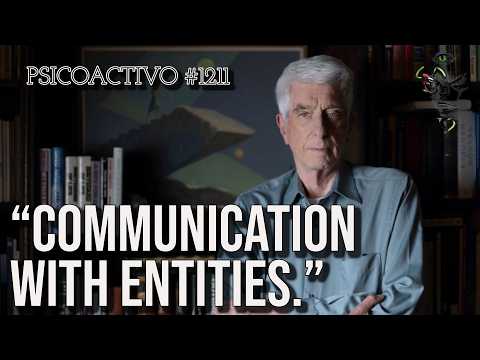
In an interview with Jesse Michels, religious studies scholar Jeff Kripal discusses his path into the study of religion and a mystical experience he had in India in 1989. He describes how personal experience and academic work shaped his thinking about religion, the body and sexuality.
The conversation turns to UFO encounters and reports of beings. Kripal discusses David Huggins’s account of an entity he called Crescent, and argues against reducing such experiences either to religious explanations, such as demons, or to scientific ones, such as hallucinations. He calls for a third way of thinking that takes people’s accounts seriously without deciding that the beings are necessarily literal extraterrestrials. Kripal suggests the phenomenon may be connected to human nature and our sense of the cosmic, while acknowledging that he cannot say exactly what that means.
Key points
Kripal describes a powerful, physical and creative mystical experience in India in 1989.
He argues that sexuality is closely tied to ecstatic experiences and has been under-discussed in religious traditions.
Kripal discusses David Huggins’s account of an entity named Crescent.
He says UFO experiences should not be reduced to either religious or scientific explanations.
Kripal suggests the phenomenon may be connected to humanity, but says he does not know exactly what that means.
0:00Why did you want to study religion in the first place? >> That's a long story. I You know, I started out um I had a I thought what it was a religious vocation uh and I started out in a Roman Catholic seminary in a monastery actually and I studied religion because that didn't work out basically and I had questions that I wanted to ask that that um couldn't quite be fit into that particular training. >> I want to get into why that didn't work out cuz you have you have a chapter in one of your books that's uh titled My Eros Has Been Crucified. >> Right. >> What does that mean? >> Well, that refers to this period of my
0:45life, you know, um I was I was anorexic. Um we didn't even have a word in the late '70s and early '80s for that. I mean, I think Karen Carpenter died in '84 or so and then the culture had a word, but um I was if you would have asked a young Jeff, you know, why he wasn't eating, he would have said something like he was fasting. Um he was trying to be holy. He was trying to be a saint uh and he was and that that was very genuine, but on another level there was this um psychological suffering that that was tied into this and that's really what turned me into an intellectual, Jesse, to be to be um
1:31clear about it is I learned that there were other motivations um behind religious motivations. >> Mhm. >> You know, and sometimes they were instinctual, sometimes they were sometimes they're sexual, sometimes they're emotional, um but I I I learned through because I had to to survive, I learned to distinguish between um what I was doing and and what I believed and and and what was actually the case. >> The religious impulses maybe in theory supposed to be the most immune from human nature, but it is often motivated by our most base impulses. >> Oh, yeah. I I I think so and and again, it's not that there isn't this this um transformation or sublimation of those
2:17impulses, but um the definitely this is an uh definitely anorexia was a form of embodiment and a form of uh obsessive um emotional um I don't know how else to put it. I mean, I was dying. I was literally dying and I I got down to 125 lb and this here is about 220 you see here. Um but so it was I was I was basically on the edge of of death and it really was the monks and and psychoanalysis that brought me back uh and that cured me really or healed me of of this this condition I had. >> And was that somewhat inspired
3:05or aided by a version of Christianity you held in your head? Was it Were there, you know, particular saints or monks that you were >> Oh, yeah. I mean, certainly the the the anorexic um behavior was was um in my own conscious mind was driven by religious impulses and by saints. I was reading the lives of the saints and I was fasting and I was I was pursuing holiness essentially. So, it it definitely had a grounding in my my own religious tradition. Um but there was something else going on, you know, as well um that was that needed to be addressed. >> You had an experience in India early on that was sort of the inverse of that,
3:50sort of flipped on its head >> Yeah. >> what religion might mean. >> Yeah, I mean, so so I get asked about that that experience a lot. I it's worth it's worth describing because I've written about it explicitly and and and theorized it. I mean, basically what happened was uh I was asleep. Uh it was during a a major Hindu festival called Kali Puja. And basically I had what most people would think of as a Kundalini awakening. There were there was some kind of energy or force uh that came out of my body or came out of the room and overwhelmed me, you know, physically and spiritually. And I had an out-of-body experience. I had a basically a a near-death
4:35experience in which I left my body and I came back into the body and felt this incredible charge or transmission that um was really overwhelming. That was in 19 89. So, I was all I you know, I was all of 27 years old. Um I was a young I was a young man. And I haven't had it since. Uh >> Was there an emotion associated with it? >> It was profoundly It was I don't want to say it was sexual. It was erotic in in a kind of spiritual or mystical sense. Um you know, looking back on it Jesse, I what I really think cuz I've thought about it endlessly for
5:20almost what? 37 years now. Um I think it was basically all of my books flowing into me. I mean, I think there was a kind of pre-cognitive um or or creative element to it. I course didn't understand anything that was transmitted into me. I mean, I was like but I knew something had been transmitted into me. >> Really? >> Oh, yeah. I absolutely knew I had a >> like content was transmitted in you? >> Absolutely. Absolutely. Instantly. And I mean, I woke up and I was like, "Oh my god, that was that was incredible." And um and and and I I couldn't have told you what the content was, but I was writing my dissertation at the time and it was
6:05very much about the dissertation, and I wove that into the dissertation in a kind of implicit or or secret way, I guess. >> And the dissertation was on Rama Krishna? >> Yeah. Yeah, it was my first book, basically, Kali's Child, um and that whole book is organized around basically the the god Shiva on top of or but below the goddess Kali, and so I I reflected on this this iconography, and that's essentially what I experienced. It was I was basically Shiva. I was asleep, or I was was dead, or I was I mean, there are different ways of framing that that state. Um but um it was ecstatic.
6:50>> Mhm. >> It was it And it wasn't minor, Jesse. It wasn't like some dream I had. It was really physical and powerful and and transmissive in in some intellectual and spiritual way. >> Mhm. And so it was almost like what you were studying, the barriers between you and that broke down. >> Totally. >> Interesting. >> There was no binary between the academic researcher and the experiencer. >> Mhm. >> None. >> Mhm. >> And you know, my second book was all about that breakdown, by the way. Roads of Excess, Palaces of Wisdom is all about the mystical experiences of scholars of mysticism, and I've really felt
7:36certainly since that experience, since 1989, but really in all my work is a is a kind of challenge of that breakdown between those two those two modes of of being, as it were. >> How did that reshape your understanding of religion? So going from this kind of, you know, anorexic, maybe trying to, you know, uh inhibit your worldly impulses, and then you have this ecstatic, very worldly >> Yeah. >> experience. It's obviously, you know, it almost seems otherworldly, but >> I mean, I was always interested from the very beginning, I my sensibility was that there was something profoundly spiritual about human sexuality and I was interested in the most
8:21ecstatic experiences that were also erotic. And so I I was already challenging that binary between the body and the spirit as it were. Um and this just confirmed that. >> Mhm. >> In a but you know, in a big direct personal way. >> And Ramakrishna himself had had some similar experiences or >> Yeah, I mean, he was he was um you know, he he he was spiritually activated for sure and he was a radioactive is is the word that keeps coming to my mind. I mean, he would just touch people and they would go into to ecstasy and and so I think he was very much in the same
9:06uh mode, but he was an active agent of it. He was a he was a medium of it. I wasn't a a medium. I wasn't a a spiritual teacher or guru, but certainly I was the the object of of this this awakening. >> When you see depictions of like the ecstasy of St. Teresa, for example, it feels like it's sort of sexual in nature or something and then that seems somewhat heretical to say or something. >> Well, yeah. >> Yeah, I mean, it is. It is sexual. Um and it is it is heretical. >> >> Um I you know, again, I was trained and grew up with with Teresa and ecstasy and you're talking about the Bernini statue which I've seen actually in Rome and
9:52it's over an altar actually and so there's something we talked about the bridal mystical tradition a lot in in the Catholic tradition and so there was this linking of of of human sexuality and and and mystical experience in a very dramatic way and I don't to this day I don't think we understand that. I don't I don't think you know, I I know we'll get to the UAP or the UFO issue later, but I think this this topic of the sexual comes up constantly. And it's just brushed aside cuz because people don't know how to think about it. And and they aren't aware of these long mystical traditions
10:38that have thought about it and have uh framed it in different ways, for sure, but I I I do think that there's this profound relationship between human sexuality and and and human ecstatic experience that that we just don't we don't give enough attention to. >> That also feels like uh dirty little secret that gets shoved in the trunk around alien experiences, quote-unquote alien experiences, whatever they are. Like when you you know, Betty and Barney Hill uh you know, they were interviewed after their experience, you know, I think it Barney only very reluctantly said that gametes, you know,
11:23sperm samples were were taken in his case. And I I believe Diana Pasulka, another religious scholar, also discusses uh the ecstasy of Saint you know, uh Teresa uh also accompanying a being sort of spearing her in the heart or something. >> Yeah. Well, that's the the the angel as they call it, you know, the the the male angel. And yeah, I mean, it's not even a dirty It's not a dirty little secret to me. It's just like it's so obvious. It's like yeah. Um I guess it's a it's a secret in the sense that it doesn't get talked about enough or integrated enough or it's made fun of. But it's it's just obvious to me, and maybe what drives a lot of my work is
12:08that I I take that very seriously because that's that's really what I've been in interested in from day one. >> Mhm. What's the honest empirical thing to do is to take seriously the the facts. >> And and to take it ontologically or to take it as a part of the human experience or part of human reality and I am I just don't think we do that. >> There was a an alien experience or who I believe you might have had some contact with or at least studied named David Huggins? >> Oh yeah, sure. >> Who lost his virginity to what he describes as an alien being? >> Yeah. I mean, do you want me to talk about David? Because I can. >> me off. >> I mean, Brad Abrams was was
12:53came to my home. I'm in that movie actually. It's called Love and Saucers. It's a great movie. And David um What's great about that movie is it doesn't land. It doesn't dismiss David's experiences of of sexual intercourse with with with the entity, but it doesn't affirm them either. It just stays It just reports it. And I think that's that third space as I call it is is the right way to go about this. And David's just you know, it's like Whitley Strieber, you know, my my my language around Whitley is your your sin is is you're you're just
13:38too honest. You're just you're describing what actually happened and you're not lying about it. You're not um you're not not saying. >> Mhm. >> You're you're you're saying too much for for most people. And I think David's a lot like that and he just says too much too much. >> Mhm. >> And and I don't I don't mean that negatively cuz it's not too much for me, but it's I think it's too much for most people. >> What is the core experience just for the audience who wants some context? >> The core experience of David Huggins is with this being or entity named Crescent. He called her Crescent and she was this tall female entity that he had intercourse with and he was shown all these hybrid children and it's kind of a
14:24classic, you know, abduction experience in that sense. Um and then he, you know, he becomes a painter later in life and he starts to paint these these images and I I do think that there's something about creativity and there's something about painting and but also writing that is really crucial here that we don't we don't quite understand either. I think a lot of these experiences are result in a kind of wild creativity. >> Mhm. >> Whether it's the visual arts or whether it's the creative arts or or writing. >> Mhm. Can we say anything about these beings? It feels so hard to say things that are definitive about the beings and I find that when I speak to sort of deeper
15:10thinkers like yourself, they say, "Oh, I'm sort of in the Jacques Vallee, John Keel camp." And I, you know, I sort of am too. You know, where it's like you can't take these things at face value necessarily, you know, that they're they might might not have literal meaning and they're more sort of mythological or archetypal. And then simultaneously, how does that not end in this sort of radical Cartesian doubt or it's sort of, you know, this everything is everything >> Yeah. >> can't make progress. >> Yeah. I mean, that's the that's the $60 million question there. I My my sensibility is that it's us. And by us, Jesse, I don't mean Jesse or
15:55Jeff. I don't I don't mean this sort of superficial social ego. I mean some other other realm of mind or consciousness or humanity. And I think that that other realm is profoundly spiritual and profoundly sexual, frankly, at the same time. So I guess I do, you know, when I when I reduce it back to the human, I don't mean the human as what you what is generally meant by the human. And I think that's that that's that third space that gets that gets dismissed a lot or that does isn't understood. I'm not I'm not the rationalist debunker, but I'm not the literalist religious believer either.
16:41Um and I think that's why I get along so well with debunkers and and believers, by the way, um because I really do understand where both are coming from. >> When you say it's us, you know, John Mack actually described this sort of identification with the beings that were performing the abductions on the part of the experiencers, which is fascinating. >> A very powerful dimension of this phenomenon is what I call the double identity aspect. The experiencers, as they're called, will often experience themselves as aliens. They have a whole other identity as an alien. >> And then obviously when people have psychedelic experiences, it seems like these sort of subconscious archetypal beings seem to
17:27talk to them talk to them and they're of us, you know, common taxonomy. There are sometimes there are actually, you know, specific, um you know, kind of morphologies in which they show up and they say sort of consistent somewhat consistent things. So, is that what you mean or what do you mean when you say it's it's us? Or is it impossible to talk about? >> I don't know what I mean. >> >> Uh and I and I say that with all honesty. I I I don't think we have conceived how awesome we are, how how cosmic we are. Um and the the experiencer community in particular has has really changed me and transformed me along the physicality and the kind of the literalness of of
18:13these experiences. So, I want to I want to honor that and John did too as well. But I you know, he was also a psychoanalyst and a and a psychiatrist and he he was struggling. I mean, I know John Mack both through through Karin Austin who was who is my assistant now and Karin was one of his experiencers and was John's assistant. So there's a direct lineage there. Um but I also know Mack through his books. Um I did not know him you know, when he was alive. Um but he struggled, you know, what what what really sticks out with to me in his books is a couple things
19:00is his willingness to listen to people and to struggle with the the fact that these experiences often start out with terror and they're very negative. And that they sometimes, not all the time, they morph into transformation. They become very positive. And he wanted to he wanted to deal with both of those. He wanted to develop a model that that could accept both of those. And the other thing that sticks out at me that really strikes me about John's work is how often it returns to the sexual. >> Mhm. >> I mean, his books are filled with penises and vaginas and sexual fluids
19:45and intercourse and hybrids and I mean, it just goes on and on and on. And I think that's right. >> Mhm. >> I think that's actually what's happening. There's something to do with human reproduction or something to do with the the sexual the sexual being that is not just sex. It's not just instinctual um >> What do you What do you think it is? There you know, um UFO researchers like Steven Aspen who wrote a great book called Out of Time which is about this like intergenerational breeding program between, you know, these beings and humanity. That might be too literal for for you. And then on the other side, you have people saying, "Oh, it's all it's all demonic." Or something. You know, of course it's
20:30sexual because it's, you know, it's sort of >> [clears throat] >> tempting or something. So, yeah, what what can we say about it? >> It's definitely not all demonic. >> Yeah, I So, I agree with that. Yeah. >> Yeah. >> And I also I think that ends the conversation. Then it's like, okay, what what do you mean by that? What is that? Yeah. >> You know, one of the things I say a lot is, "Don't reduce the phenomenon to your worldview." >> Mhm. >> And sometimes that worldview is religious, so they'll say, "Oh, it's a demon, or it's an angel, or it's a god, or what or what have you." But sometimes it's secular and scientific, and they'll say, "Oh, that's just a hallucination, or a bad dream, or a sleep paralysis." I'm like, "Don't do that." >> Mhm. >> That's just not right. And so,
21:15when I say it's not right, I mean, if you actually listen to people who've had these experiences, it doesn't work. It doesn't work. The the secular, scientific reduction does not work, but the religious belief doesn't work either. >> Yeah, breaks everything. >> It it it just it stops the conversation, as you put it. And but so does the secular, scientific explanation. >> Yes. >> Because it's not really an explanation. It doesn't really explain anything. It just invokes a word like hallucination or sleep paralysis, and it just it just stops it. It just stops the conversation. And what I want to do is like, "No. Let's have the conversation. Let's keep going." And that's why I think this earlier
22:01fascination I had with with erotic forms of mystical experience, or or mystical forms of of sexuality, is really crucial because it just breaks down that binary between the the religious believer and the the secular scientist, and says, "Well, there's another way. There's another way forward here that is neither of those." >> Mhm. >> And I don't Jesse, I don't know what that is. >> Yeah. >> Again, I don't think we've had that. >> Yeah, well I think >> So you haven't had that conversation. >> That's right, and we need to have the conversation in order to then crystallize some analytical overlay that we're confident and you we need to be able to sort of talk about this stuff freely. >> I mean I I think the the problem is is even deeper. I
22:47It's not that we can have that conversation and come to some analytical overlay or explanation. I don't think we can ever explain it rationally. >> Mhm. >> But I don't think we can explain it religiously either. >> Right. >> I I think um I mean I know a lot about religion. Um And it just doesn't work. >> Mhm. >> And and I haven't seen anything that does work. So that that's why I'm so fascinated by the phenomenon as as an intellectual is because nothing works. >> Mhm. Is do you think it's sort of um intended to break all of your prior conventions? So there's a a great uh author uh named James Madden. He's you know, also a scholar and he he's uh
23:33uh a Platonist and he talks about these as as um you know, unidentified uh Platonic hyperobjects. >> Yeah, that's Tim Morton by the way. >> Ah, interesting. >> Yeah, that's Tim's Tim's language. I know Jim well. >> Uh-huh. >> Um And and I know I literally had Jim and Tim at to dinner together and had them talk about the the hyperobject stuff and I think that is where you want to go or where we want to go. And I think this is why I keep saying, it's actually the humanists and the historians and the philosophers who have the goods. >> Mhm. >> Let's listen. Let's listen to them. And it's not that they have the only goods. I'm not saying that. It's that that they have goods that we really need to hear.
24:18>> Mhm. >> Um in terms of what it intends, I think attention is always a uh a dangerous thing to think about. But I I do think there's something about breaking one's categories that's crucial here.