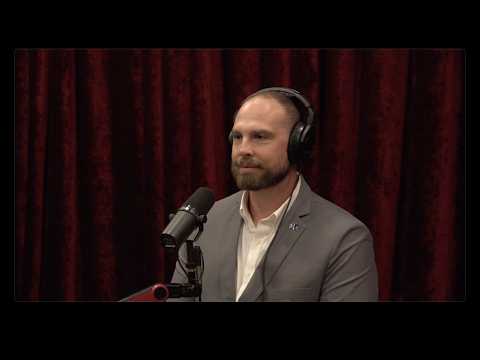
0:00To some, he is known simply as the UFO politician. He stood up in parliament and started asking the questions nobody else would touch. His own party told him to stop. His colleagues froze him out. He kept going anyway. He has faced ridicule but has stayed the course and has amassed a league of allies, experiences and witnesses who have become personal friends >> >> and desperately want to see Japanese UFO disclosure. Asakawa has questioned defense ministers directly on the floor of the parliament and flown to Mexico City to
0:46testify under oath before their congress. He is the reason the UAP parliamentary league exists at all. He also is a witness to multiple UFOs, taking us to the very first spots he saw these unknown flying objects as a child. >>
2:08>> But to understand why a man like this ended up pouring his whole career into UFOs, you have to go back almost 40 years to the case he says changed everything. And here's the thing, it wasn't what he saw in the sky that got him. It was what happened afterward. November 17th, 1986. Japan Airlines flight 1628, a Boeing 747 hauling cargo over Alaska. And the captain, Kenju Terauchi, was not some hobbyist squinting at the stars. This was a former fighter pilot with almost 30 years in the air. Partway through the flight, he reports these brilliantly lit objects moving
2:53around his aircraft. And then something much bigger shows up alongside them. He later said it was so enormous that it was the size of two aircraft carriers, shaped like a walnut, hanging there in the night sky next to his plane for 50 whole minutes. His crew saw the lights, too. Air traffic control was on the line the whole time. And this is the part that lifts it above your average sighting. The encounter generated radar returns, picked up both by civilian and military systems on the ground. This wasn't one guy describing a light in the distance. It became one of the most
3:40thoroughly documented aviation UFO cases in modern history. So, the FAA, or the Federal Aviation Administration, opens an investigation. And years later, the man who was running the FAA's Accidents and Investigations Division at the time, a guy named John Callahan, comes forward and says the case was walked into a classified briefing with the CIA, the FBI, and other agencies in the room. And according to Callahan, when it was over, they took the data. And they told everyone present that the meeting never happened. Callahan says he quietly kept his own copies. He thought that truths involving the nature of reality shouldn't be confined to the government.
4:25And after he retired, he published them. And I've had a former NASA physicist on my show analyze them and tell me directly that they indicate an anomalous object flying around this Japan Airlines plane. >> From that radar data, it's accelerating at 10,000 Gs, 250,000 mph. And And you can actually see the position of the plane on the radar. And at the one point where the plane actually does a 360 to try to shake this thing, you can actually see them on the radar. So, the radar's working. >> And Captain Terauchi, the decorated veteran who reported exactly what he and his crew saw, as was his duty, he got pulled off international routes and parked behind a desk.
5:10A humiliating demotion. Now, in the UFO world, JAL 1628 sits in the same tier as Rendlesham, as the Nimitz Tic Tac, as Tehran. The cases with trained witnesses, real investigations, and evidence that goes beyond one person's word. But here's why it matters for our story. Asakawa was a teenager when this happened. And he watched one of the most extraordinary aviation encounters in history quietly get turned into a lesson about power. A Japanese crew, a Japanese aircraft, and an investigation that ran through Washington. So, that by the time the Japanese public got their answer, a
5:56lot of people felt the conclusion had been written somewhere else long before. >> Do you think that the United States has a right to dictate whether the Japanese government can share data with their own population about the nature of reality, which seems like a fundamental truth?
6:53If you had to guess, what do you think is known at the highest levels of Japanese government when it comes to UAP?
8:09the skies over Japan are some of the most active for this phenomenon anywhere on the planet. I got back from South America last year with something I couldn't shake. Weeks of it. I kept filming down there. I picked up a bug somewhere along the way and it just kept going long after it should have stopped. I was in bed for weeks. Ways to Well is how it ended. Brigham and his team went at it properly and got me back on my feet. Then I sent them my parents. My dad, unfortunately, has dementia and they've been treating him. My mom's had vertigo for a long time and they helped her with that. That's the part I find hard to talk about without sounding like an advertisement and they're not paying me to say any of this. So, I'll just say it plainly. They looked after my family and
8:55I'm not going to forget that. But, here's what I actually want you to understand about them because it's bigger than any of those stories. Most of us treat a serious diagnosis like the weather, something that happens to you. But, it doesn't have to be that way. Almost everything serious that we end up diagnosed with has been building up for years and a blood test would have shown it the whole time. Nobody looks because a normal physical checks the same handful of things every year. And if they're in range, you're fine. And the range in the American health care system is healthy or on the verge of death. Ways to Well looks at all of your information. One blood draw and they run it for everything. How your body's handling sugars, so you see diabetes coming years out. The inflammation that
9:41shows up years before heart disease does. Your thyroid, your hormones, your vitamins, your stress. Every part of you that can quietly go wrong checked at once. Then a clinician sits down and goes through the whole thing with you and leaves you with a plan. They're very good at fixing people. But, what they're actually built for is making sure there's nothing to fix. Go to waystowell.com now. >> Mhm.