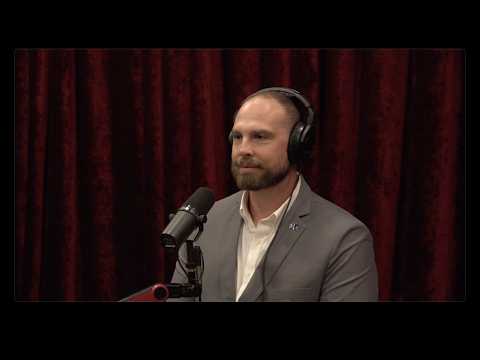
In episode 11 of the Bigelow Podcast, Robert Bigelow and geneticist Garry Nolan discuss childhood experiences involving mysterious figures. Bigelow says that at age eight he saw three short, hooded figures beside his bed; he recalls the experience happening several times. Nolan describes a similar scene from his own childhood: three figures in his bedroom, pressure on the edge of the bed, and a face at a window too high for someone to reach.
Bigelow also recounts encounters reported by his family. His grandparents saw a glowing object appear in front of their car and vanish, and later his mother and grandparents watched a large craft hovering over a mountain. The conversation turns to personal memories, evidence and testimony about UFOs, and the prospect of disclosure. These are personal accounts; the identities of the figures and objects are not established in the conversation.
Key points
Bigelow says three short, hooded figures appeared beside his bed when he was eight.
Nolan recalls three figures in his bedroom, pressure on the bed, and a face at a high window.
Bigelow recounts his grandparents seeing a glowing object by the road and his family seeing a craft over a mountain.
The conversation considers personal testimony, evidence, and UFO disclosure.
0:12>> So, Robert, you know, as as a kid I would read all these comic books and new comic book comes out, I read them all and I know every superhero has an origin story. Kal-El is born on the planet Krypton, it's just going to blow up and his parents send him off and he lands on Earth, he becomes Superman. Peter Parker goes into some lab, is bitten by a radioactive spider, suddenly he can, you know, has all these powers. I think people will be amazed at you being the superhero in this story of your origins and how you became the person you are, your interest in these topics and in funding research on particular topics, but also how how you made your fortune. So, we're going to start in this episode. We're going to be joined by a special guest later on, but in this episode telling you how you
0:58became you and starting with your family. There's some things that you've dug up in the in the last days that you didn't know about your own history. >> Absolutely. >> And and it goes way, way back. So, >> Yeah. >> When when the Mayflower arrived, you there's a connection there, but there was also already a Bigelow waiting on the shore when the Mayflower got here. >> Yeah. So, >> [clears throat] >> uh I I have a girlfriend who was born and raised in in Long Island, uh you know, New York. And um uh she has a nephew. The nephew [clears throat] uh has all had always been told that his his father and his grandfather were dead. But he never accepted that.
1:45He became really proficient as a genealogist. And uh so, he found out that they were actually alive at the time he was searching and and at the time he he learned of their existence they died like within a short time a year or two prior to that. So he never ever got a chance to meet him. So he's been driven and he's he's really really good. So last year was [clears throat] my first time that I learned about my own father and the fact that his mother was killed when my father was 12 years old. She was run over by a trolley car in Seattle and he was raised by his two sisters. Well, I knew he was raised by his two sisters but I never asked why and I knew that his father
2:30
was kind of an irresponsible husband and irresponsible father and that uh he was seldom uh uh at home. He was a prospector. He was an inventor and he was a he was always looking to strike gold in some way literally. And so he was a mining prospector and but most of the time he wasn't ever around. So my father my father's father was a was a very incompetent father. Negligent father is a better adjective. He was a negligent father. Didn't provide for them financially or being around or anything. Um and so uh and then uh after after my my my want to go back
3:15further now to uh the beginning of the story starts and that the genealogist expert found that was amazing to me all kinds of things in the background and that was that uh my family was a was ultimately connected to two individuals. One was one individual who was on the Mayflower in 1620 and the other individual carried the Bigelow name uh and he was born in in 1616. And he and was John Jonathan Bigelow I believe is is his name. And um so I have to look at my own notes or that have been typed up for me here and by other people to >> >> cuz I have I don't know of these people.
4:02>> 1616 in Watertown, Massachusetts. Watertown. >> Watertown, Massachusetts, which we [clears throat] know has another meaning. >> It has a special significance for Area 51. We'll come back to that because that was the original name for Area 51. What the employees called it was Watertown. >> Yeah. >> And it's based on that town in Massachusetts. >> Yeah. >> So you had There was a guy named John Bigelow born in Massachusetts 1616 uh or or a liver at that time. He was already on shore when the Mayflower arrives with another distant relative of yours. >> That's right. That's right. >> You're like royalty. >> Well, I don't know about that because, uh, the guy, uh, you know, who knows who was in chains and who was I'm just I'm just joking. I have no idea, you know, really anything much about these people.
4:47But But as we see, uh, John [clears throat] Bigelow, um, carried forward, uh, tremendous amount of of of future generations of Bigelows and that were connected one way or another to a lot of famous people and you have a copy of that. >> Basically, everybody named Bigelow in America to some degree has can be traced back to John Bigelow who was there. >> Apparently, most all of us are are related to each other. >> And he was a very prolific guy. Had like 13 kids, is that right? >> Yes, according to this the the research. He had 13 children and because of that their descendants were connected to like James Garfield who was descended through John Bigelow's son, Samuel Bigelow. James Garfield, the 20th president.
5:34Clara Barton founder of the American Red Cross descended through John Bigelow's daughter, Sarah Bigelow. And Erastus Bigelow Brigham Bigelow was an inventor of the power loom for manufacturing carpets and founder of the Bigelow Carpet Company. >> Erasmus Brigham Bigelow, that's a pretty cool sounding name. Is there a an LDS or Mormon connection somewhere along the >> there is. Keep on reading, George. So, Ruth Campbell Bigelow >> entrepreneur, founder of the Bigelow Tea Company. I swear, Robert, over the last 30 years, so many people have said, "Oh, yeah, Bigelow, he owned his fortune earned his fortune with the Bigelow Tea Company." which I said, "No, it's nothing to do with the Bigelow Tea Company." Turns out you have a relative
6:19who did though. >> So, we had we had a law office in in DC for quite some time and I had a couple of attorneys. Mike Gold was the the prime attorney there. He worked for me for at least 10 12 years and one time we're at the museum in the space museum. And there and I had been doing something. I came back to stand in line with Mike and he'd been talking to this woman in front of him. And and he found out her name was Bigelow cuz she she asked, "Who are you working for?" and he said, "Bigelow." And she owned the tea company. >> >> And and we didn't know at that time. I said, "Well, I don't think we're any relation, you know. You know, glad to meet you and all that, but that's just a coincidence kind of thing." >> So, then there's Lucy Bigelow Young and Mary Jane Bigelow, early Mormon
7:05pioneers, wives of LDS President Brigham Young, descended through Jonathan's son, Joshua Bigelow. So, there is a an LDS connection there. >> So, they need to have a I want to see in the temple, yeah, somewhere, right? I mean, uh I have my own religion, you know, I don't belong to any particular religion, uh but uh I I that's an interesting interesting feature there. >> Doesn't hurt to have connections though. You never know. You know, you might need some extra help going you know, what comes in the next life. >> I'm I wouldn't be opposed to that, yeah. >> Uh so, John Bigelow, US diplomat, lawyer, and author who served as minister to France under Abraham Lincoln. And he co-founded the New York Public Library. That's a big Just by
7:51itself, that's a pretty big one. >> Yeah. Yeah. Yeah. >> And And you just learned all this yourself? >> Yeah, like uh 48 72 hours ago. >> As you're reading this, you're going, "Oh my gosh." >> Yeah, I'm like I'm It's like I'm reading about somebody else. You know, not not me cuz I These people I was never aware of at all. >> Uh, so let's go back to your grandparents. They're in Seattle. Your father's mother was run over and killed by a trolley car. Uh, [clears throat] your father wasn't raised by two older sisters. Grandfather Bigelow was inventor, gold prospector, was never around. >> Never around. >> Uh, so his wife was Then after she was killed, he he he was gone for good. He was gone for good. He was gone for good. He was gone for good. He was gone for good. >> Yeah, he he wound up actually uh before he died in Las Vegas. My father
8:36uh happened to come to Las Vegas and I don't know whether it was because his dad was already here. Uh, this is before my my father uh was drafted into World War II. Uh, maybe around 1939. And um 38 39 cuz my my grandfather wound up here also. And I don't know if that was coincidence or whatever. I know that uh my father and his best friend wound up in Las Vegas cuz they were looking for work. And so um the the country was gearing up for for war. And we actually they came here like 39 or 40. I'm not sure exactly when. But things were were um there was work to be had one way or another. The dam had been finished I think in 1936.
9:22So, but there were still the the town was alive. And And so it was a place to come to get find jobs. And uh so in some capacity my grandfather was there, but my dad's best friend told me one time that he was [clears throat] a curmudgeon. My my dad's dad, he was no he was a a mean kind of guy. He was very strong and kind of a just a grizzly kind of guy and um Jack, my dad's best friend, >> [clears throat] >> was standing on a board and my dad's had a small little warehouse kind of building and he had some of his he he had invented a gold separating machine using static electricity or something like that. And uh so he had wood around
10:07laying around so forth. So, Jack's standing on a 2 by 6 and my grandfather reached down, picks it up and Jack goes up flies up in the air. He said, "He threw me off the board." Just with one hand doing like that. So, uh and he did it just for malice, just to be to be mean is why was why he did that to Jack. So, I my father never said anything derogatory about his father in spite of everything that happened. My father never said a word to me that this is the kind of man my my you know, my grandfather was, that his father was. He never said anything bad about it. He I knew he was There were times when they didn't have enough to eat. He and his two sisters and his mother, they they
10:53had times when there was no dinner. There was times when they counted how many peas and a piece of carrot that they had for dinner. >> Your mother's Okay, your maternal grandfather This stunned me when I saw when I read this, which is yesterday for the first time, owned the Apache? >> Yeah. Apache Casino. >> The Apache became Binion's. >> Well, it's on the same property. It's the same I think it was part of the adjoining building or part of the same building. I I think it was on the same building. Uh P. O. Silvani owned the land and the buildings were built on leased ground as I was told. >> That that's pretty astonishing. >> And that was he owned that from 1935 to 1950 roughly then the war started and then the the gaming industry
11:40uh kind of disappeared but there was a revival in in other manufacturing because of the war in Las Vegas. You were born here in Las Vegas May 12th 1944 right and growing up you didn't like to tell other people that you were from Las Vegas there was a stigma [clears throat] attached to >> Well I grew up right next door to my my maternal grandfather the good one the good guy and he was and so we he had about 8 or 10 acres and he bought an existing fairly large house at the time and it had a barn behind there and somebody had built a guest house behind that and he had horses for a while
12:25and then there was a time [clears throat] when he no longer had horses and it converted converted the the stables into small studio apartments and with little kitchens and they had all the utilities included and they were all furnished and then he had a little he also had a trailer that he rented behind so he had all together in that property about seven rentals he gave us two daughters each about an acre and a half next to him so my mother had an acre and a half and her sister had an acre and a half there and so my father built a house eventually on my mother's acre acre and a half there but going back to my grandfather he was he was
13:11very poor as a kid and he was kind of a cowboy gun toting cowboy right well he was 14 years old when he went on the last three state they call it tri-state cattle round up he was only 14 years old. And um and then he became uh a professional gambler. After he grew up a little bit and and so on. Uh he graduated from high school. Um he uh uh became a professional gambler. There were 10 uh nine siblings, 10 of them in his family. Um and at one point his father was also very re responsible. And at one point uh
13:57what he made in doing odd jobs and so forth helped support the family. And uh um cuz most of the kids were females. They were like only about three males and the rest seven females. So um he grew up knowing the value of money. And so by my growing up next door to him, I was taught some things by osmosis. The value of apartments but for real estate industry. And um and knowing something to the penny to the to the cent on something like he did. But also that gambling there was only one side of the table you wanted to be on. And so he taught me a couple things about that that that uh
14:42you don't want to be unless you're an owner, you don't want to be in a in a casino like that. And the other thing was the sadness of gambling. And I learned that at an early time. And um and that's what taught me not to like being in Las Vegas cuz I was ashamed. Because he he taught me and told me about how it takes money from people who can't afford to lose that money. They can't afford it. >> How long did that last? Is it still there some to some degree? >> life, yeah. But I I've all I I I change two things happened. I grant I became proud of the of the city because of the magnificent hotels.
15:28I became just because of those structures, not what happened inside those structures. I still have that that feeling that uh that um I'm no longer ashamed of this city, but I am very uh aware that it's taking money all the time, every minute, from people who can't really afford to lose that money. >> Jumping out of sequence for just a second, we'll come back to this part of the your history. Years later, decades later, as you're building Bigelow Aerospace, and you're trying to attract former astronauts, engineers, brilliant scientists to come here and work, the image of the city becomes a problem again, doesn't it? >> Oh, it was it was terrible. It It's more
16:14than that. It is uh it existing right this minute, right to this day. It is a place where if you have something seriously wrong with your body, if [snorts] you can afford to go to other ho- other hotels, other hospitals in California, you're going to go. We have a significant paucity of of adequate medical attention and care in this city. We don't have enough do- good doctors, we don't have enough good nurses and other other uh technicians. And the reason We have a lot of reasons for that. Um I think one of the main reasons is our
16:59educational failure. Um When I was when I was in third grade, uh my father's best friend was moving from California with with his wife and a couple kids, and the boy was my age, and the daughter was a year younger. And there was considerable talk in my family about the problem that those two children were going to have to be put back. It What's that say? The scholastic level in Las Vegas at the elementary school I was going to was higher than it than more was going on in the classroom in terms of quality education than in than in the California where they came from
17:44in Southern California, which is unthinkable today because our scholastic achievement is horrible. We are racing some in Mississippi is above us. We used to be racing Mississippi for the bottom. We were either 48th, 49th, or 50th. We are still lousy. Our educational system still sucks. I have gone I've talked to various people, and I don't think it's going to get any any traction. I know I'm deviating here about trying How do you solve the problem? And we have like the fifth largest school district in the United States. And I said, "Look, just divide the damn thing up. Make five school districts out of the one school district in Clark County, Nevada. So, we have a decent educational system, and put these school
18:30districts in competition with each other. So, you're going to have somebody who's one, and somebody that's five. And don't worry about it. Make sure they get the same amount of a kind of funding that they needed, so that it's equal distribution per capita, per per student. Okay? But make them challenge challenge each other. And because there's got to be some kind of way to fix the problem that why our doctors Why should they come here for their children to have to go to uh private schools that cost you $50,000 a year? For you know, why why do that? These aren't colleges we're talking. These are These are elementary private schools. You know, high schools are in in elementary schools. So, that's a
19:15significant problem that we have. So, I I still feel that uh Sin City is a disgrace. To be called Sin City is a terrible to have that that moniker attached to us permanently uh caused because of of an advertising scheme that that was created uh by an advertising company that I know about. >> I I know the people you're talking about, of course. And and you know, it was a great marketing tool for attracting people to the >> but it was a disaster from an image standpoint of the city. >> You had problems though recruiting the professionals I'm talking about to come and work for Bigelow Aerospace. >> Absolutely I did. Absolutely horrible. Yeah. >> For those reasons. The wives would say, "I don't want my husband going out there working." >> Absolutely. Absolutely. Uh because
20:02gaming back then in the day uh even prior to BA obviously Bigelow Aerospace was was illegitimate. And that's why I uh I I didn't like to admit where I was from. I was embarrassed. Now, the first gaming license was a woman named Stalker. She And why? Why would they Yeah, why would they pick a female to have a gambling license in Las Vegas? >> And or a respectability maybe? >> Exactly. She was a high-class woman. She was a high-class woman. And so, they said, "Okay, we want to start off with the best." And she was the first licensee. >> I You know, I think uh you're right about the if if a wealthy person in Las Vegas gets ill, seriously ill, they go
20:48somewhere else for the treatment. That's true. I think that's probably going to change. The The Kirkorian School of Medicine is now cranking out doctors, good good doctors. >> a personal experience. I mean, I I broke my neck uh you know, a year ago uh June. And and fell down and broke my neck uh vertebrae um six and seven, something like that. >> Yeah, the doctor said, you know, you you were this close to gone or permanently paralyzed. I was just very lucky and um so I was in Scripps. I was in uh Del Mar when it happened in a hotel. And so so and I had felt fine the the the day before, but anyway, um so there the Scripps hospital was fantastic. But there are other
21:33you know, other UCLA and other hospitals that are fantastic there also. Um I made a I made donations to hospitals here, charitable donations. Um but uh it's the educational system, I think, that is probably the largest single deterrent um as to why we're not that attractive to doctors. So and other people uh I I could name other clinics and other people that are having difficulty the same thing, attracting they have to they have to pay much more than they should in perks and various kinds of salaries and so forth to get people to come and move here to Las Vegas. I understand it. >> Jumping back to the timeline, so your cowboy maternal grandfather
22:18>> Right. >> has these >> Gun-toting cowboy, yeah. >> horse stables >> Yeah. >> and once the horses are gone, he's given up the cowboy life, he transforms those horse stables into apartment studio apartments and that plants a seed for you for later. And we are going to do an a full episode that traces your financial success and and the businesses that you've run. In this for purposes of this conversation, we're going to talk about just how weird your family really gets. I mean, in terms of weird experiences. >> Yeah. Yeah. >> When did it start? Who's who's the earliest one that you know of that had unusual abilities or interests or experiences? >> Well, in which category? >> Uh like with psychics phenomena, um UFO encounters with beings.
23:05Cuz you had some yourself. >> Yeah, yeah, yeah. >> So My maternal grandparents and my grandmother. And I can so I can I just I was just remembered something. So [clears throat] As a sidebar, so we're My grandfather had built another house adjacent to the main house that he had bought back in the 30s. And um And so the uh The first one was which he didn't build was made of railroad railroad ties and had a tall porch coming up to it and and that kind of thing. So it was a really stout house. And
23:51so he built this other house and my grandmother wanted it pink. Cuz it was the day of pink everything. She even had a pink Cadillac at one time. You know, so then the house was pink. So he did what He she was told, you know, what he was told. So uh >> We all understand that. >> Yeah, and my dad was was uh Very much into Into raising doing everything he could Uh for his son in terms of uh uh Making life fun. Not that I was given everything, but the just in making being playing catch, playing you know, football, baseball, whatever. Um and and all of that. So anyway, so [clears throat] we would have Christmas
24:36dinners over and and Thanksgiving dinners at my grandparents' house next door. So and I just thought of this. So we're sitting around the dinner table and the dining room area, all of us. There were about eight or nine of us. And I was the only kid and my mother had had miscarriages or I I have had more and she would occasionally come to me and say well [clears throat] this be when I might might be four or five and she'd say well now what do you think about having a brother or a sister? And she said that to me more than than twice about twice more than once and cuz she'd gotten pregnant at different times but had these miscarriages. I remember the first time I I was kind of like
25:21okay. But I remember the second time I had to think about it. I wasn't I didn't jump on it because I had all my my friends except for one guy had brothers and sisters and they were all fighting and they were all stealing each other's stuff and and this and that and I thought >> got it made. You're the apple of your parents' eye. >> I don't have anybody I have to fight or I have to put up with or whatever you know and so she my grandmother's walking in with a with a big dish of mashed potatoes. And she has this dish in her hands and I'm watching as she's coming up to the table and it flies out of her hand and goes up against the wall and she didn't throw it. It did it on its own. It flew up on the against the wall.
26:07And and so I'm trying to think of what age I was um I don't know maybe I might have been seven eight nine years old. And I had no idea about the experience that they had encountered when I was three. And that's that story about my grandparents having that really really close encounter. And now I think they were probably abductees because they didn't come come home until very late. And so and then my mother my grandparents also had a really good daytime UFO sighting that was very >> So your grandparents had one and then your mom with your grandparents had one. >> I don't know if they had any more or not. I was on a need to know basis and basically it was
26:53seen and and not be heard. You know, that was the that was the the code at the time at the dinner table or or other things. My dad never discussed business at you know, with me much less at the dinner table. Um But in my but my grandfather um he uh he taught me I as I said very attributes of of the business type of thing but never talked about any UFO thing whatsoever. Uh cuz I asked him. And he's he refused to talk about it. And then I asked my grandmother and she said, "Well, we don't talk about that." And uh so that was that. >> So it your your impression thinking back on it now was a traumatic experience for them. I mean it was would have been very traumatic for people. Yeah, my because
27:39my dad when I was 10 I found out about all this because he began to read so many uh so much about UFOs in various books. And when he was finished with with one I would read it. And I would kind of read everything that he read. And uh I I finally asked my mother, "Well, why is he so interested in the subject?" He was and she said, "Well, I think it's because of a conversation or because of the experience that your grandparents had. And I don't think uh either I conjecture that he my my grandfather and he uh talked or my mother may have said that they talked. But in any case um I'm I'm sure that was the genesis of why the connection of of to the UFO books. So in those years they the early 50s
28:25that's an explosion of UFO activity, public interest in UFOs, UFO waves, and the first big wave of UFO-related books. Kenneth Arnold you you dug up some articles about Kenneth Arnold that had been >> Yeah, we have them here on the table cuz we were talking about those the other day. And how he was you know, he was ridiculed eventually there's article whole couple good pages here about him in that in that uh Idaho >> yeah. It was a famous famous article. >> the Idaho uh Statesman, their their paper at the time. I can't see the date on that, but that's an old paper. >> That's from '97. So, it's a repeat of an an article from a long time ago, but 1997. But, that's the original Look
29:10article. >> Yeah, it is. >> The man who started it all. That's a pretty That's a famous article. >> This is. And um But, he he uh he he suffered a little bit because of that. >> So, you you read those articles as a as a 10-year-old that what your dad was reading and it it obviously left a a long impression. Did you think that I'm going to pursue this at that point or does that come later? >> [snorts] [clears throat] >> I was reading uh Well, by the time I was 13, I was into reading books on cyclotrons and other kinds of science books. Um And so, I I had a I had a really strong interest in in uh various kinds of of science areas. And um
29:56And I I remember a a good friend of mine uh confided in me when I was probably Oh, gosh, I don't know. Um maybe 12 or 13 or whatever. That he and his dad and another man were driving home from a hunting trip through the uh through the uh Paraniga Valley uh from Alamo and and they were and they were driving along. They were all in the front seat of their truck and all their gear and everything was in the in the bed of the back of the truck. And uh this UFO came down and um as they were going down the road in in front of them off to the side, uh a UFO landed in the desert not too far off the
30:42highway. And um his dad started slowing up. The other man, they had a rifle >> [clears throat] >> behind them. The other man reached for the rifle and my friend was begging them not to take the rifle, not to stop, just to keep on going. They stopped anyway and before they stopped the UFO took off. They got out of their car and went over to the site and he said he could he could tell it was night time. He could tell though there was just something felt different about that piece of desert where where it was and um I don't remember exactly what he said but he said it just felt different but but when they got home his father made him swear uh that you absolutely will tell nobody. Of course he went up telling me but I
31:28didn't tell anybody else at the and and uh I I don't think I've ever told the story to to anybody else so uh but he told me about it and I said, "Wow, that that's really cool." You know, to to have that happen. That's that's really interesting. And so but you have to remember back what Las Vegas was like when you know, and uh we're the Korean War started around '52 and that time I was 8 years old and I'm digging all kinds of foxholes and stuff out in the backyard and uh um and playing war and so on and like kids do and so um >> [clears throat] >> I had a two-story tree fort that I built you know, in this huge this huge elm
32:15tree and um uh so there were squadrons of jets all the time and bombers flying over Las Vegas all the time. I think we talked about this once where you know, the sound there weren't rules on the on the sound barrier which at least for a while they may have been but they broke them. So you have these concussions cuz they're going over 700 miles an hour. Um speed of sound I think is around 720. But they're they're these concussion kaboom boom. And they were neat to have those it would shake the windows and everything in the house, you know. And uh but then of course the bombs were all going off above ground. And and that was pretty cool. Daytime, nighttime, you know, to and uh and even we would be let out. I was going to an elementary school for a
33:01short time. And uh there were no obstructions and uh I think uh ground zero was probably uh about 70 miles away. And so we could see the mushroom clouds and and and and the order of sequence is the first thing [clears throat] is that you see the earth you see the cloud. And then you start to hear the noise. And what happens is the earth is quaking, right? And the rumbling of the earth is the noise that you're hearing. So there's a lag at the speed of sound that is taking from traveling from where the epicenter was of the of the explosion and you're you're where you are at the location. But we're all turned out into the schoolyard to watch at different times. We were lucky enough to where the shots were going off and
33:47when you know, when we were able to be out in recess, special recess. >> Your friend who's who has that story about traveling through the Paranegat Valley from Alamo to Las Vegas and seeing what sounds like a UFO land on the side. Pretty interesting because that Paranegat Valley if you're going from Las Vegas to what we now know as Area 51, that's where you go. You drive through it. Beautiful beautiful area. Just a beautiful little spot. And then a bunch of desert and then you get out to Area 51. So that he's not the first guy to see UFOs out in that area. We'll get into that at some point. So your your grandparents had an encounter and maybe some missing time. Your mom had an encounter. Who knows if there's missing time. Nobody really wanted to share that information with you, but
34:33then you have your own encounter, some beings that show up in your room. >> Yeah. >> Three beings. >> Yeah. When I was about eight. >> And you know, that we when we were talking with Jacques Vallée here some weeks ago and talking about his latest book, he mentions in the book that somebody else had a very similar encounter, a name that we both know really well, Dr. Garry Nolan. >> Yeah. >> And we've invited Dr. Nolan to to join us for this conversation. >> And I and if if I hadn't read started reading Jacques's book, course because I I would have read it whether it had been on our show or not, I would have probably read that book. I have I have a lot all of his books, at least most of them. And on page 18 he starts to talk about Garry.
35:18And night to page 18 and 19, and I'm reading along and I'm think I'm reading about practically the same kind of story that I experienced when I was eight. And he was like five or six years old. >> And you had never talked to Dr. Nolan before, you'd never >> I called him last Saturday. That's when I called him. >> But until this experience reading that book, you'd never talked to him. >> Yep, we had a good long conversation and I just wanted to verify certain features of the story and everything. And I thought, "Oh my gosh, so what I had was real." And I you know, I didn't know whether it was for sure dreams or I mean after a while I began to question, you know, as the decades go by. And but I I didn't see I had three beings stand there alongside my bed. I
36:04was laying down and I had a narrow rectangular window, small little bedroom. And so there's some kind of ambient light maybe coming from the moonlight. So because I could see three structures, three people, short. I know these and I kind of had a sense that they weren't children. I don't know as I think about it right now, I kind of have that sense that that wasn't [clears throat] that wasn't children. And they couldn't see any faces or appendages. They were wearing a like a monk's robe and and kind of a something going over the top of their head like a part of the robe and um and there
36:49there wasn't any fear whatsoever that I had and and their only exchange was I'm just mentally not verbally out loud saying, "What do you What is it you want? Why What Who are you?" And it was the same thing and I had that experience about four times over maybe a maybe a month. Maybe I don't know the exact chronology and the exact time anymore. >> The first time you told me the story and described these beings, I remember thinking of these little hooded short little hooded figures in Star Wars on Tatooine that were out in the desert gathering up broken robot parts. That's [clears throat] what occurred to me. >> Yeah. >> Close to that? >> I I don't think they're very far off. >> Yeah.
37:34>> Yeah, and they just stand there. They were motionless. >> Well, it turns out that >> There were three of them. >> you having that experience at a young age, three of these beings in your room at night is pretty much identical to what Dr. Garry Nolan has described to what was described in Jacques' book. So, we're bringing Dr. Nolan in and get the conversation. >> That's right. >> Uh Dr. Nolan I want to start with this. Uh Robert Bigelow had shared with me a a story about something that happened to him as a child. He hadn't really made it public, I don't think, at the time he told me about it. And I then I realized, "Hey, that rings a bell with me in terms of the creatures, the beings that showed up in his room as a child, right?" >> Right. >> And and um it seems like you've got a story pretty close to that. don't know I
38:20don't know how much detail you want to go into, but could you share us with us that experience and what happened? >> Before we say that, I learned about Gary's story through Jacques' book. His new book. And on page 18, he starts talking about about Gary's experience and on the page 19. And I I said, "Oh my gosh, this is this is just about what I remember when I was 8 years old." And I always chalked it up to maybe dreams or I didn't really know, you know. I never told my parents at all about it. And but that's that's why I reached out to Gary just last [clears throat] Saturday, wasn't it? Last Saturday. Yeah, he and I have never met. We never talked before. So, Saturday I called him
39:07up and that's the first time we ever connected. >> Well, that was overdue anyway, but I mean there are similarities between the stories. Can you share with us Dr. Nolan what you told Jacques about the experience you had it and at what age was that by the way? >> Yeah, it was I probably I was about probably five or six cuz my brother had just been moved into my bedroom with me. We shared, you know, the small room. He's just old enough to have his own bed. Um and I've actually talked about this publicly, so it's not like previously. So, it's not like I'm spilling the tea here >> Okay. >> for the first time ever. Um so, yeah, I mean I it was um I just remember waking up uh I don't know what time it was in the middle of the night
39:53and cuz I felt something was like pressing down on the bed on the edge of the bed. And I remember uh before I even opened my eyes uh saying my brother's name, Jeffrey. Jeffrey, is that you? And then I opened my eyes and there was something standing there and then like it seemed two more standing behind it. And I I just remember them being little, like couldn't see the color of course because it was it was dark. Um and yeah, I wasn't afraid and then literally within probably 10 to 15 seconds I just fell asleep. I don't remember anything after that.
40:38So, what was unique about it I suppose was that the next morning when I woke up it was the first thing I thought about thought about because I remembered it. And I was like, "Geez, what was that?" And I went and told my mother and she was like, "Well, Gary, it was probably a dream." You know, and and I'm just going to say openly it maybe it was and maybe all of the things that I saw were just a dream. I mean, from a scientific standpoint, I have to accept that. It continued over the next couple of weeks. These repeated like every other night I would wake up and there they things would be in the room and then a couple of times you know, I had a my bed was literally right next to the window. Um and I remember seeing a face looking in the window. Now, that's unusual
41:23because the window is like 5 ft off the off well, higher than that actually it was about probably 8 ft off the ground. So, you know, we didn't have any peeping Toms or anything. Uh and so and it was just staring at me. Um and you know, so and then after that it it stopped. But from that point on when I started I was telling Bob this last week, when I you know, when I would move when we'd move to another house or when I started actually renting my own apartments since college and stuff, one of the first things that I would do is go out and buy window shades. Um to make sure that at night everything was closed off. And you know, to this day I have this fear and actually in the book uh
42:08American Cosmic uh Diana Pasulka recounts you know, part of the story as we were going out to the site in New Mexico at the little kind of bed and breakfast that we were staying at. Um, you know, they'd all gone, I thought, to bed. I'd been moved I went into my room and then I noticed that the the window had no ability to have a shade across it. And I just freaked out. I went to the front desk and I said, "You just got to move me to another room which has has shades because I have this PTSD about somebody looking in the window at me. It's not a I'm not afraid of the dark. It just It just brings back these memories. And so, you know, there was another story of me
42:53being a paperboy and seeing a craft go over my head, um, not knowing what it was, but it was there, uh, like, you know, right at the top of the trees. Um, and again, I've talked about that many times publicly. Uh, but it wasn't until I was a graduate student here at Stanford, um, and there was a used bookstore, um, over on California Avenue at the bottom of the end of the street. And this is pre-internet, etc. And, you know, I'm an avid reader of science fiction. Frankly, it's all I read because I just am fascinated by the ideas in science fiction. It's sort of like They're almost like predicting the future cuz we're we're almost there in a lot of in a lot of the cases. Um, and I was pulling out this the books
43:38and looking at these used books, and I pulled out this one and it had an alien, you know, what we think of as aliens now, but again, still pre-internet. So, I didn't know what it what it was and it but it was Whitley Strieber's Communion with that face on the front. And I I truly dropped the book on the ground cuz all the memories came flooding back. I hadn't really remembered it. And I was like, this is what I saw. And so I picked up that book. I I read it. It wasn't so much of you know, he talked about these little purple guys and stuff throughout much of his thing. It sounded more like gremlins or I don't know what um troglodytes or what have
The transcript is shortened here. Keep watching from this moment in the player.