Worlds of the family
The Sun and its dark twin
Our Sun is aware. And it has a hidden dark partner that helped end the dinosaurs.
The Sun
A living star
Our Sun is alive and aware. It checks in regularly with the center of the galaxy. Beings from higher levels can even "inhabit a star".
Deep past
Once bigger, once hotter
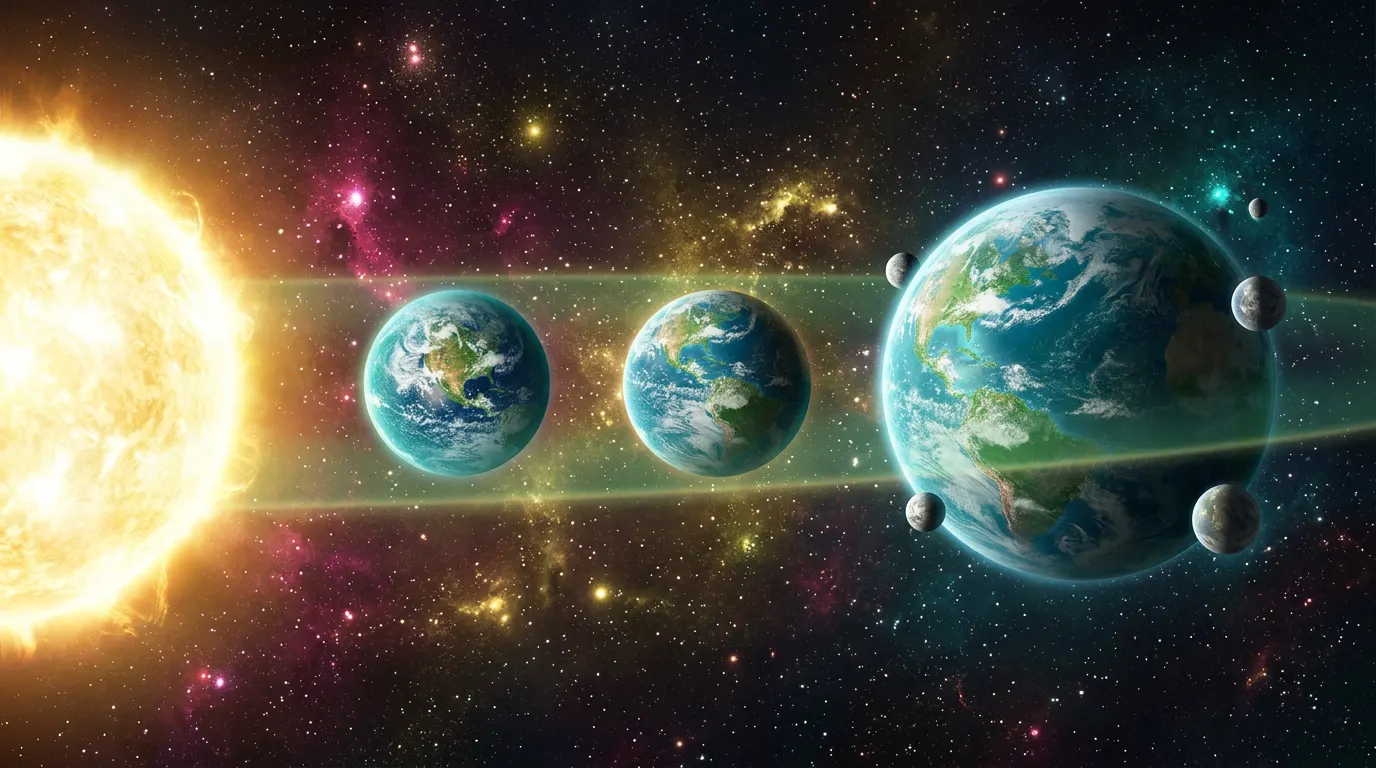
Long ago the Sun was a little bigger and hotter. Its stronger pull kept Earth, Mars and Maldek in the "just right" zone, so all three could have life.
The dark star
A second sun we can't see
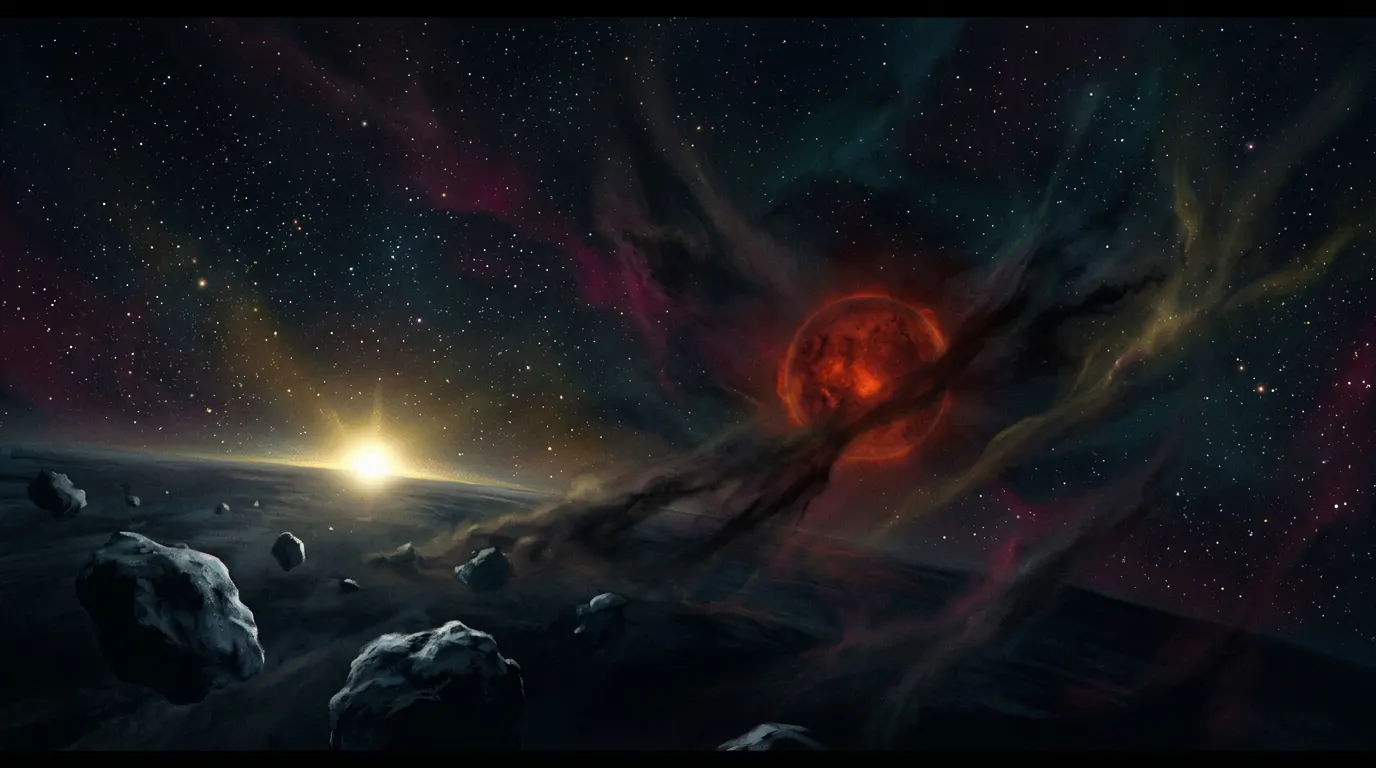
A dark star circles our solar system. It's solid, and it's not light-years away. It glows only in infrared, a kind of light our eyes can't see. Scientists have called it Nemesis.
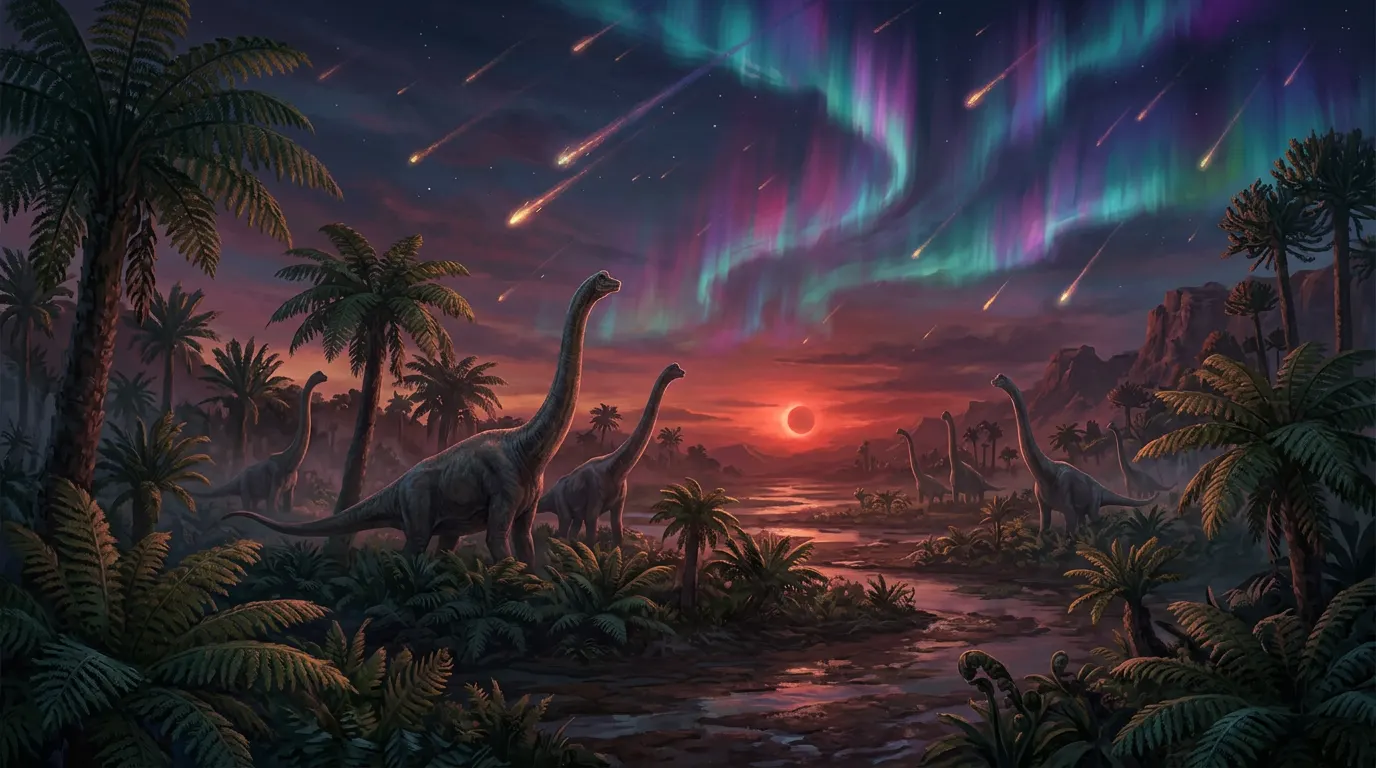
The last pass
When the dinosaurs fell
On its last swing by, it dragged in meteors from the old asteroid belt. Their electromagnetic jolt froze animals and dropped them where they stood.
Things to know
The dark star comes around about every 26 million years, and right now we're halfway between passes.
It's packed-down matter, but it isn't a black hole.
In this picture, sunlight is mostly energy for body and mind. (Here on Earth, sunscreen still wins.)
Essassani's star, Shah, is yellow-green and a little hotter than our Sun.
A tiny planet called Vulcan circles very close to the Sun.
Mystery box
There's more than one version. Tap to open.
Other worlds